
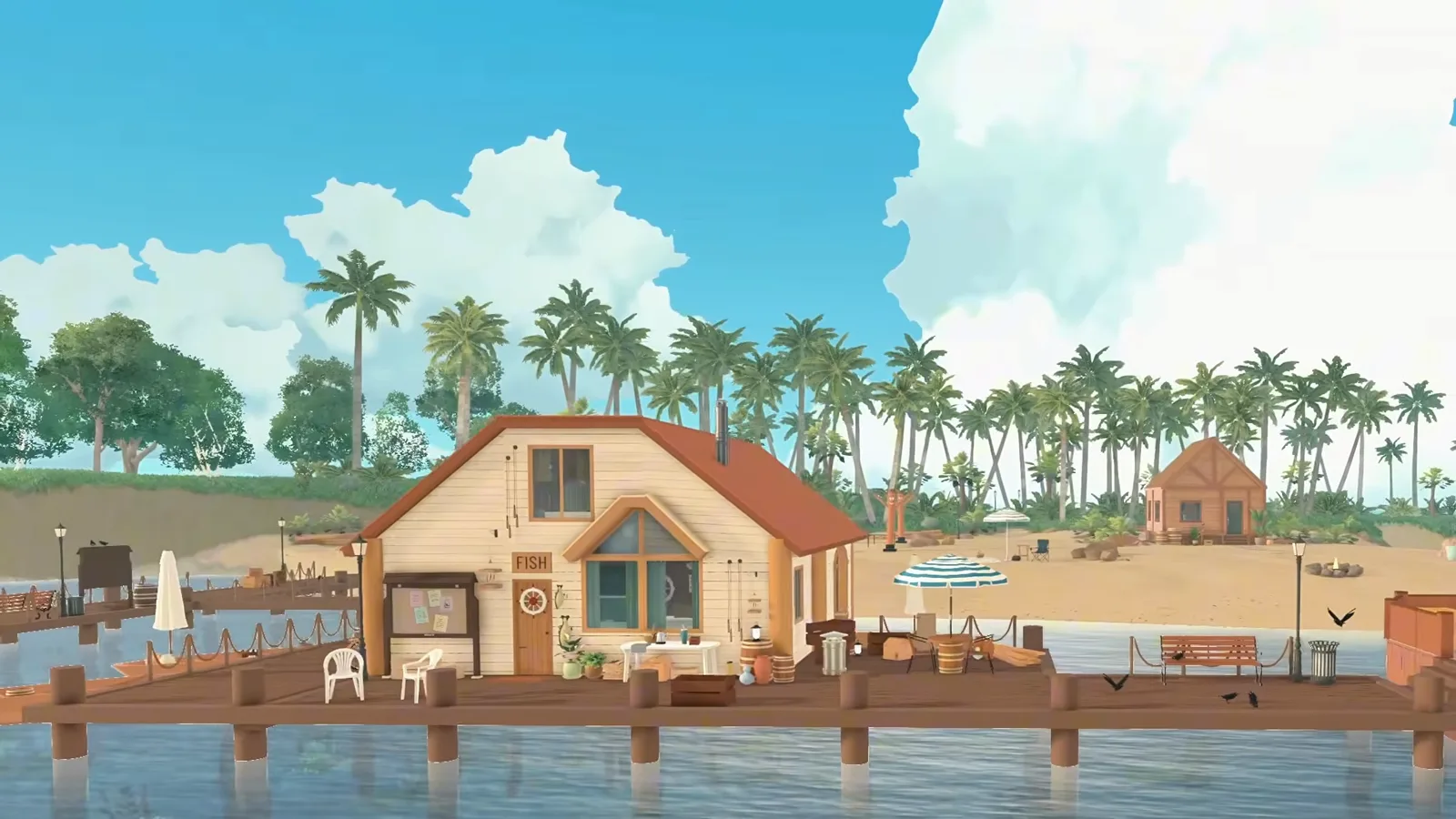
The short version
The beach episode is a terrain story first and a props story second: sketch the layout on a quadrupled blank map, sculpt a shore that slopes into the sea, then let painted gravel, resized trees and repurposed furniture do the theming. Elliott's hut and Willy's fish shop anchor the two ends of the beach, and the Luau gives the sand a reason to exist.
- Start from a quadrupled blank map (615×615 m, Workshop mod) with ToggleEditTown on
- Draw the beach outline and town path before touching terrain heights
- Smooth the shoreline into a gradual underwater slope, then paint gravel at the waterline
- One coconut tree, resized and sunk, becomes the whole palm grove
- The coral reef is painted gravel and soil, stocked with enlarged plants and gems
- Paralives has no ladders — Willy's fish shop connects its floors with stairs
The coastline
Sketch first, sculpt second
The beach starts as flat shapes on a quadrupled blank map: the sand, the path into town, the river that will flow toward the future city. Only then do the height tools come out — lowering the sea, smoothing the shore into a gradual slope, painting gravel where water meets land. The palm grove that finishes the scene is a single coconut tree stretched, shrunk and sunk into every role.
- 1
Sketch the beach before you sculpt
The episode opens on a quadrupled blank map (615 by 615 meters) loaded from a Workshop mod, with ToggleEditTown switched on for the whole build. Before touching terrain heights, the beach area and the path leading into town are drawn as flat shapes — a guide for every raise and lower that follows.
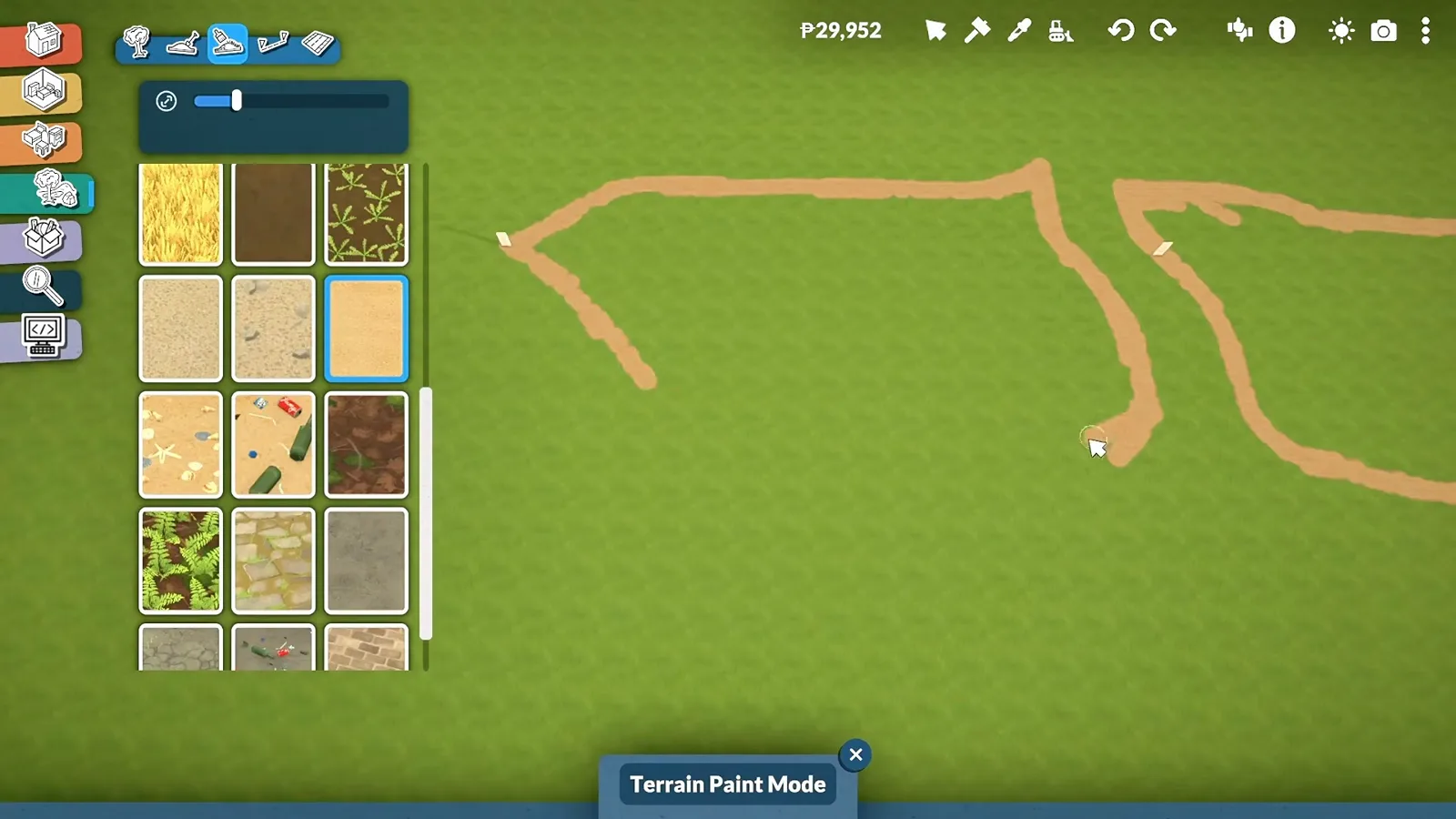
Draw first, sculpt second — the sketch anchors every height change.Watch at 1:18 - 2
Smooth the shoreline into the sea
The sea is lowered with the terrain height tools, then a smoothing pass walks the waterline until the beach slopes gently into the water instead of stopping at a cliff. Two areas take shape here: Elliott and Willy's side on the left, the coral reef on the right, with a river running between them toward the future city.
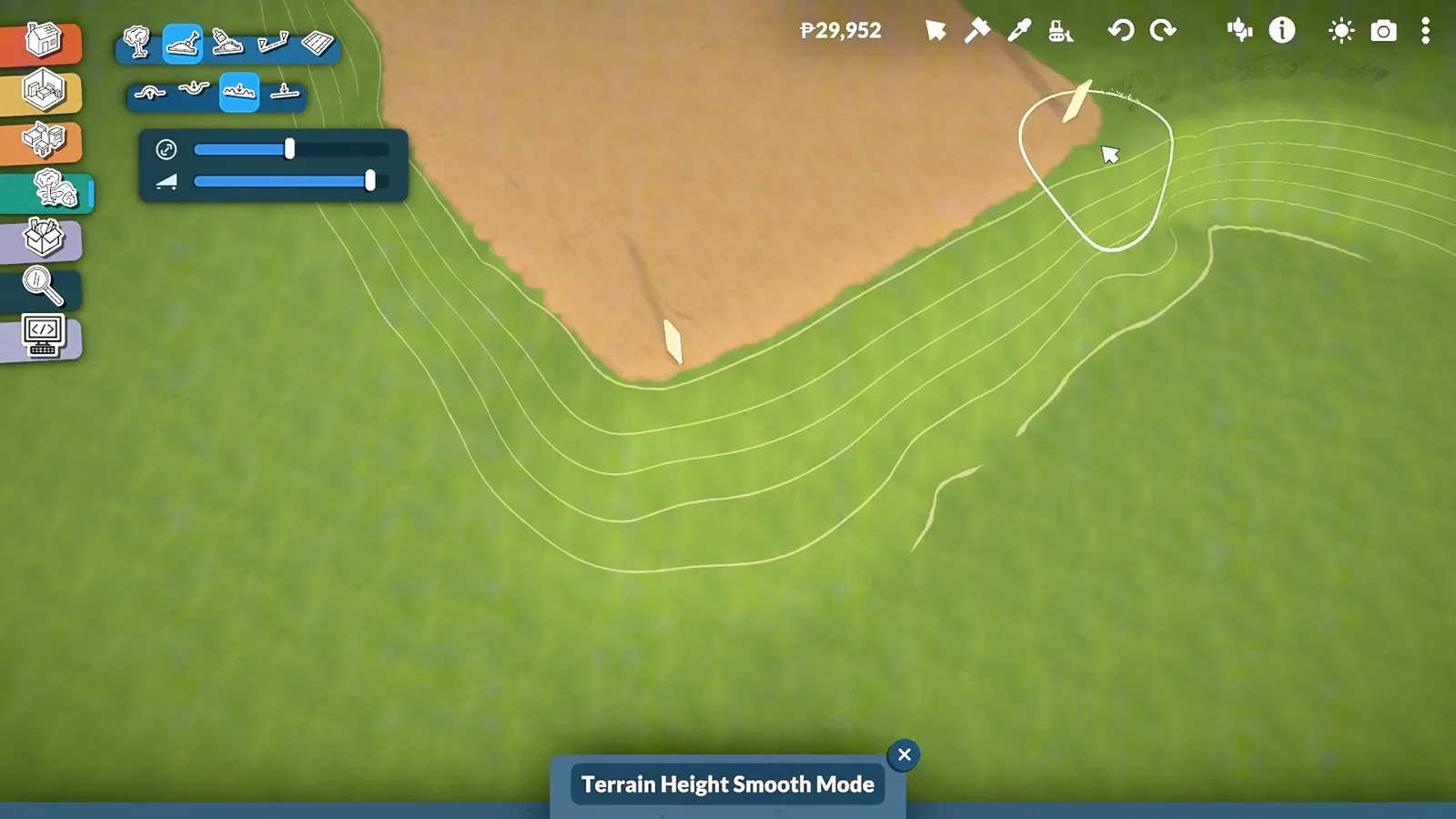
A gradual slope, not a cliff — smoothing is what sells the beach.Watch at 2:00 - 3
Paint gravel along the waterline
With the landscape paint tool, a band of gravel goes around the water's edge. It is a small pass, but it breaks up the sand-to-water seam and makes the shore read natural at a distance. Behind the beach, grass and soil paint mark out the buffer zone that will separate the sand from the city.
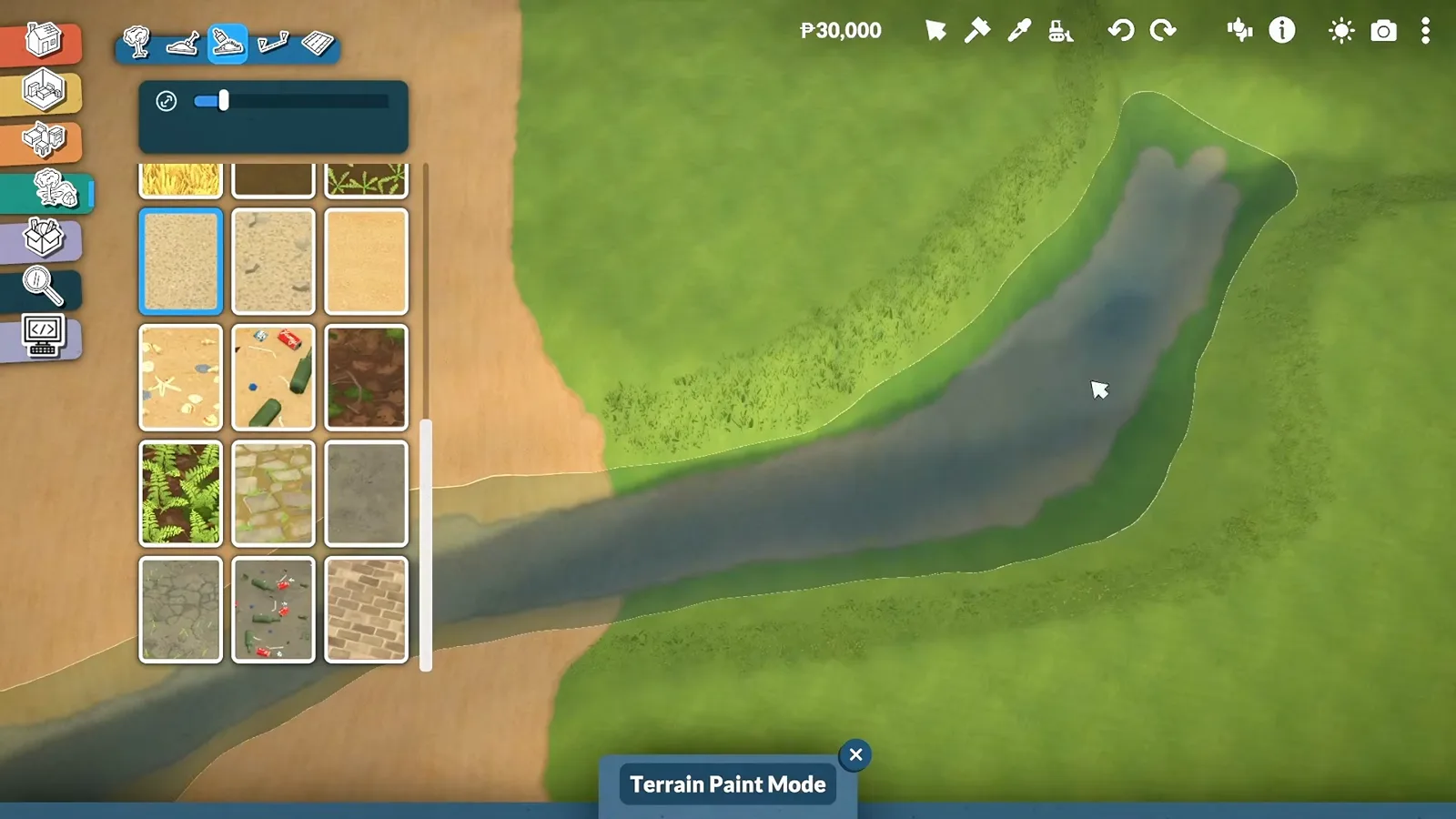
One paint pass at the seam does more than a dozen props.Watch at 2:47 - 4
Stretch one coconut tree into a grove
Paralives currently ships a single coconut tree, so the grove is the same asset resized and tilted with the advanced and resize tools — small, tall and leaning trunks. Sinking a copy into the ground until only the leaf crown shows fakes a smaller palm. It is the trick that keeps the beach from looking planted by a machine.
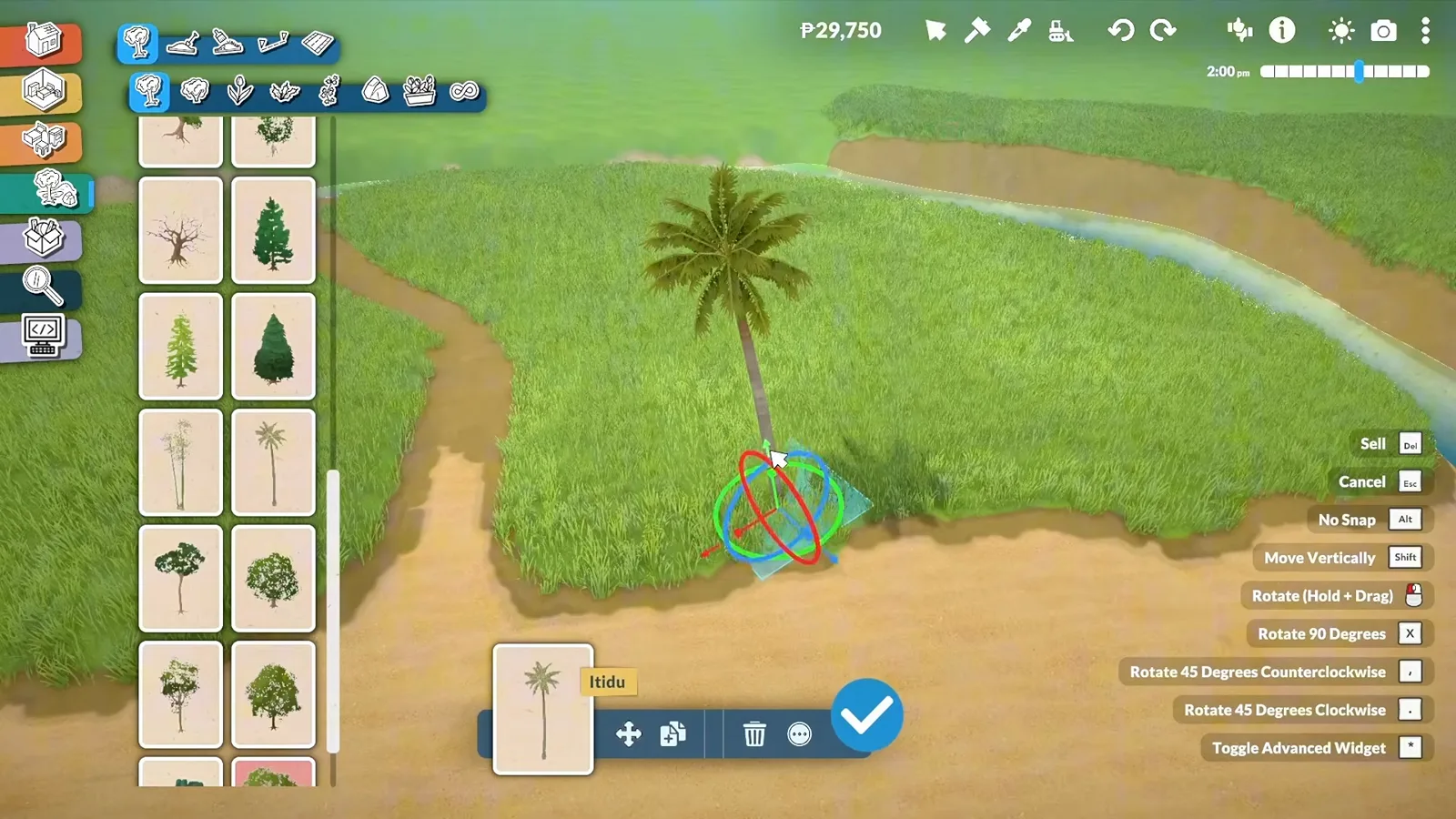
One tree, three sizes and a lean — variety without new assets.Watch at 5:00
Piers and shore detail
A dock, a reef and things to find
The middle of the episode is props doing wrong jobs on purpose: crates and barrels on the pier beside Willy's house, museum barriers painted brown to stand in for rope fences, and an exposed coral reef built from painted gravel and stocked with oversized plants, mushrooms and gems. None of it needs a mod — every piece is a base-game asset.
- 5
Furnish the pier like a working dock
The main pier goes in next to Willy's house — one of the best fishing spots in the original game. Wooden crates, barrels and chairs dress the deck, and museum barriers painted brown stand in for the rope fences that line Stardew's docks. A second, quieter dock sits at the far end of the beach.
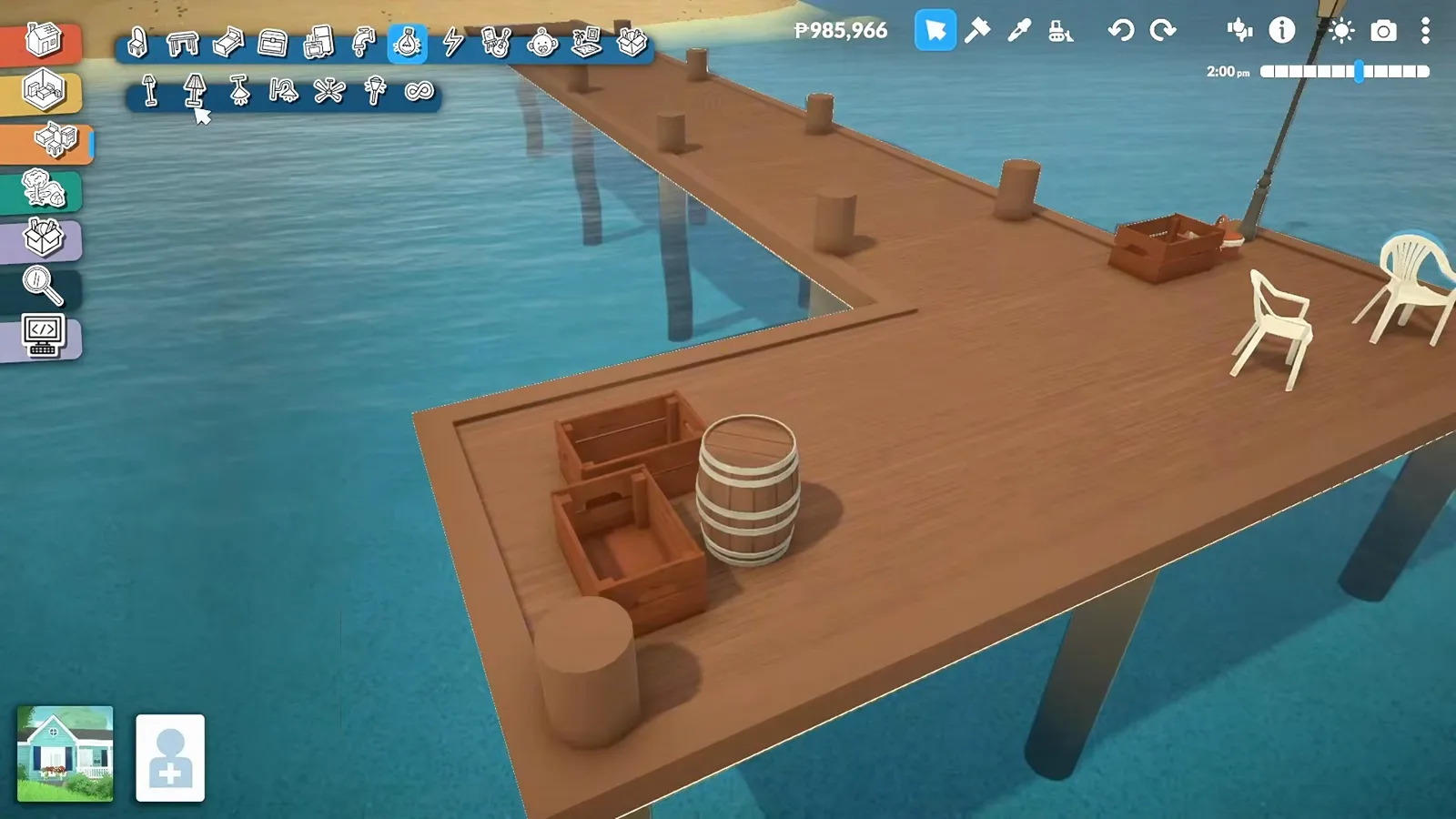
Crates, barrels and brown-painted museum barriers pass for rope fences.Watch at 9:48 - 6
Paint the exposed coral reef
On the right side of the beach, the whole reef area is painted gravel, then soil is brushed around the edges so the reef blends into the sand instead of cutting off. The patchwork of light and dark paint is what makes it read as an exposed seabed, straight from the original map.
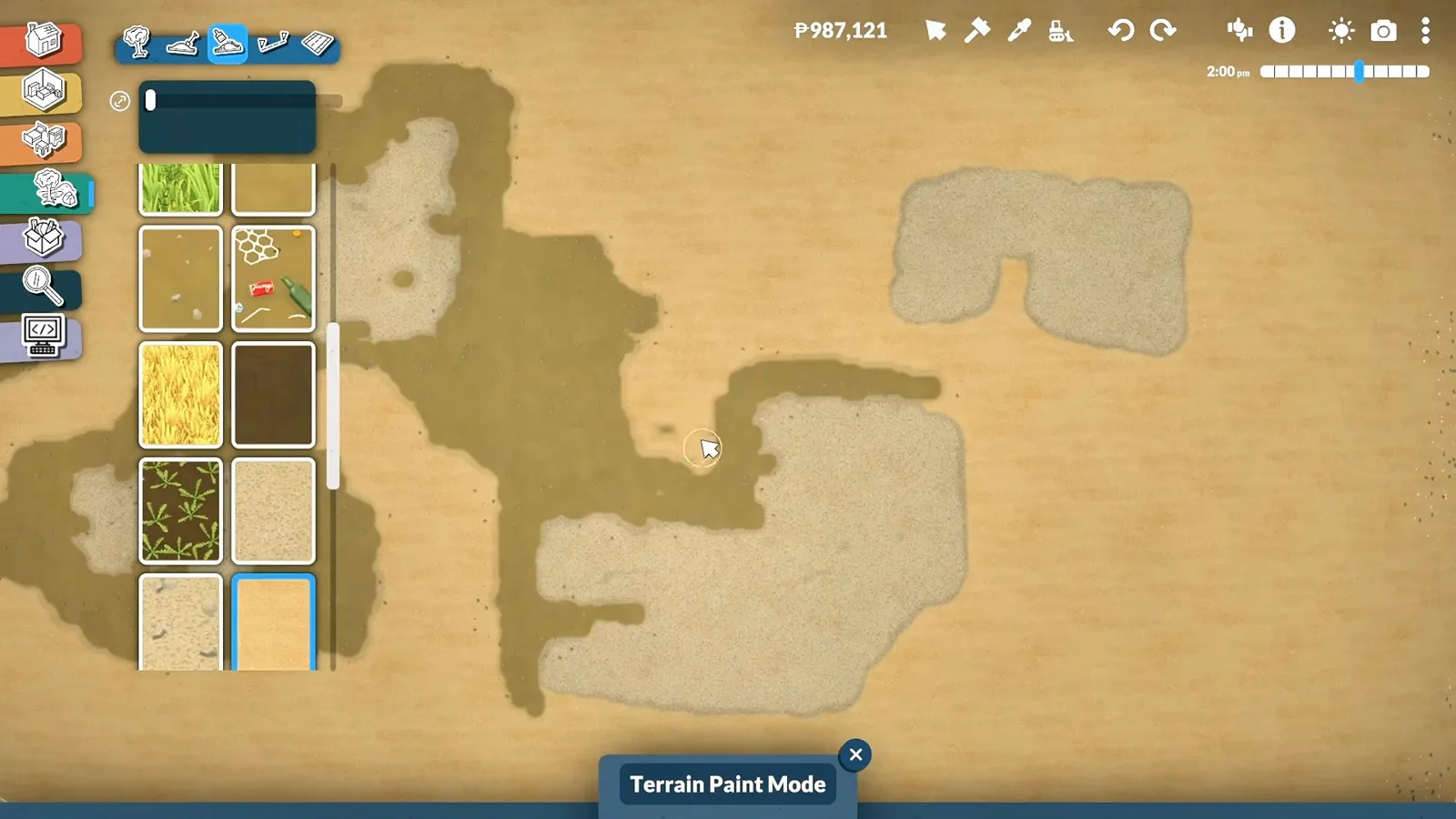
Gravel base, soil edges — a reef is mostly paint.Watch at 11:25 - 7
Stock the reef with things to find
A tiny plant enlarged until it looks like seaweed gets scattered across the reef by the dozen. Mushrooms, ore and gems stand in for Stardew's beach collectibles — not exact copies, but the right silhouette for 'something to pick up'. This is the corner of the map that keeps giving the world its game feel.
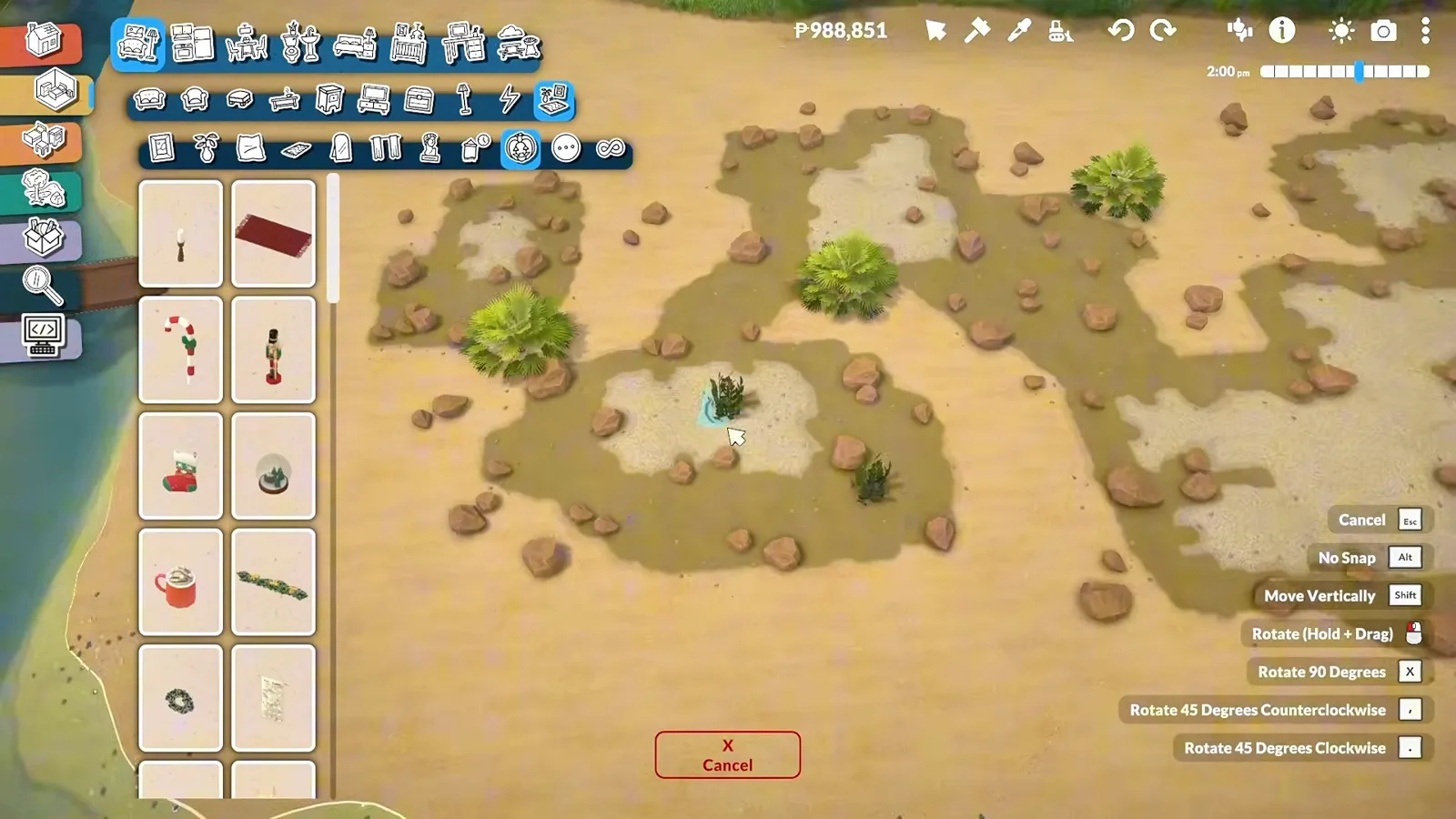
Enlarged plants become seaweed; mushrooms and gems become loot.Watch at 12:00
Elliott's corner and the Luau
Two landmarks and a festival
The left side of the beach holds the character builds: Elliott's hut, recreated faithfully outside and modernized inside with his piano and desk kept exactly where players remember them; the little rowboat built from a bowl and wooden spoons; and the summer Luau laid out with buffet tables, grills, a dance floor and inflatable tiki torches.
- 8
Recreate Elliott's hut from the outside in
Elliott's hut is awkward in the original game — exterior and interior do not match. The compromise here: rebuild the outside faithfully, then treat the interior as a real home with a bathroom, kitchen and dining space, keeping the color scheme and the iconic furniture. His piano and desk stay in the bedroom, exactly where Stardew players expect them.
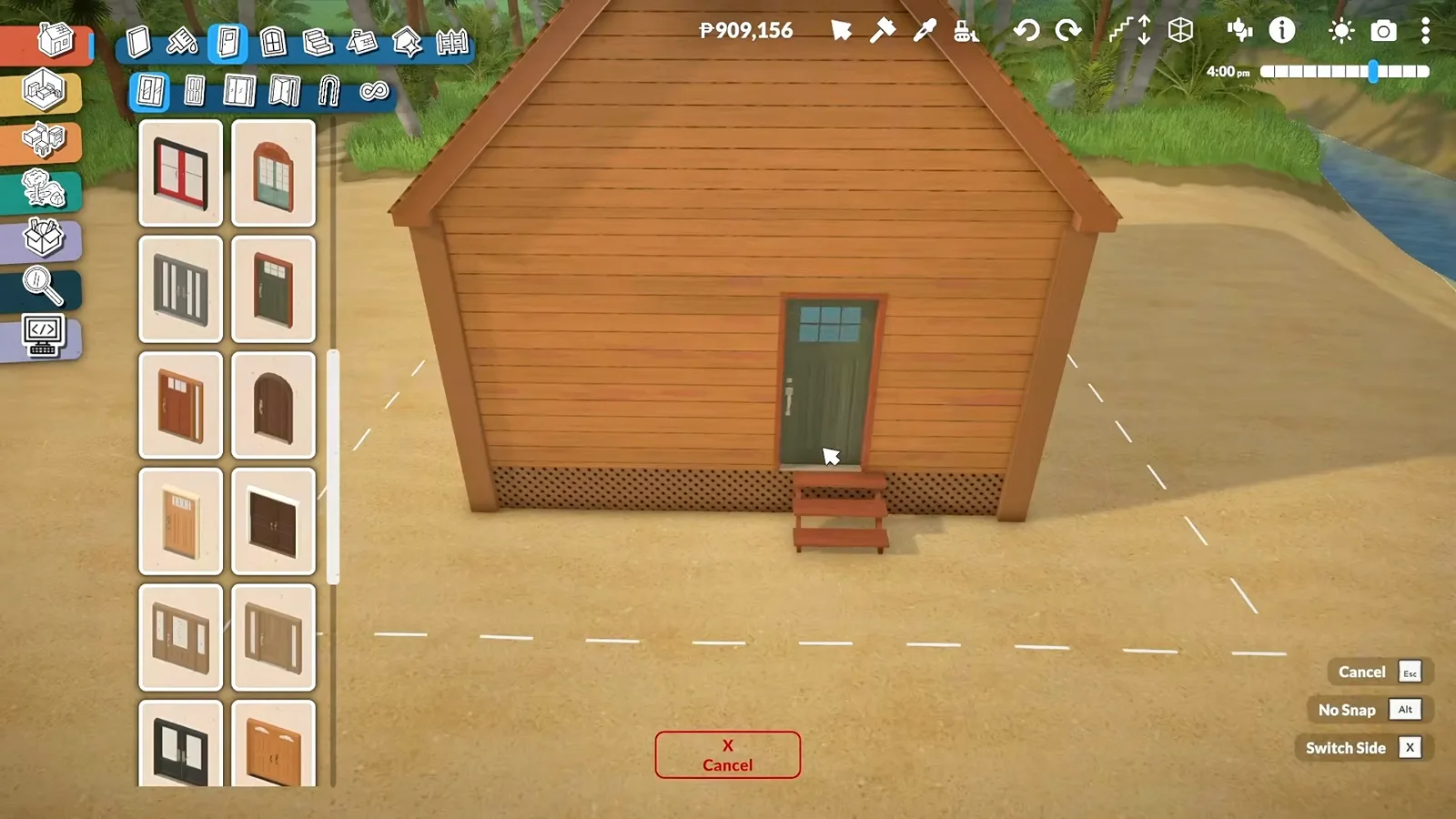
Faithful outside, livable inside — the rule for every house in this series.Watch at 14:28 - 9
Build the rowboat from a bowl
A small boat sits near the hut on the original map. The Paralives version starts from a bowl and a few trays, pushed into a hull shape with the extension tool; the paddles are oversized wooden spoons. It is the clearest example of the episode's habit: no boat asset exists, so furniture becomes one.
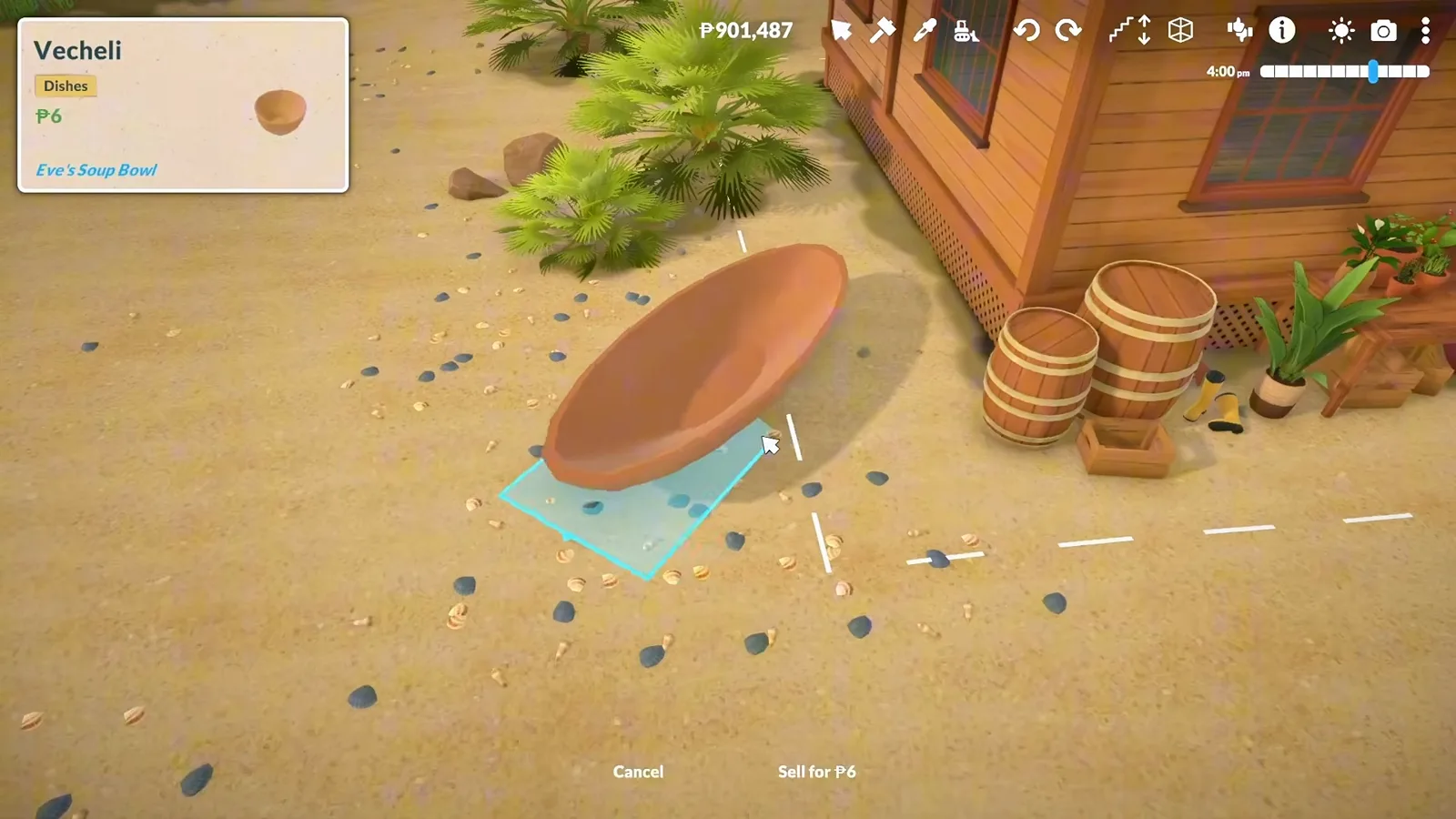
Bowl, trays, extension tool, two big spoons — one rowboat.Watch at 15:40 - 10
Set the Luau table
Festivals give the beach its purpose, so the summer Luau gets recreated on the sand. Buffet tables carry the food, and instead of the giant communal soup pot, grills and preparation tables add a deliberate touch of modernity. Rugs and large speakers mark the dance floor, and inflatable figures stand in for the missing tiki torches.
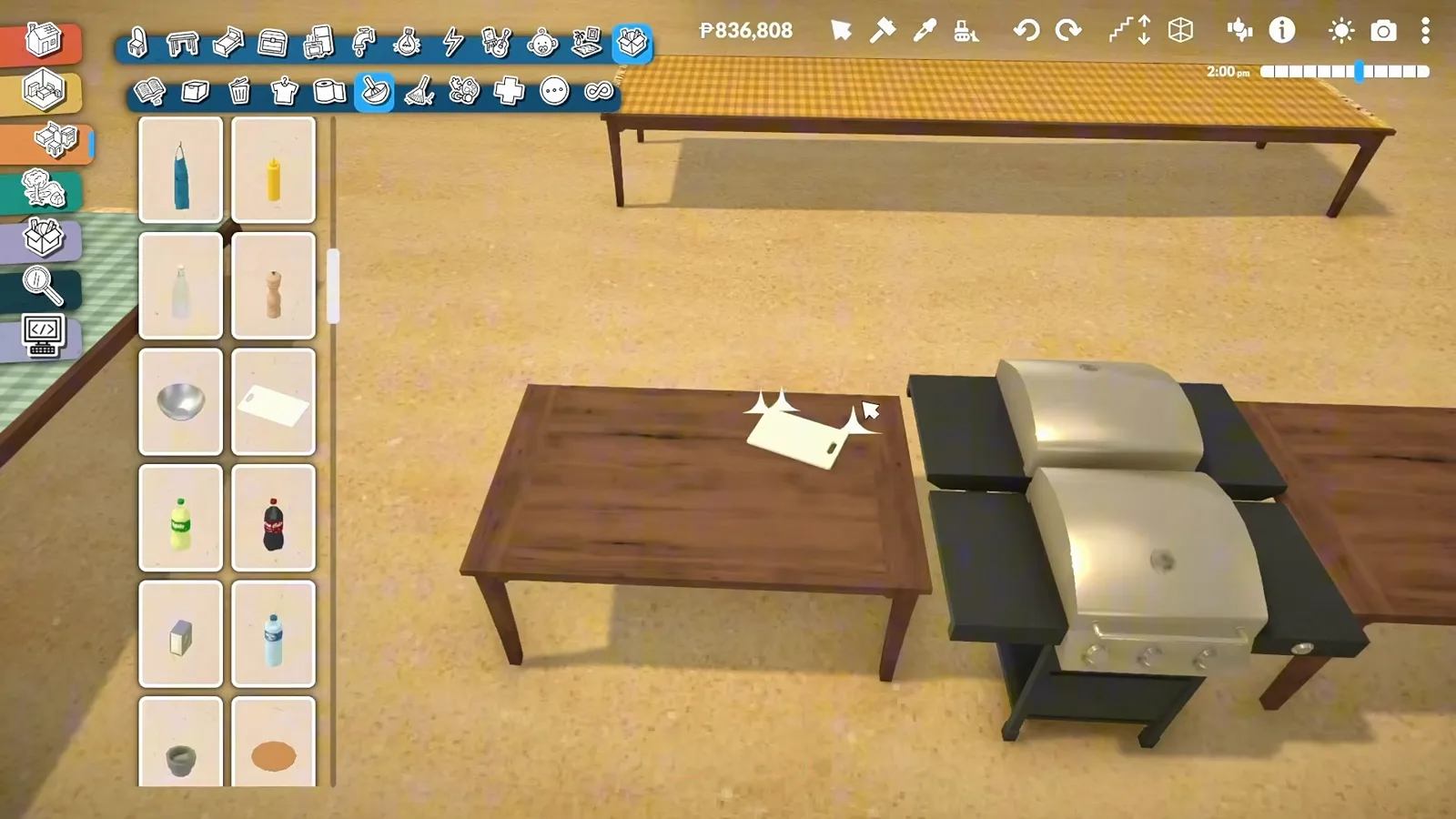
Grills and prep tables replace the communal soup pot — modern on purpose.Watch at 19:20
Willy's shop and shipyard
The fish shop with a secret
The busiest corner of the beach belongs to Willy: a fish shop on the ground floor, his home above, and behind the house a shipyard whose floor has been removed to let the sea in through a side arch. His boat moors nearby with sails made of closed white umbrellas and a deck stacked with cargo about to sail.
- 11
Give Willy's shop its face
Willy's house stacks three spaces: a fish shop on the ground floor, his living area above, and the secret shipyard behind. The exterior keeps the original color scheme and adds the house-shaped window and the fish sign above the door. Around the docks, extra crates, a bulletin board and a bench fill out the busiest corner of the beach — and barrels float in the water beside the pier.
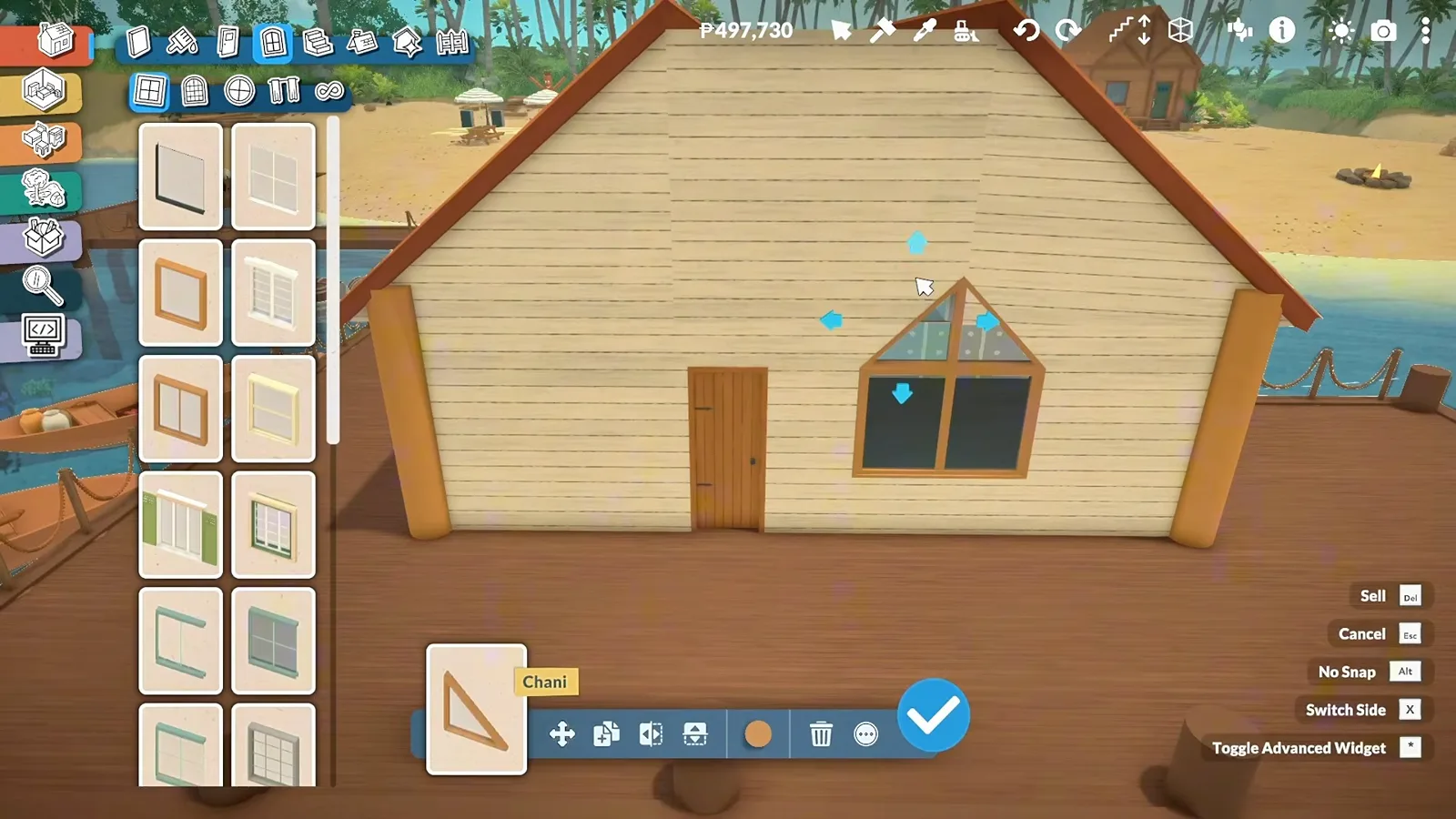
House-shaped window, fish sign, original palette — Willy's at a glance.Watch at 23:00 - 12
Carve the secret shipyard
Behind the shop, the floor is removed so the water shows through, and an arch cut into the side wall becomes the boat's exit to the sea. It reads as a hidden dock rather than a building mistake, and it is what makes the back of Willy's lot worth walking around to see.
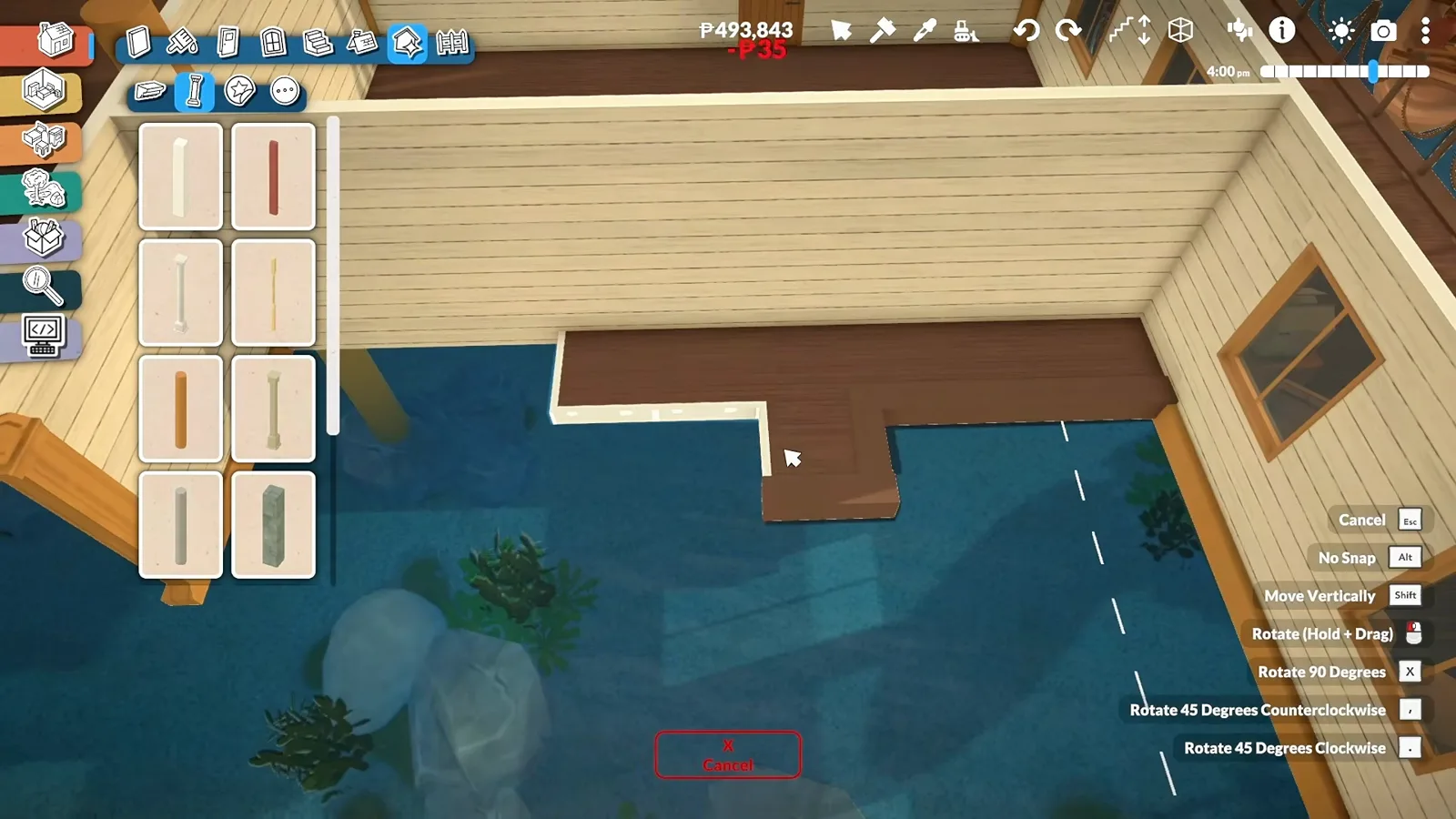
Floor gone, arch in — a boat exit hidden behind the shop.Watch at 24:15 - 13
Sail the boats with closed umbrellas
The little boats around the docks carry goods, as if merchants sail in to trade. Their sails are closed umbrellas painted white — stood upright in the hull they read instantly as canvas. Small merchant boats like these are also what make the water between the piers feel traveled.
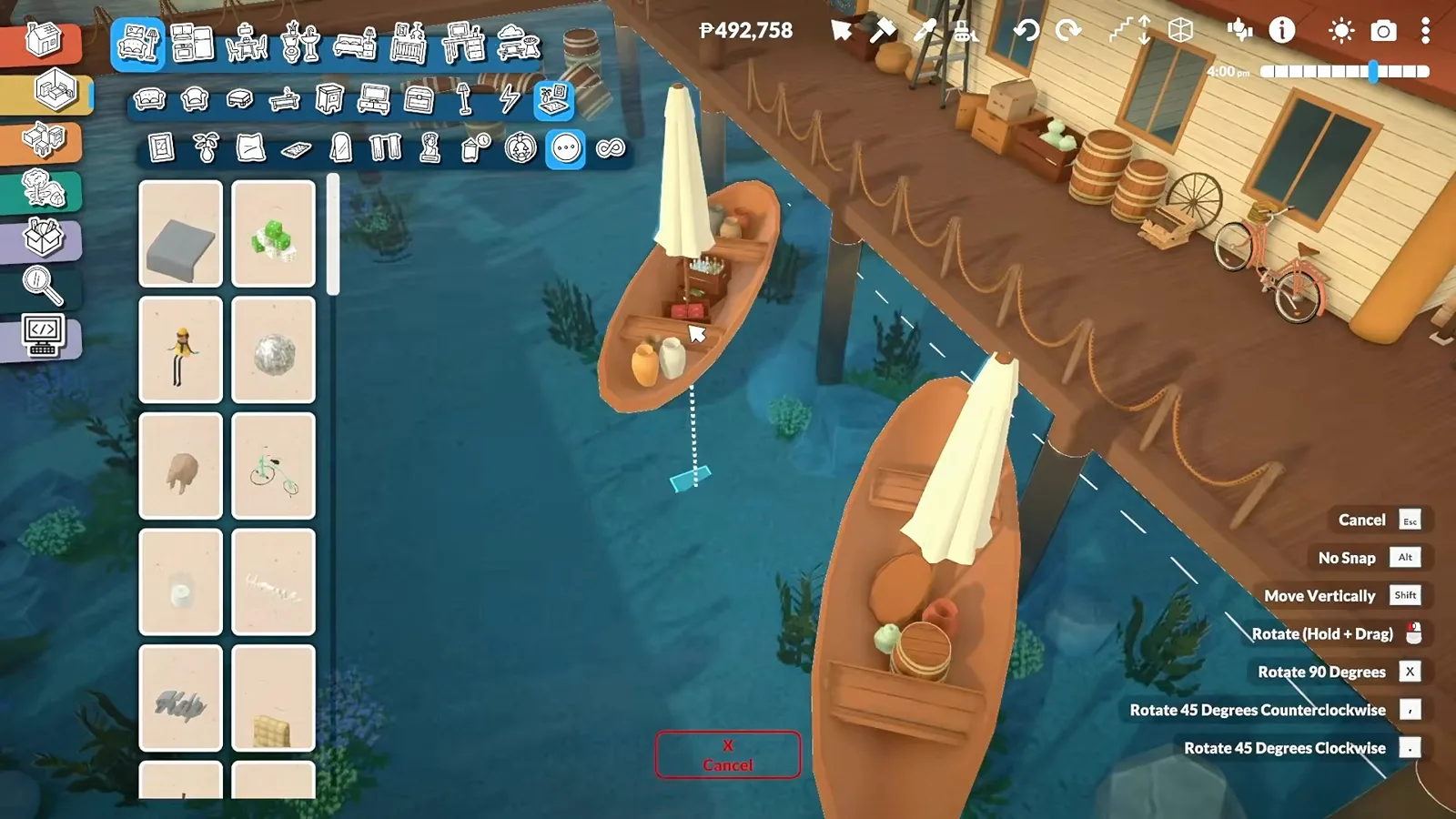
A closed white umbrella is one prop away from a sail.Watch at 24:26 - 14
Load Willy's boat for departure
Willy's boat from the original map gets rebuilt and moored near the docks, barrels and crates stacked on deck so it looks like it just finished loading. The interior never appears in Stardew Valley, so it is free design: an enlarged wall decoration that passes for a ship's wheel, a captain's work desk, a small kitchen and a sofa for the crew.
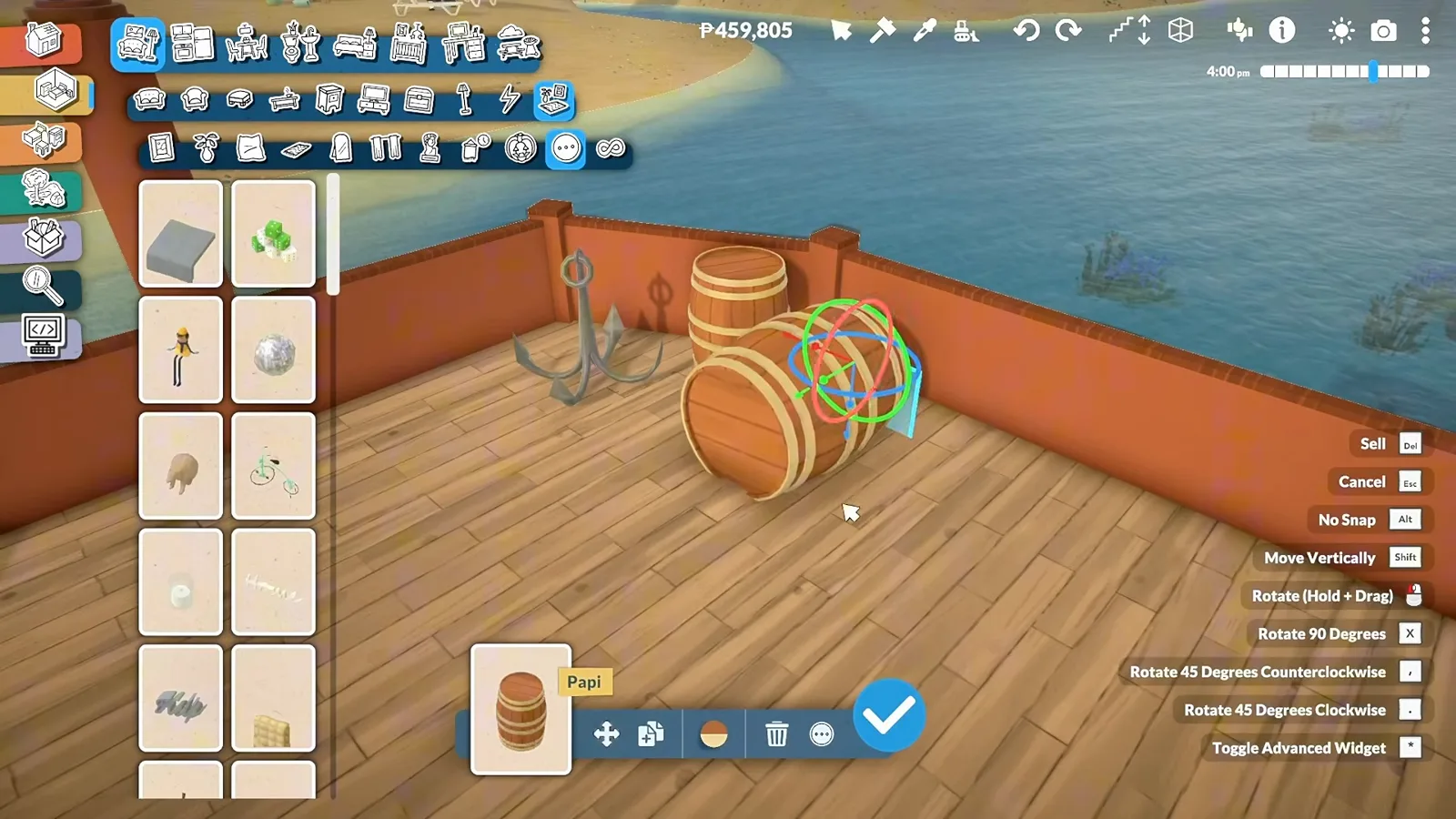
Cargo on deck sells the story that the boat is about to leave.Watch at 27:40
Limits and disclosure
Scope: this episode builds only the beach — the forest, city, farm and mountains of the Stardew map are promised for later episodes and are not covered here. The recreation is deliberately not one-to-one: the narrator adds modern details (grills instead of the communal soup pot, full bathrooms in the houses) to make the world feel lived-in while keeping the classic Stardew look.
Mods: the quadrupled blank map (615×615 m) is loaded through a Workshop mod the video never names. The terrain, painting and building techniques shown in the walkthrough are base-game tools. ToggleEditTown stays on for the whole build — at this scale it is a precondition, not an optional extra.
Unverified: nothing in the episode shows live mode, so whether Paras can walk the beach, fish from the pier or attend the Luau is unknown. How a modded map survives saving and reloading, and how the reef collectibles behave in play, are equally unshown — this page documents the build exactly as filmed.
Stardew Valley beach FAQ
- Can you recreate Stardew Valley in Paralives?
- Area by area, yes. This series starts from a quadrupled blank map loaded through a Workshop mod and rebuilds the Stardew map with base-game terrain and build tools. The beach episode covers the shoreline, the coral reef, Elliott's hut and Willy's fish shop; later episodes take on the forest, city, farm and mountains. It is a fan tribute rather than a one-to-one copy — the creator mixes in modern details on purpose.
- Does Paralives have ladders?
- No. When the fish shop needed the ladder from the original game to connect the store with Willy's room above, the build used a staircase instead. Stairs take more floor space, but they are currently the only built-in way to climb between floors.
- What does the toggleedittown cheat do in a build like this?
- It unlocks town edit mode, which is what lets one player terraform and build across the whole world instead of a single lot. The beach episode keeps it on from the first sketch to the last barrel — without it, the shore, the reef and the piers could not share one continuous ground.
- Is this build affiliated with Stardew Valley or ConcernedApe?
- No. The page documents a fan tribute: YouTuber NanaWillow rebuilt the beach from Stardew Valley inside Paralives as a homage, and this guide lays out that episode's techniques. Stardew Valley is developed by ConcernedApe and Paralives by Paralives Studio; neither is involved in this page.
- How much map space does a project like this need?
- More than the standard blank map offers. The episode loads a Workshop mod that quadruples the empty terrain to 615 by 615 meters — room for the beach plus the river, the buffer zone and the raised forest cliff. The mod is never named in the video, so search the Paralives Workshop for a quadrupled empty map.
Keep building
Create a World reference
Every world-editor limit, cheat and workaround in one page — the tools this beach is carved with.
Farm lot build
A working farm lot with a barn, stalls and planted fields — the Stardew farm mood without the crossover.
Farmhouse build
A cream country house with a wraparound porch and a full family interior.
Pond build
A garden-scale pond with a dug basin and three ways to fake the water.
Ramen shop build
An ugly apartment turned into a ramen shop — the other video guide released alongside this beach.
Mediterranean town build
An empty map grown into a hillside Mediterranean town, one district at a time.