
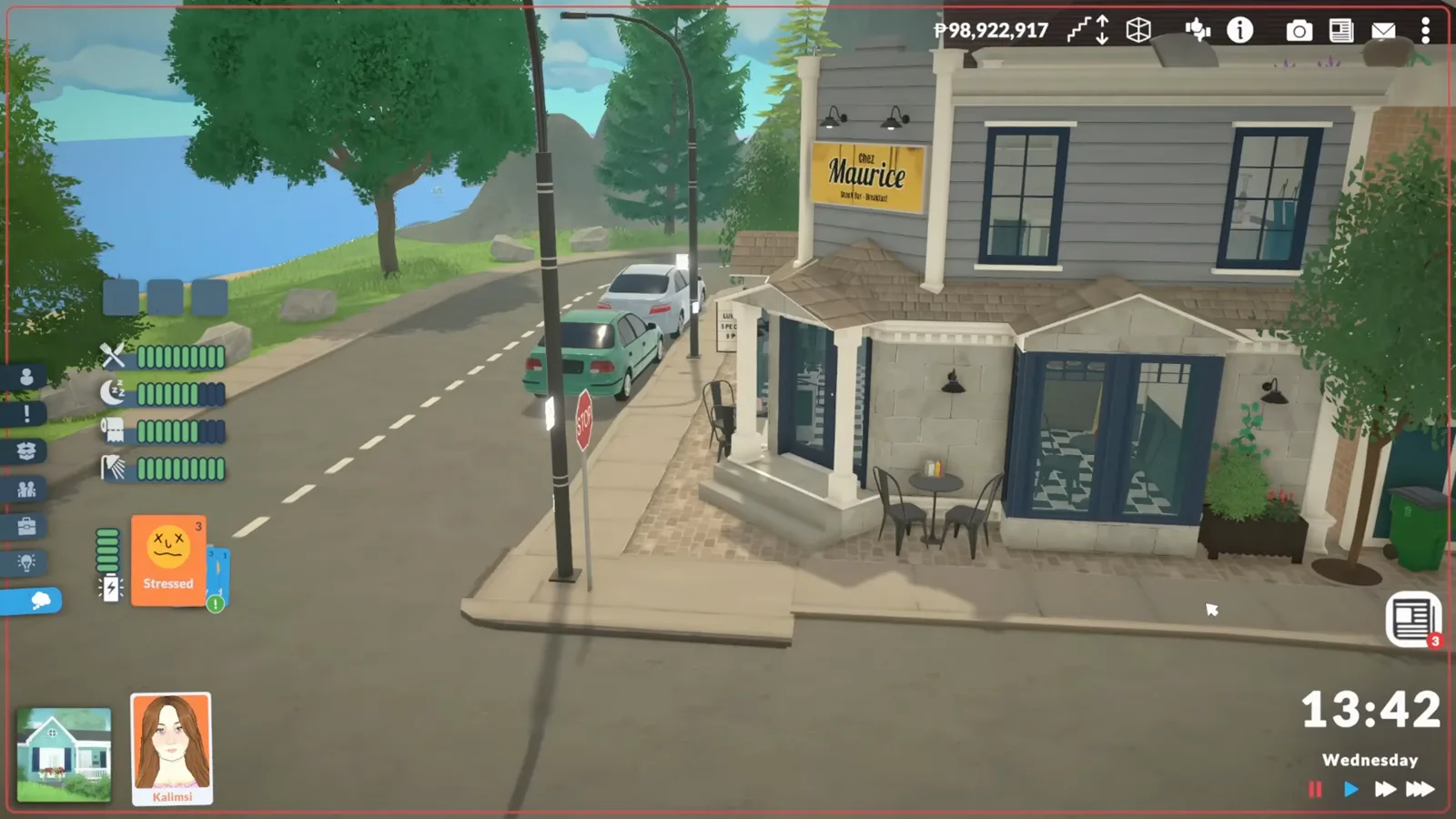
The short version
Paralives has no restaurant or business system as of 0.1.8b — so a 'functional' restaurant is a build with exactly one working mechanic: food in a display case that Paras can actually purchase and eat. This sixteen-step guide follows kalimsi's Create A World #6 as they rebuild a corner lot around its fixed Chez Maurice sign, stretch chairs into sittable booths, and stage a full kitchen that only pretends to cook.
- No restaurant system exists as of 0.1.8b — 'functional' means orderable food and sittable seats, not an open business.
- The booth trick: chairs stretched with the Advanced Transform tool become booths Paras can sit in, pull-out animation included.
- Display-case food works on camera: hamburgers, hot dogs, poutine and pie are purchasable — everything behind the counter is decorative.
- Built on the last free corner lot of kalimsi's custom Create A World town — a generic restaurant, not an official Melino lot.
The corner shell
A corner lot rebuilt around its Chez Maurice sign
The last lot on the first city block of kalimsi's custom world gets the series treatment: stacked rooflines, a navy-and-siding facade planned around a sign that can't be recolored, and a hardscaped sidewalk — with the roof kept decorative and the alley given over to one small dumpster.
- 1
Stack the corner shell: floor, roofline, floor, roofline
This is the last free lot on the first city block of kalimsi's custom Create A World town, and the restaurant starts as pure massing: a ground floor, a roof band, a second floor, another roof band. To make both street sides read evenly, the whole footprint is pulled in by one tile per side — corner lots reward planning before decoration.
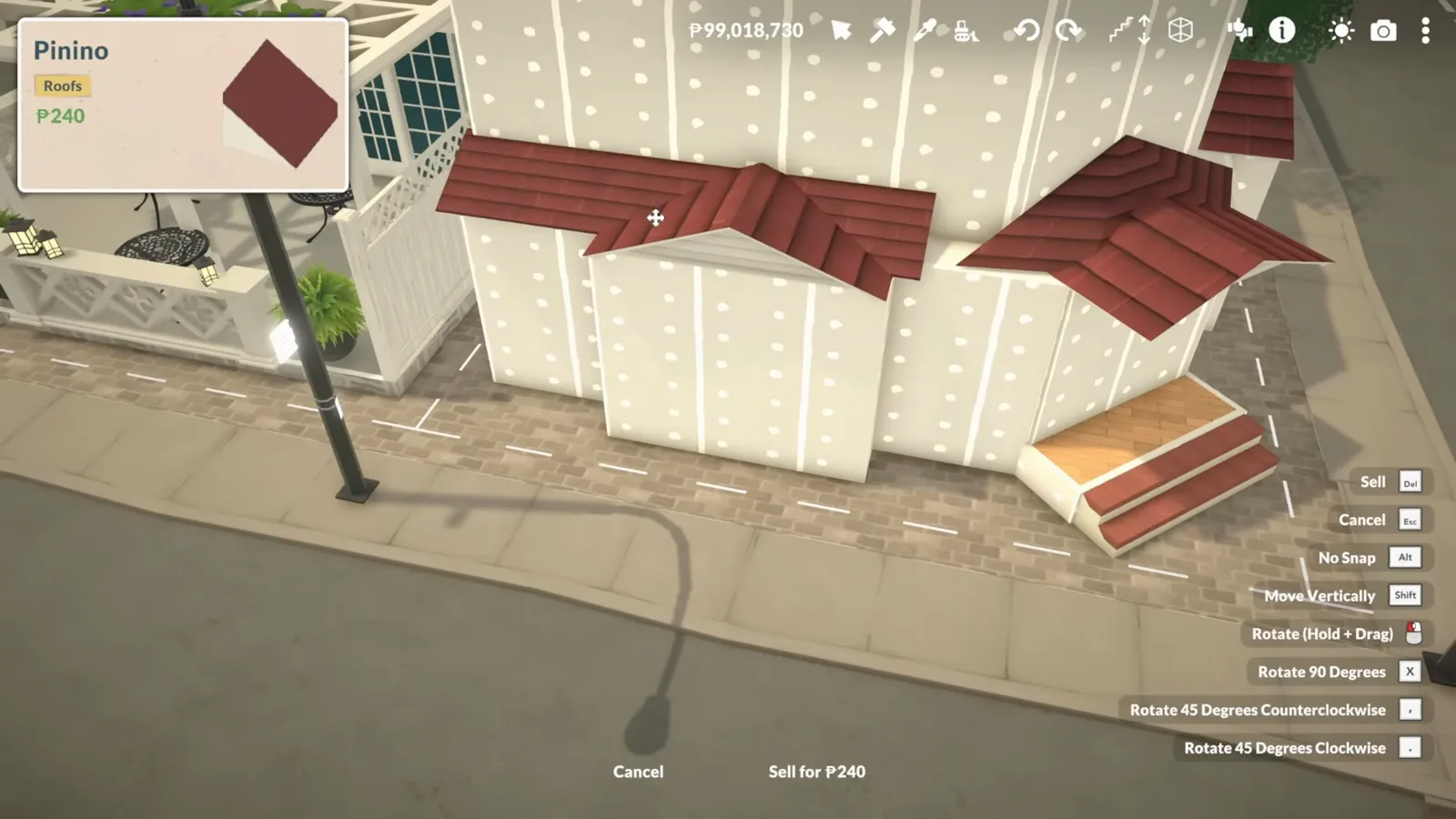
Roof band, floor, roof band — the corner massing is settled before any color or furniture.Watch at 3:22 - 2
Keep the Chez Maurice sign, bend the facade around it
The corner lot carries a Chez Maurice sign — a 'Snack Bar - Breakfast' sign object whose grime and yellow can't be recolored ('I wish I could change this sign'). Rather than fight it, kalimsi makes the windows and trim navy, follows the wall color to match, then returns to the earlier siding, which pairs with the navy 'in almost like a weird monochromatic way.' Sign colors are fixed on this object — plan the palette around what you can't change.
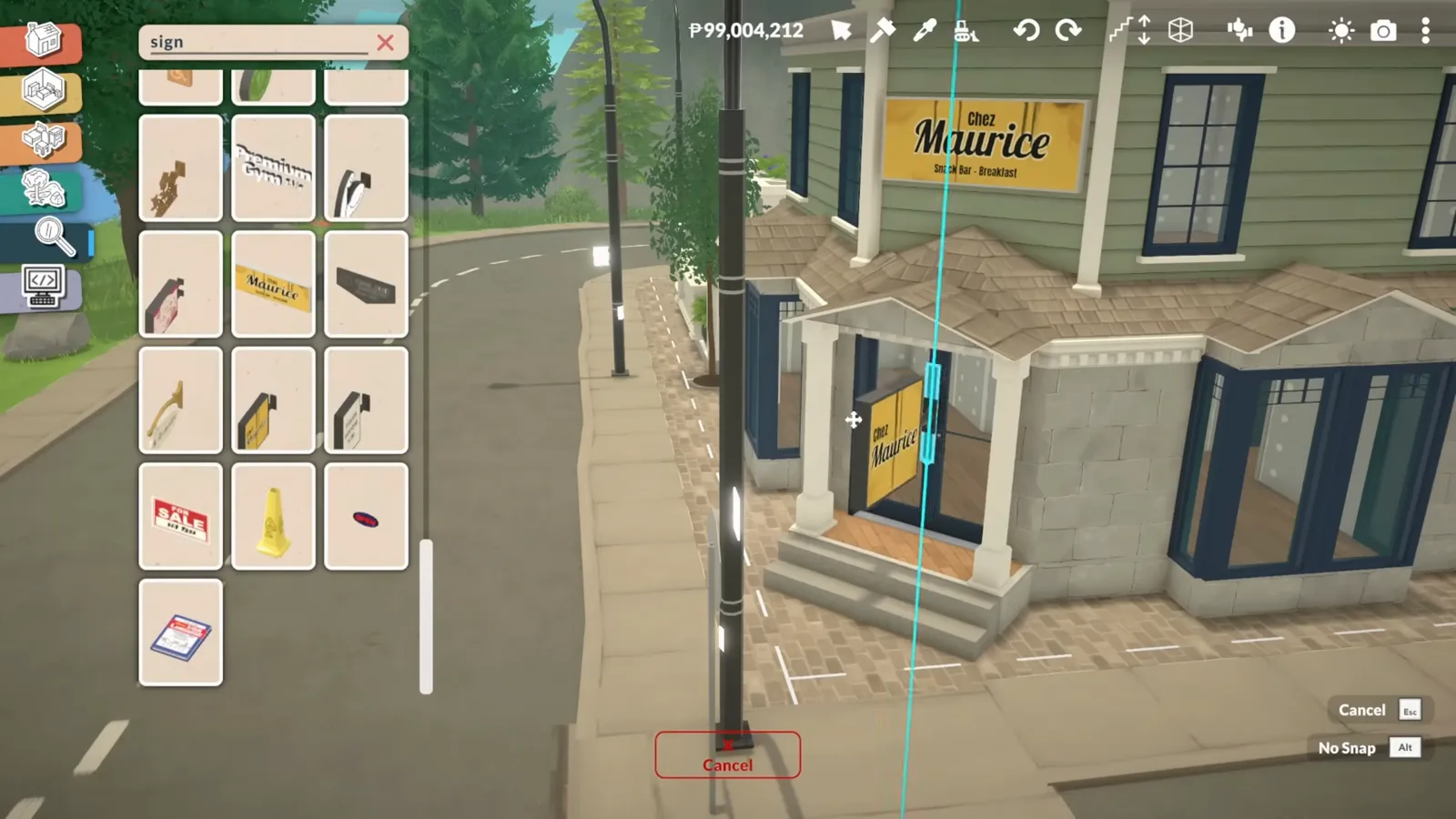
The sign stays as-is; navy trim, matched walls and the old siding do the adapting.Watch at 5:12 - 3
Set a couple of patio tables for waiting patrons
Outside stays deliberately sparse: a couple of small tables with chairs — 'maybe patrons use whenever they're dining' — plus planters and landscaping 'to give this place a little bit of life.' Nothing more; a fast-food facade doesn't need a patio scene.
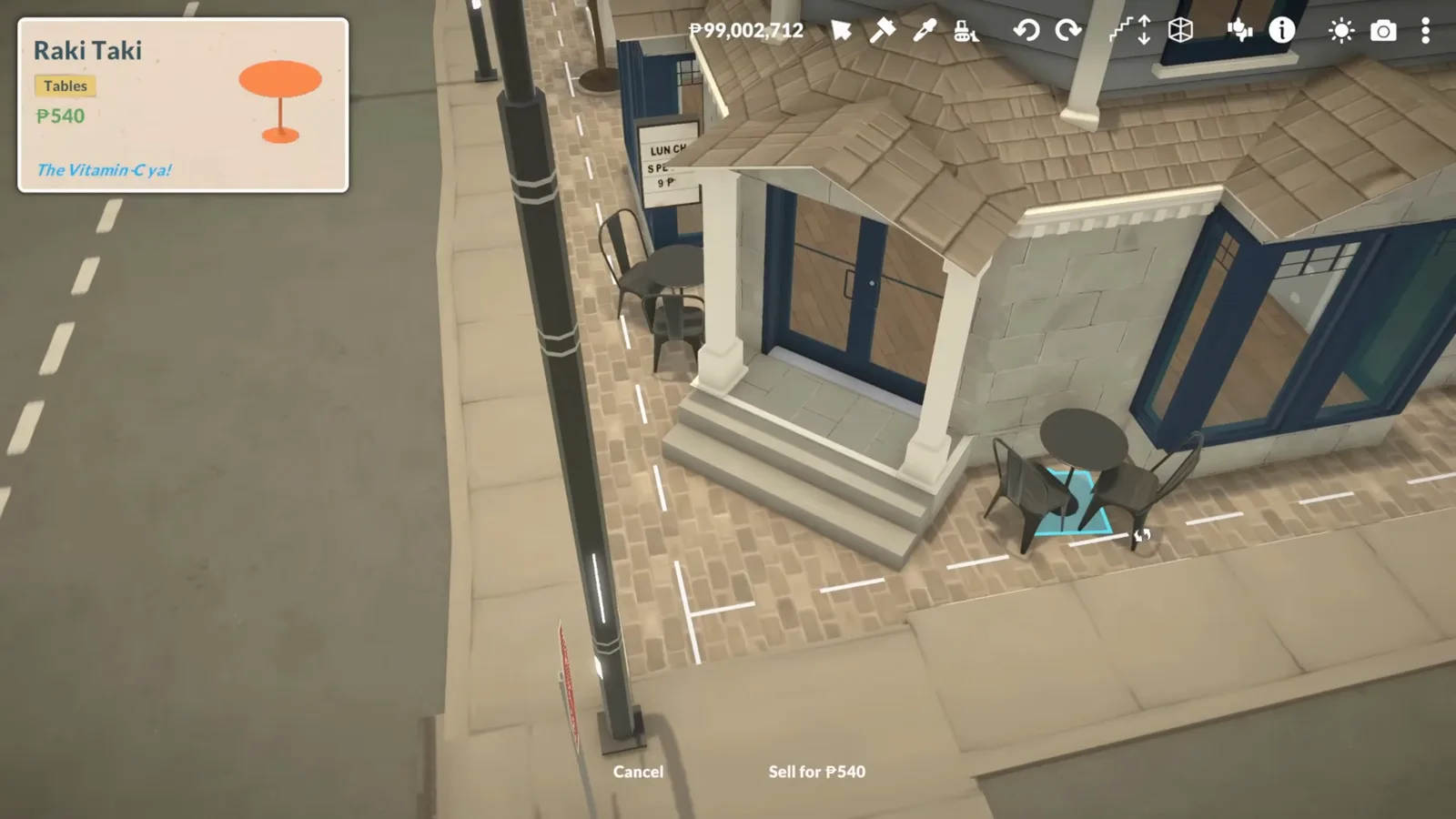
Two bistro tables, planters, done — the sidewalk stays quiet on purpose.Watch at 6:08 - 4
Cap it with a flat roof — and keep it decorative
The top of the building gets a flat roof 'pretty similar to what I did with the laundromat in the last video' — but unlike that rooftop patio, visible here over the fence, this one is 'just decorative', not accessible. The gap left by pulling the building in becomes an alley: the standard dumpsters are huge, so a small one takes the corner.
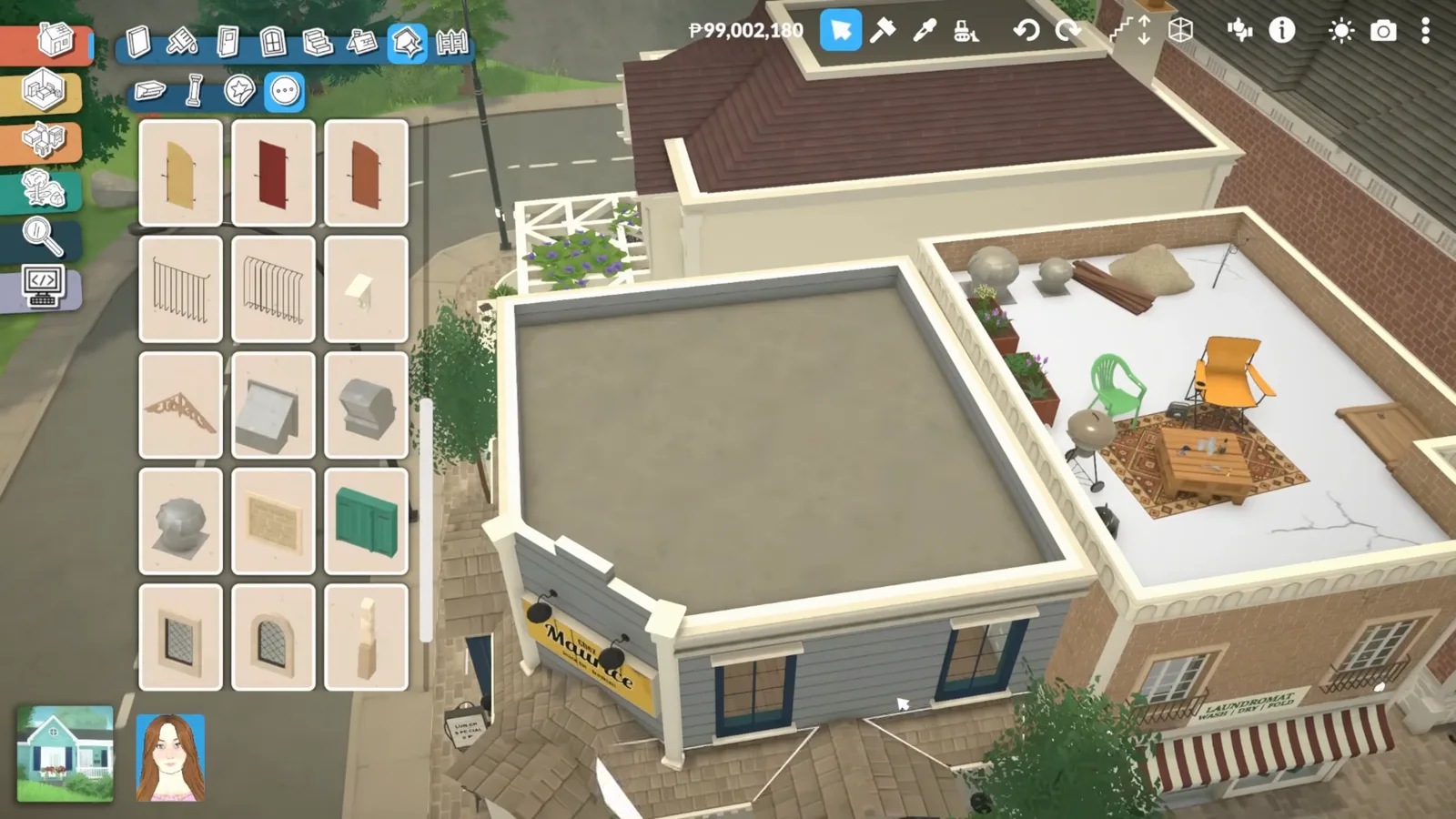
The laundromat next door got the rooftop patio; this roof is a lid, not a room.Watch at 6:48
Downstairs: the dining room
Checkerboard floor, stretched-chair booths, one working counter
Moving the kitchen upstairs frees the whole ground floor for seating — and produces the build's two signature moves: chairs stretched into booths that pass the sit test, and a display case whose food Paras can genuinely order.
- 5
Move the kitchen upstairs before you furnish anything
The first floor plan put the kitchen downstairs; the pivot: 'I'm going to actually have the kitchen be upstairs… that way I can just fit more than like five tables in, and I can have a substantial counter.' The ground floor goes entirely to dining plus a half bath for Paras, and the dead upstairs space becomes the cook line.
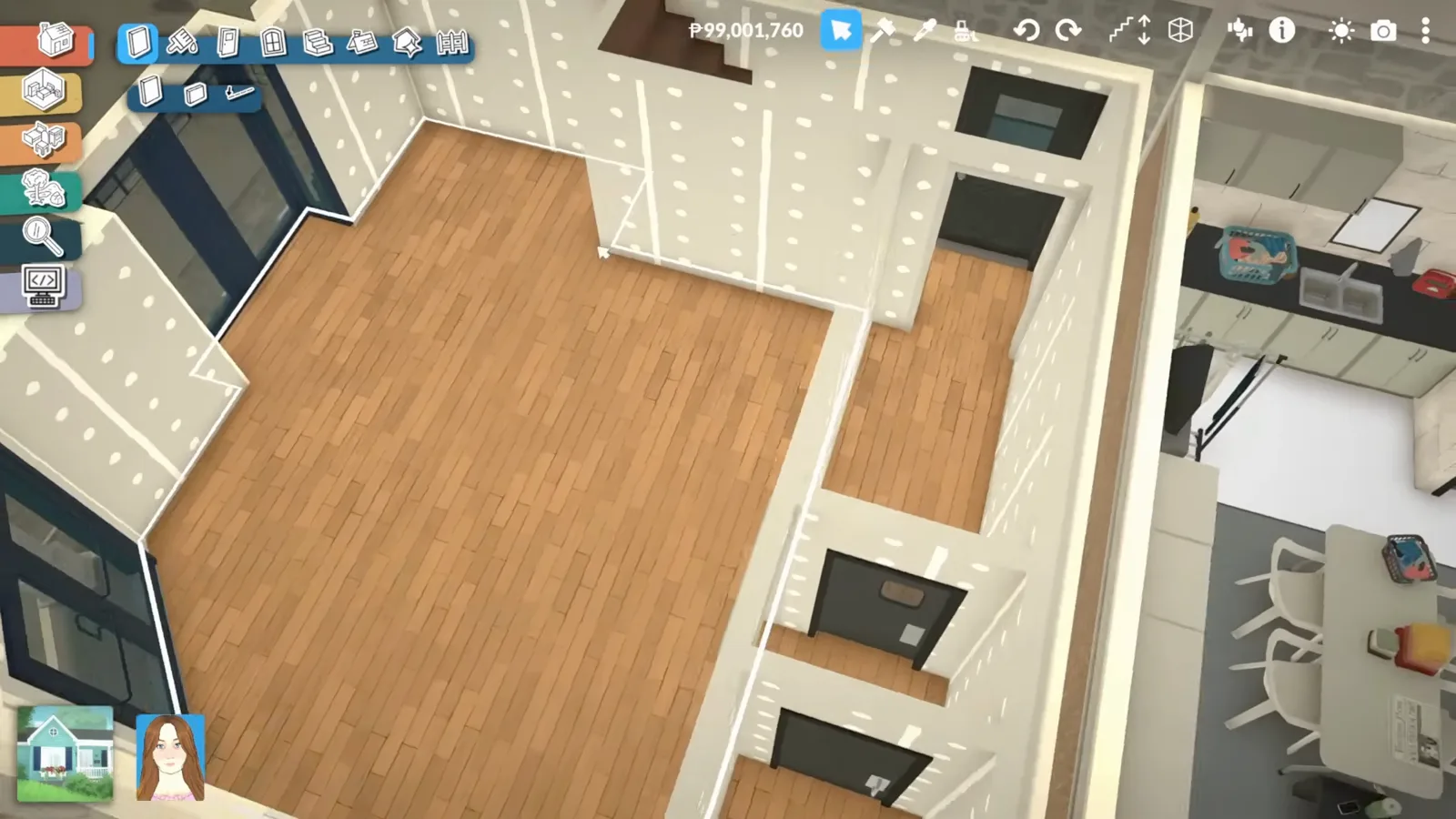
The upstairs dead space turns into the kitchen, and the whole ground floor is freed for seating.Watch at 7:52 - 6
Lay the checkerboard floor and line the walls with booths
The yellow-and-navy palette gets echoed underfoot: a black-and-white checkerboard floor, then booth benches and round black tables run along the walls. Benches against the wall keep the middle of the room open for the self-serve counter later.
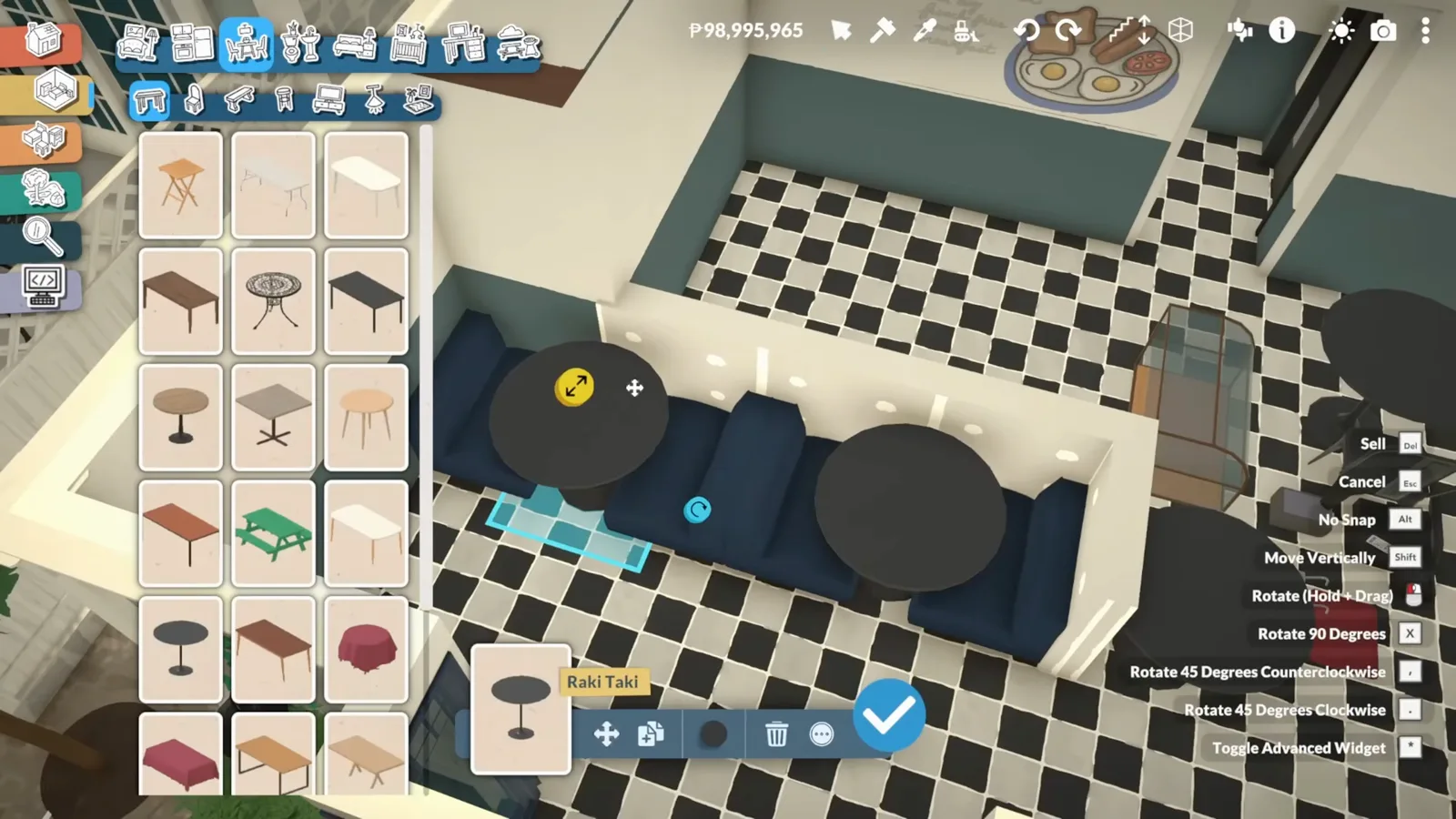
Checkerboard underfoot, navy benches along the walls — the dining room reads fast-food immediately.Watch at 8:58 - 7
Stretch ordinary chairs into booths with the Advanced Transform tool
The experiment: booth-style seating fails the sit test — 'No, I can't sit.' The fix is this page's best trick: take a normal chair, stretch it with the Advanced Transform tool, and it works — 'there is just an animation of the chair kind of being pulled out and pushed in.' In the final tour kalimsi calls them 'fake booths… really just chairs that have been stretched out to look like booths,' but Paras can sit in every one.
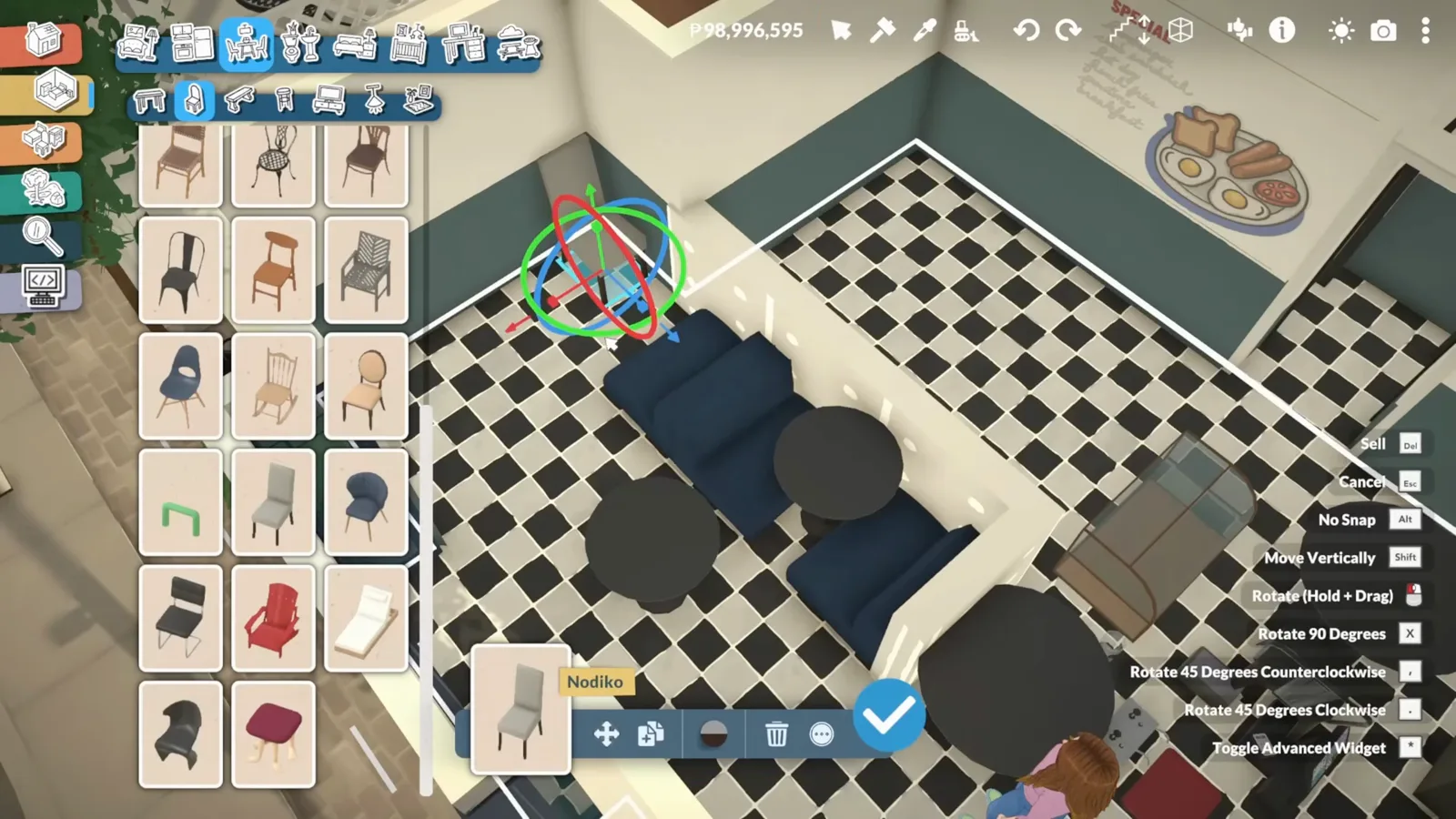
One chair, stretched: the booth look passes the sit test with its pull-out animation intact.Watch at 9:18 - 8
Build a self-serve station: trays, sauce, napkins
By the door, a counter is slimmed down with the Advanced Transform tool — 'I took another counter and I made it so that it's not as wide or I guess as thick' — and dressed as self-serve: fast food trays and a sauce container on top. Every table gets a napkin holder plus ketchup and mustard bottles in a holder tray, and a few numbered signs 'as a way for the server to know to drop off their order' — imagined staffing, staged with props.
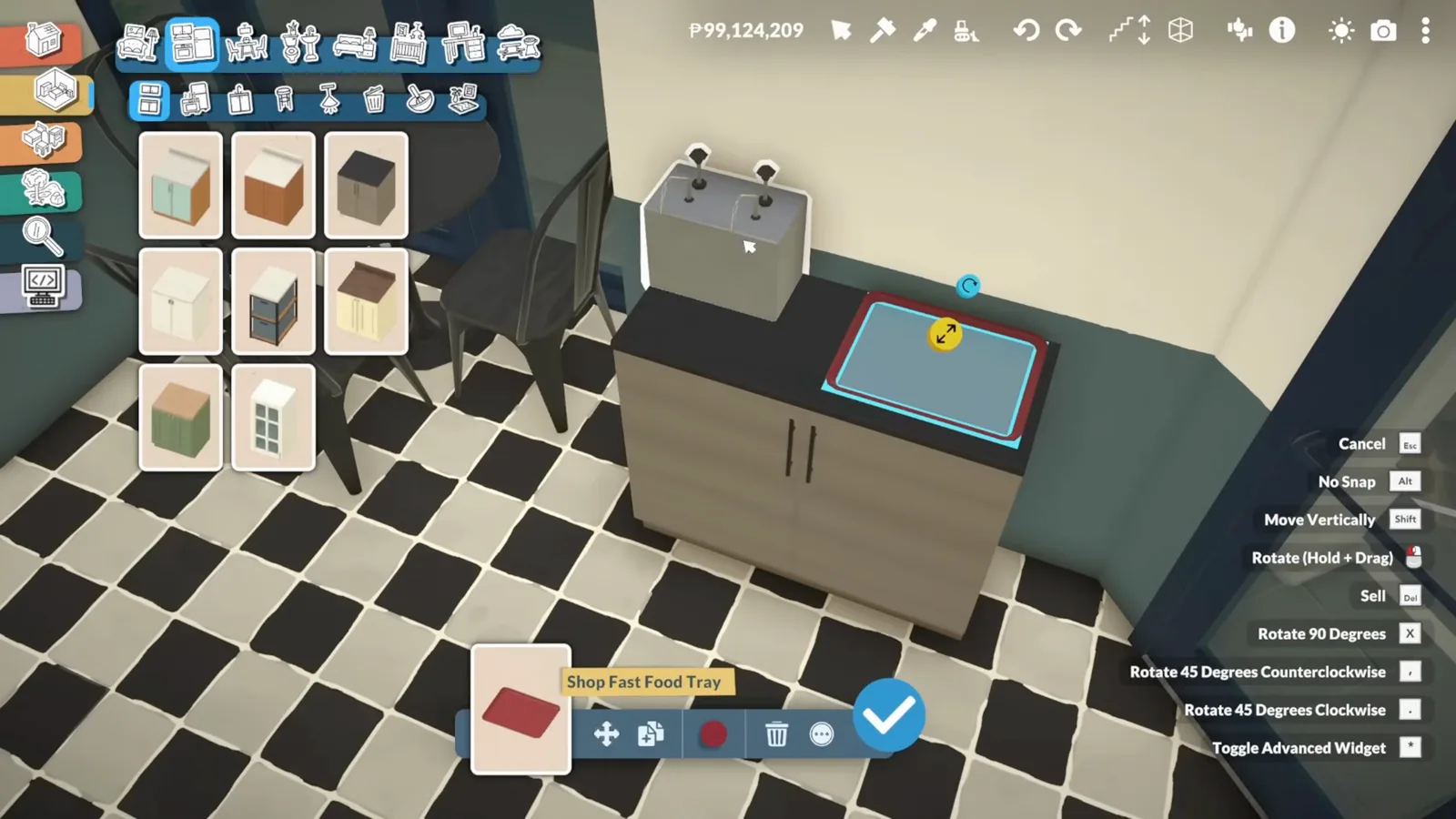
Trays and sauce pumps do the staff's job — the counter is the service, such as it is.Watch at 10:28 - 9
Stock a display case and prove Paras can order
The functional heart of the build: 'I took some food and I put it into this display case here. And so now I just need to make sure that it's actually possible to order this food.' The on-camera test passes — 'Can I purchase it? Yep.' The case ends up stocked with hamburgers, hot dogs, poutine and pie, and an order card opens for the Para at the counter. This purchase interaction is the entire 'functional' claim — there is no restaurant system behind it.
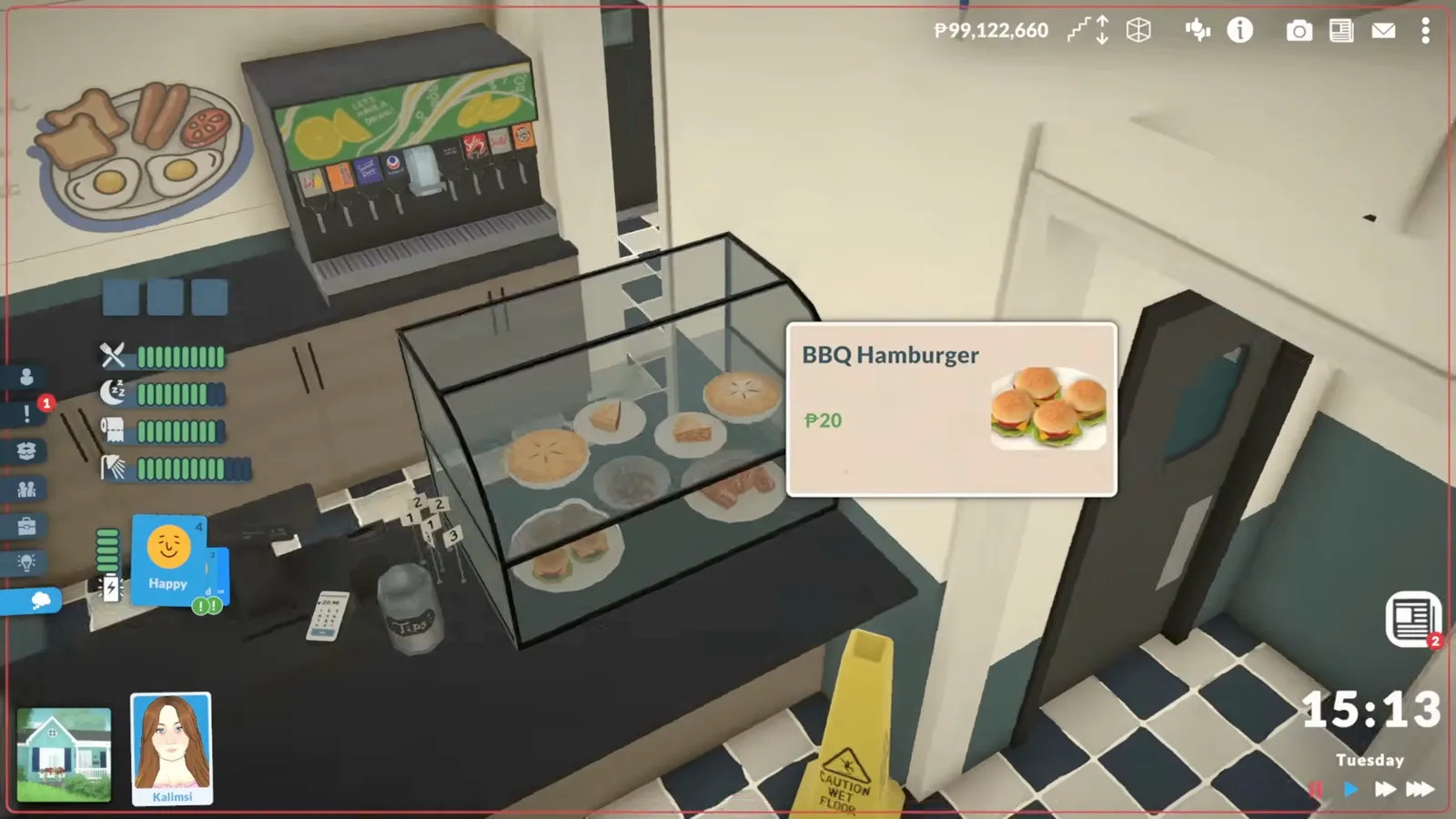
The purchase test passes on camera — the display case is the one part of the restaurant that truly works.Watch at 11:40
Upstairs: kitchen and staff corners
A full kitchen that only pretends to cook
Cooking left, dishwashing right, a pantry of staples, unopened deliveries, lockers for invisible staff — the upstairs is where the prop-work shines, including toilet-paper-roll paper towels and color-coded cutting boards.
- 10
Tuck a locker corner behind the dining room
A row of lockers gives invisible staff somewhere to 'store their stuff, kind of drop off their coats' — with cleaning supplies nearby and a chicken-and-chick stuffed animal 'to kind of show that there's some personality here.' Bonus discovery: lockers can be drag-placed as a whole row — 'I didn't realize that you could just drag it like that… that is such a game changer.'
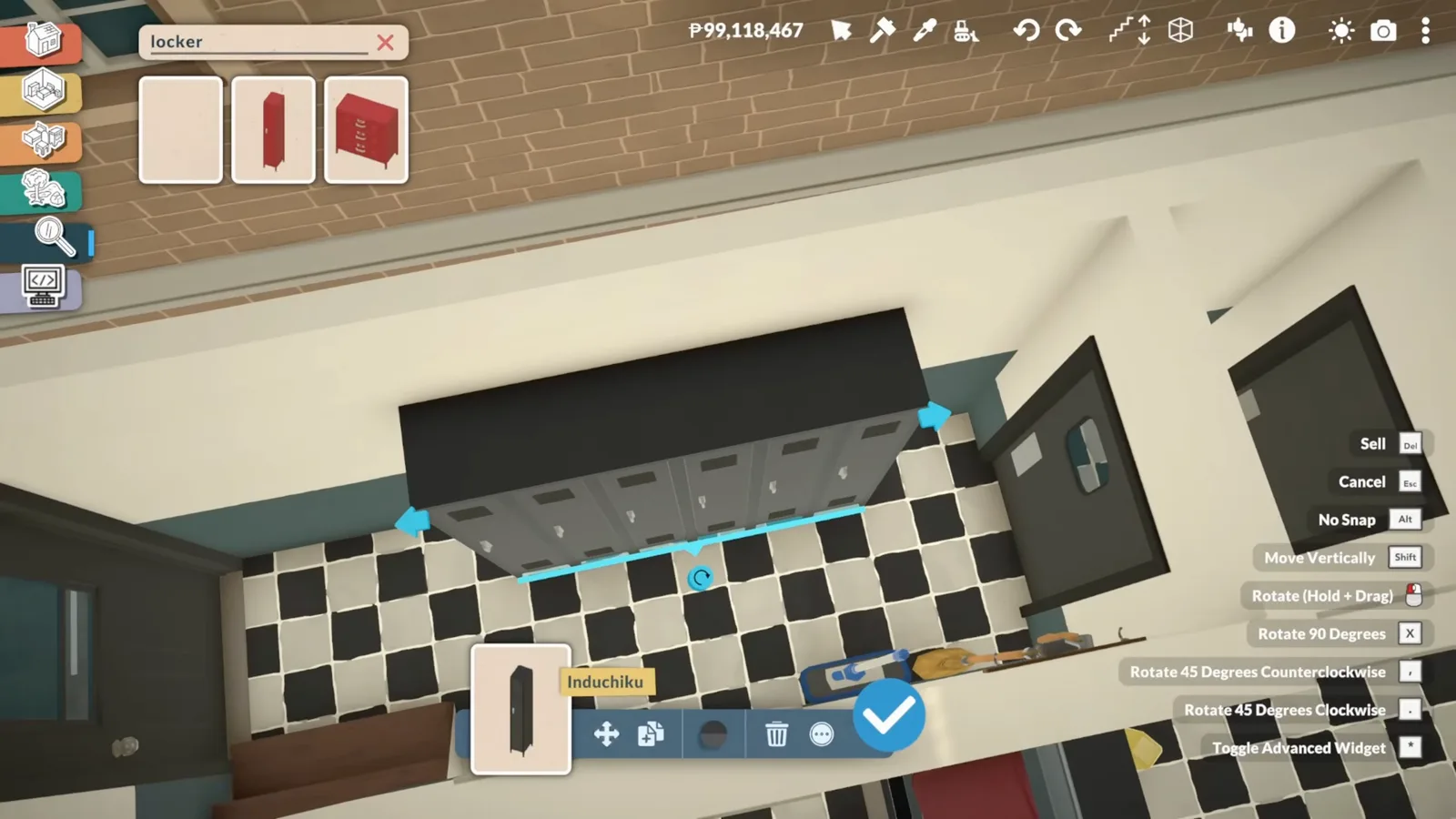
Lockers, cleaning supplies, one stuffed chicken — the employee corner is set dressing with a punchline.Watch at 12:35 - 11
Split the kitchen into cooking and dishwashing zones
Upstairs, one side is 'the main cooking area, whereas over here is really the more like dishwashing, cleaning area.' One snag: the range snaps only to the wall while the stoves float, so the Advanced Transform tool twists the hood into line. Pots and pans go on the stove; the dish side gets drying racks and spare dishes as an overflow.
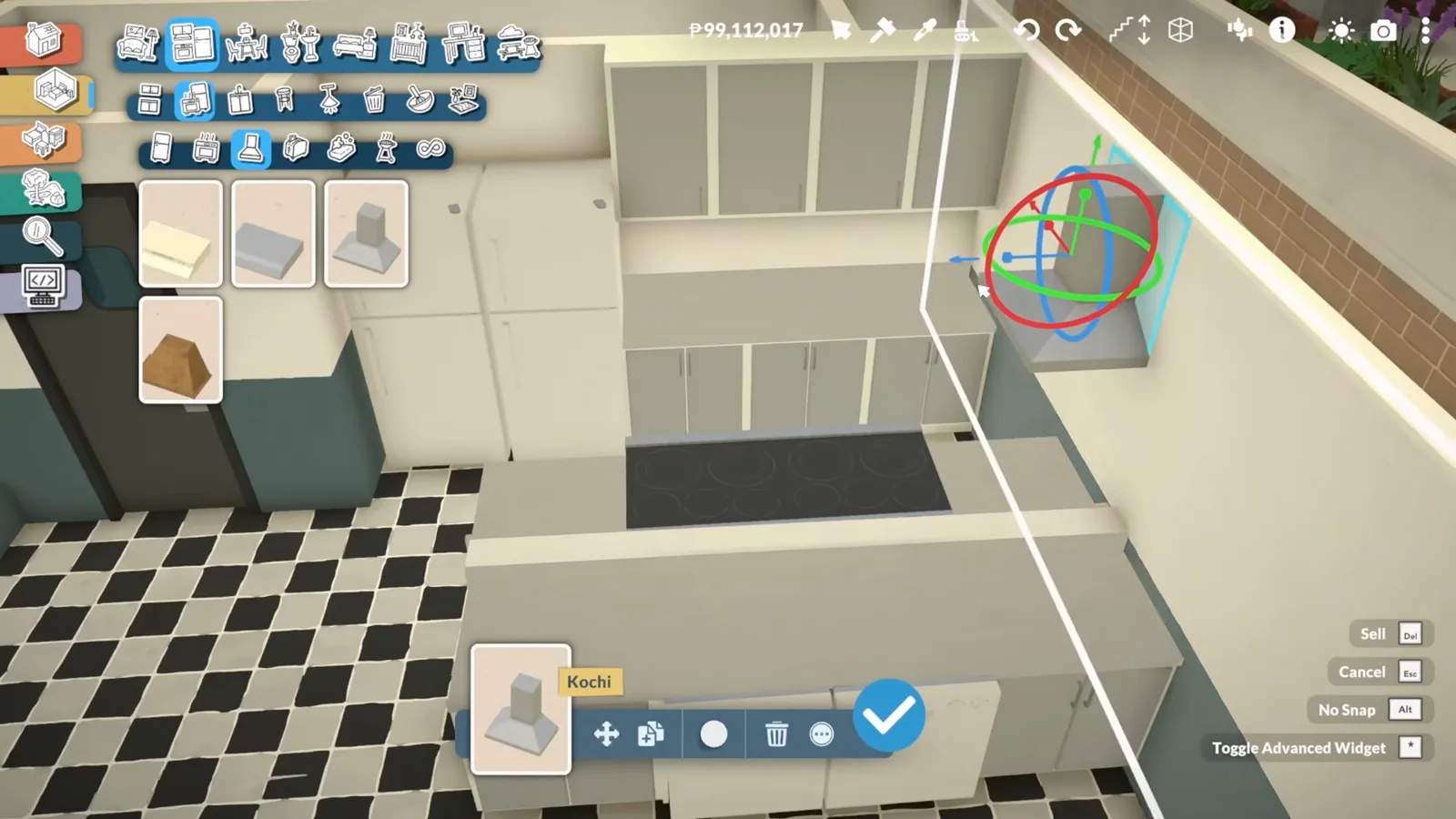
Cooking left, dishes right — and the hood twisted level with the stoves it serves.Watch at 14:06 - 12
Add a pantry and yesterday's unopened deliveries
A cabinet comes out and a big shelf goes in, 'full of different ingredients and pantry staples that the chefs would probably use.' Cardboard boxes of food lean against it 'as if maybe they got some deliveries recently and they just haven't got around to unpacking,' and rugs on the checkerboard pass as non-slip kitchen mats. None of it is functional — all of it is why the room reads as a kitchen.
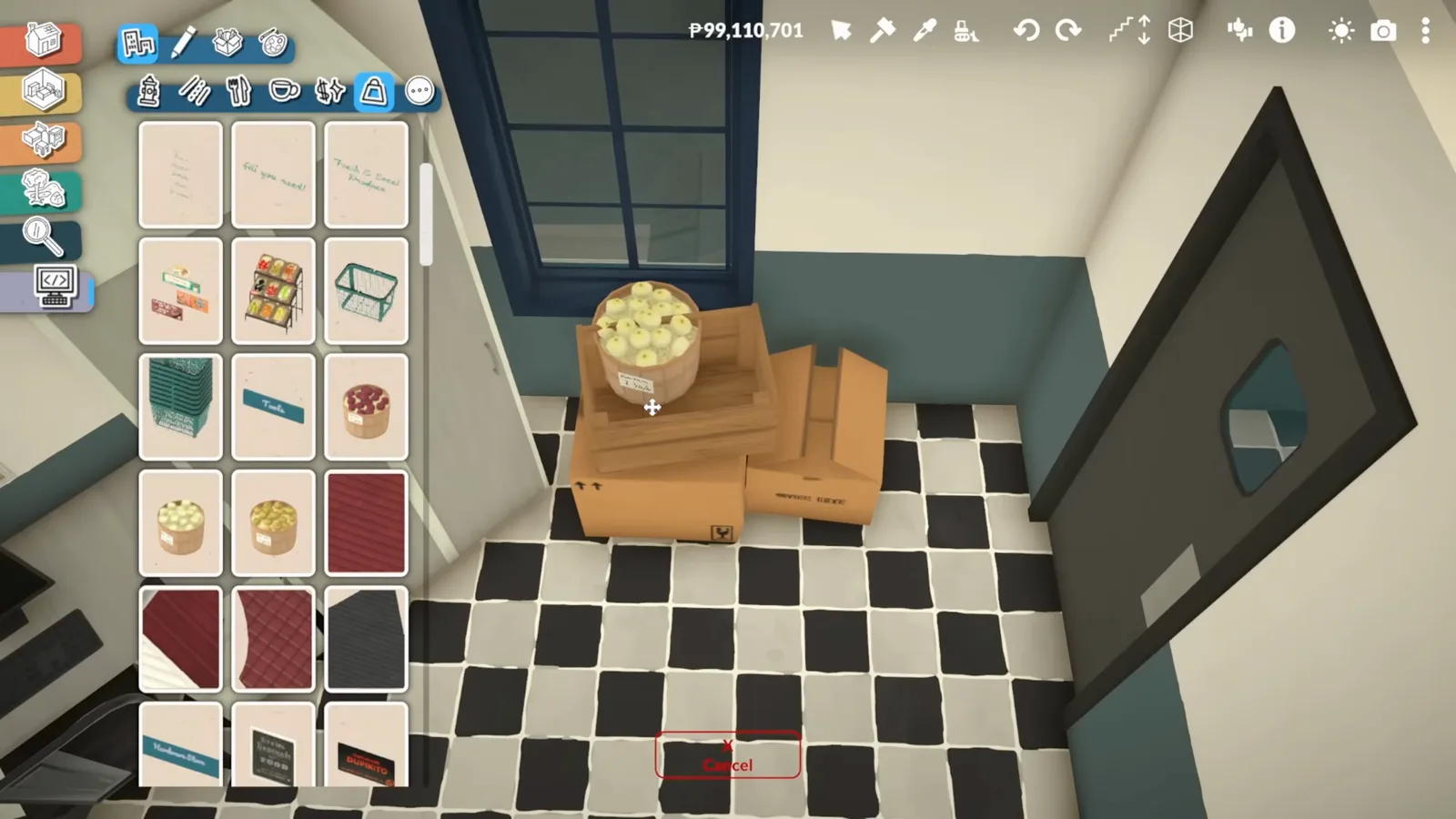
Unopened deliveries and a stocked pantry: staging that convinces without a single mechanic.Watch at 15:02 - 13
Fake paper towel rolls from stretched toilet paper
'We technically don't have paper towel rolls in the game. However, we do have toilet paper rolls' — so a roll is scaled a little taller, copied a bunch of times, and shelved: 'it looks like there are a bunch of paper towel rolls on this pantry shelf now.' A classic Paralives workaround: right shape, wrong label, and nobody can tell at play speed.
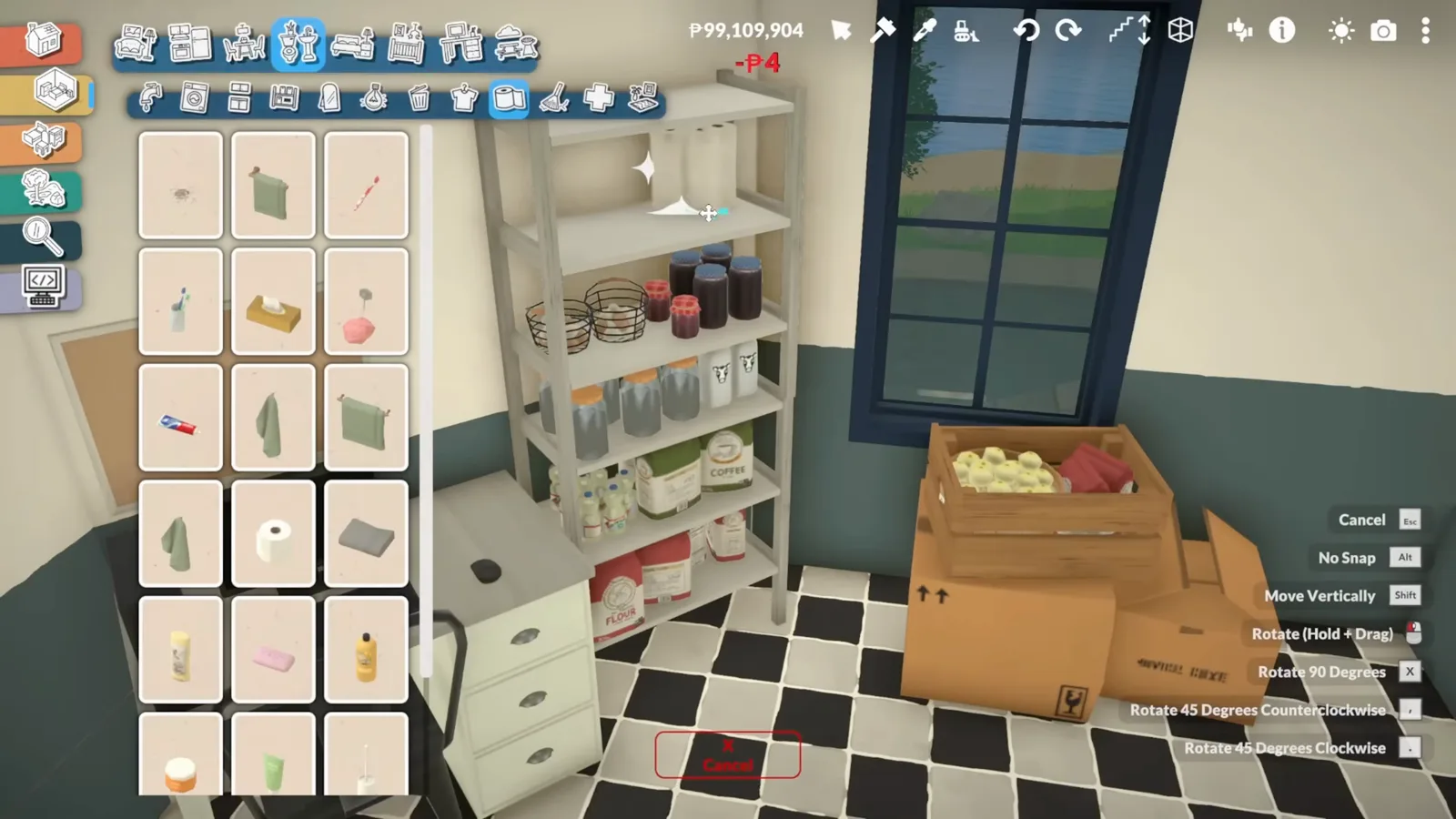
Toilet paper, stretched and multiplied — instant paper towel stock for the pantry shelf.Watch at 16:35
Finishing touches and the night tour
Prep counters, a dark play-test and the honesty tour
The build closes with detail work — color-coded prep, banner decor in the restaurant colors — one near-miss with lighting that every builder should steal, and a closing tour that says out loud which props are decorative.
- 14
Color-code the prep counter like a real kitchen
'In a lot of kitchens the colors of cutting boards kind of indicate what food is meant to be prepped on it' — you wouldn't prep veggies on a board that just had raw chicken. kalimsi runs with the logic: a set of different-colored cutting boards on the prep counter, with bread laid on one 'just to make it look just slightly more realistic.' Real-world knowledge substitutes for missing props.
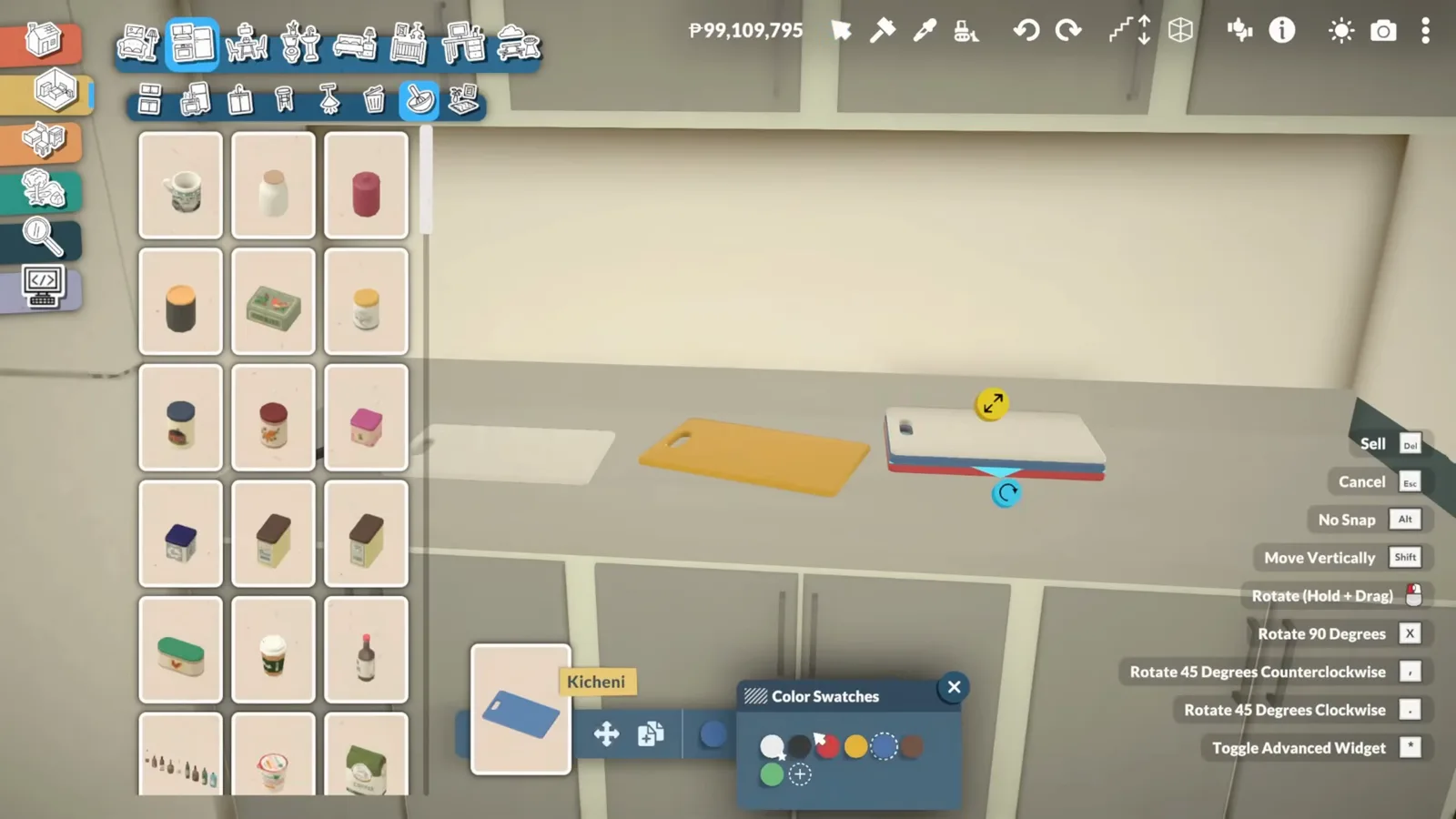
A cutting board per food group — the color code is borrowed straight from real restaurant kitchens.Watch at 17:02 - 15
Play-test at night so a finished build doesn't ship dark
'I finished this build and I was going in and play testing it and then it got to night time and I realized I didn't put any lights in this build.' The catch happens before upload — 'I totally would have just moved on and finished this build and uploaded it without even realizing.' The fix is pendant lights over the dining room, placed in the dark. The habit matters more than the lamps: check every build after sundown.
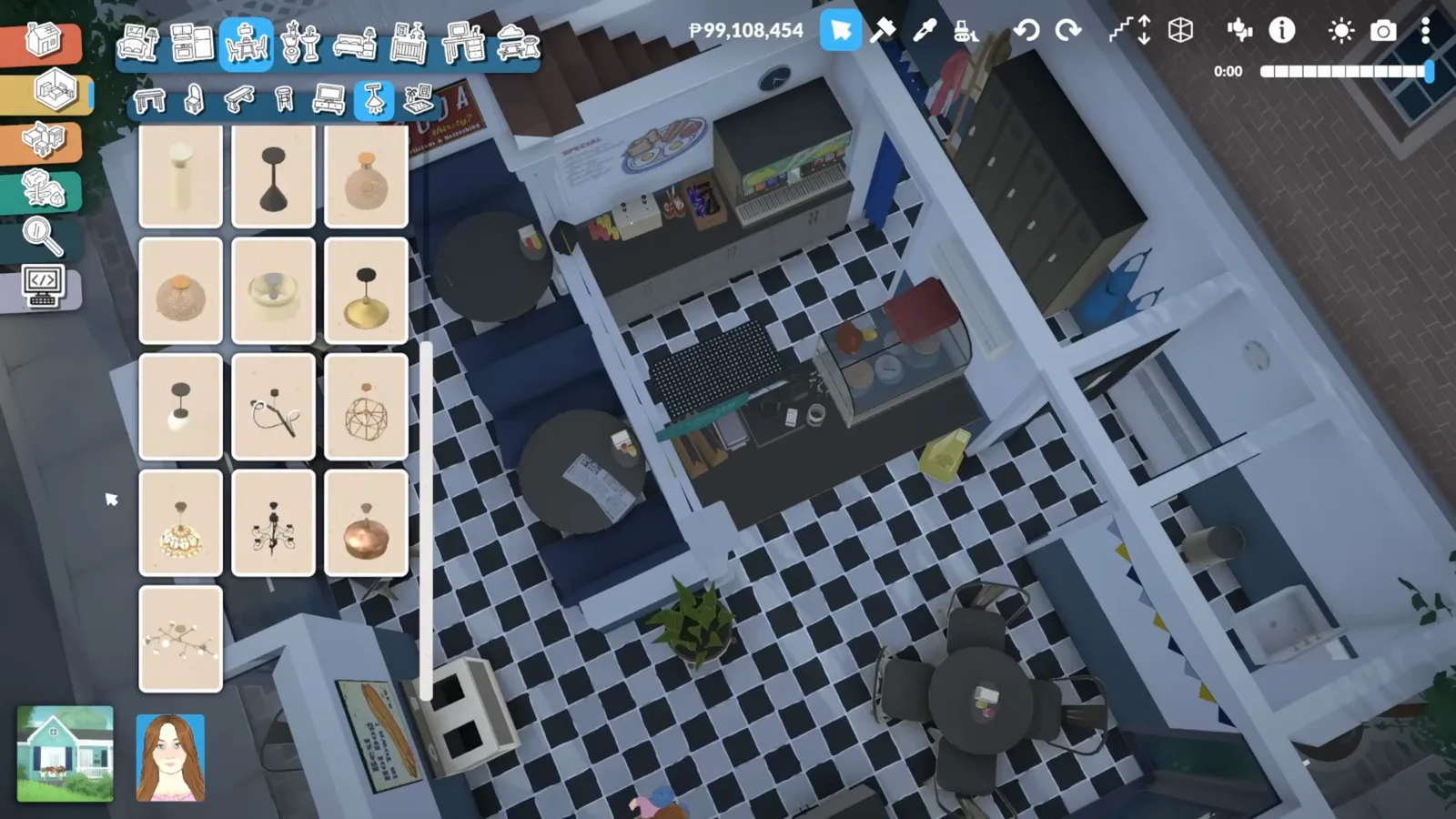
Night fell during the play-test and the whole build was unlit — caught by one in-game evening.Watch at 18:33 - 16
Tour the finished build and separate function from set dressing
The closing tour draws the line this page keeps drawing: the display case takes real orders, and everything behind the counter — 'the soda machine, these chips, these ketchup and mustard bottles, the online ordering stand — it's all decorative, but… it makes it really feel like it's a restaurant.' Stretched-chair booths seat Paras, the half bath and locker corner fill the back, the kitchen runs upstairs. The build posts to the Steam Workshop like the rest of the series.
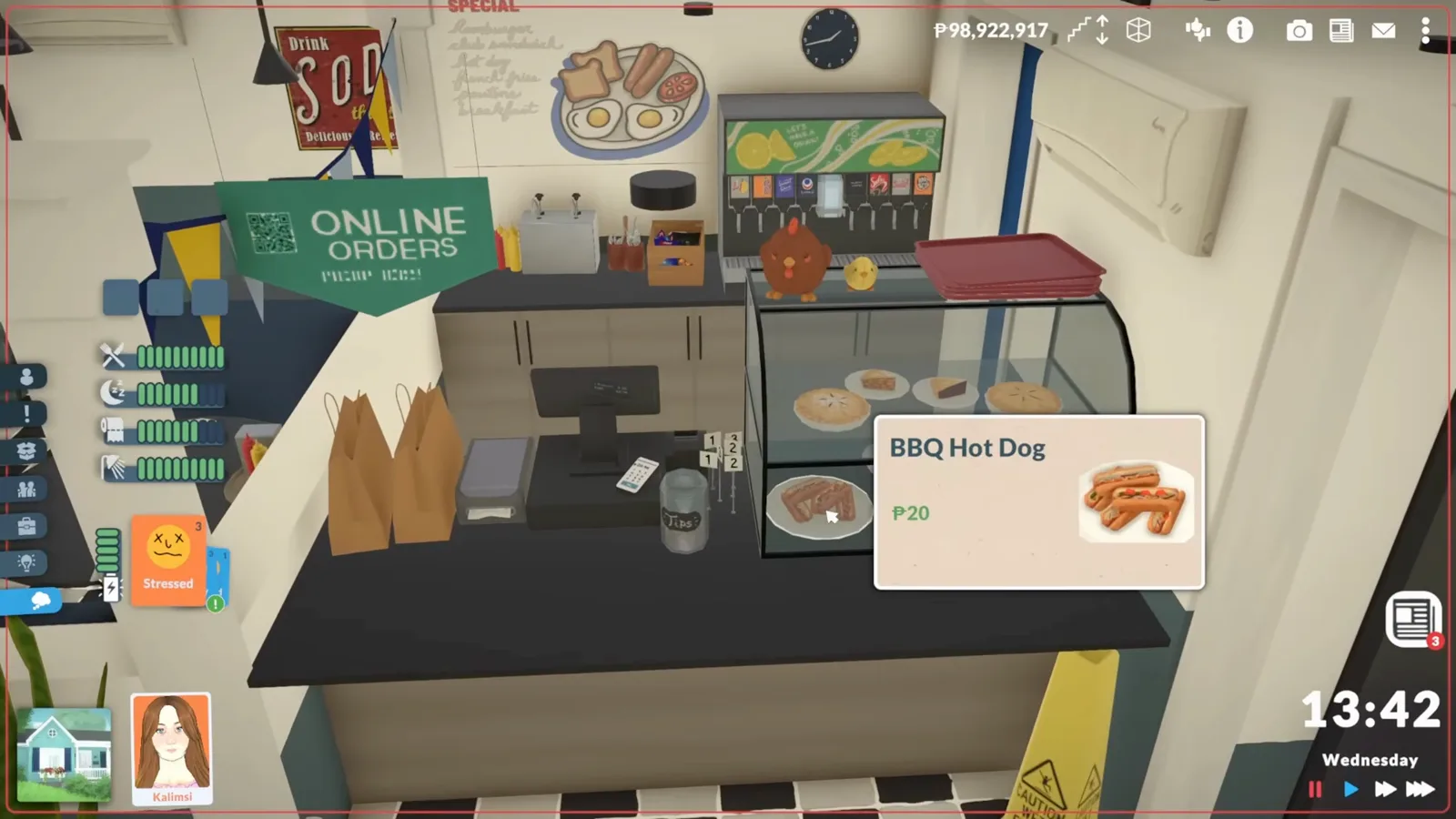
The Online Orders stand and soda fountain are pure set dressing — only the display case takes orders.Watch at 19:22
A restaurant is a build, not a business
As of 0.1.8b Paralives has no business, staffing or restaurant-operating system: there is no way to open a venue, hire a cook or cashier, set a menu price, or have customers arrive on a schedule. Nothing in this build earns a simoleon. The 'FUNCTIONAL' in the source video's title is the creator's own framing for a narrower fact — food placed in a display case can be purchased by a Para, and Paras can sit and eat — and this page keeps that line visible throughout.
What the video proves on camera: the display-case purchase test ('Can I purchase it? Yep.'), Paras seated in the stretched-chair booths, and the eat interaction around the tables. What it says outright is decorative: the soda machine, the chips, the ketchup and mustard bottles on the back bar, the Online Orders stand, the cash register, and the entire kitchen. The lot is not an official one either: it is the last corner of the first city block in kalimsi's custom Create A World town, and its Chez Maurice sign is a sign object — the same name the game gives a fast-food place in Melino, but this building is not that place.
Left deliberately unverified: whether other Paras ever arrive and order on their own; whether a purchase actually charges the household (the order card shows a price, but no payment moment is shown and no amounts are quoted here); whether any restaurant prop affects needs beyond eating; and whether stretched chairs count as proper seating for any future mechanic. Nobody has published these — if Paralives adds a real restaurant system, this page gets rewritten.
Restaurant build FAQ
- Can you build a restaurant in Paralives?
- Yes — as a build. Walls, a checkerboard floor, booth seating, a kitchen and a signed facade are all ordinary build-mode work; this guide follows a corner-lot rebuild around a fixed Chez Maurice sign. What you can't build is the business: as of 0.1.8b there is no operating system behind the counter.
- Can you run or open a restaurant in Paralives?
- No. As of 0.1.8b there is no way to open a venue, hire or schedule staff, take payment or attract customers — the cash register and Online Orders stand in this build are decorative objects. 'Functional' in the source video means one thing: food in the display case can be purchased and eaten.
- Can customers actually eat at a restaurant build?
- Yes — that part genuinely works. The video stocks a glass display case and tests it on camera ('Can I purchase it? Yep.'), and eating is an object interaction: a Para takes the food and eats at a table or booth. The stretched-chair booths seat Paras normally, pull-out animation included.
- How do you get Paras to eat at a restaurant in Paralives?
- Stock a food object they can use — here, a display case filled with hamburgers, hot dogs, poutine and pie — and place tables with seats; ordinary chairs stretched with the Advanced Transform tool work as booths. Then have a Para order from the case and use the eat interaction at a seat, exactly as kalimsi demonstrates. Trays, sauce pumps and napkin holders are set dressing.
- Do customers pay for food at Paralives restaurants?
- There is no payment to speak of: Paralives has no register mechanic or revenue loop as of 0.1.8b. An order card shows a price for the display-case food, but the video never shows money changing hands, and props like the cash register and Online Orders stand are explicitly decorative. No prices are quoted on this page because none are gameplay data.
Keep building
Melino's named places
Chez Maurice and La Tavola di Nonna exist as official, visitable Melino restaurants — the named counterparts to this generic custom-world build.
Bakery build guide
The Rolling Dough trailer bakery — display cases and chalkboards staged under the same no-business caveat.
Coffee shop guide
A corner café with a pastry counter and an espresso bar — the sister commercial build for downtown lots.
Supermarket build guide
Aisles, shelves and produce bins — the big-shop build, whose shelves are as decorative as this kitchen.
Flower shop build guide
Bouquets in the window and a wrapping station — a small-lot commercial build in the same family.
Paralives recipes
Every cookable dish and its requirements — the food your restaurant kitchen is only pretending to prepare.
Create a World guide
Community lots and custom towns — the series format this restaurant build closes a city block in.