
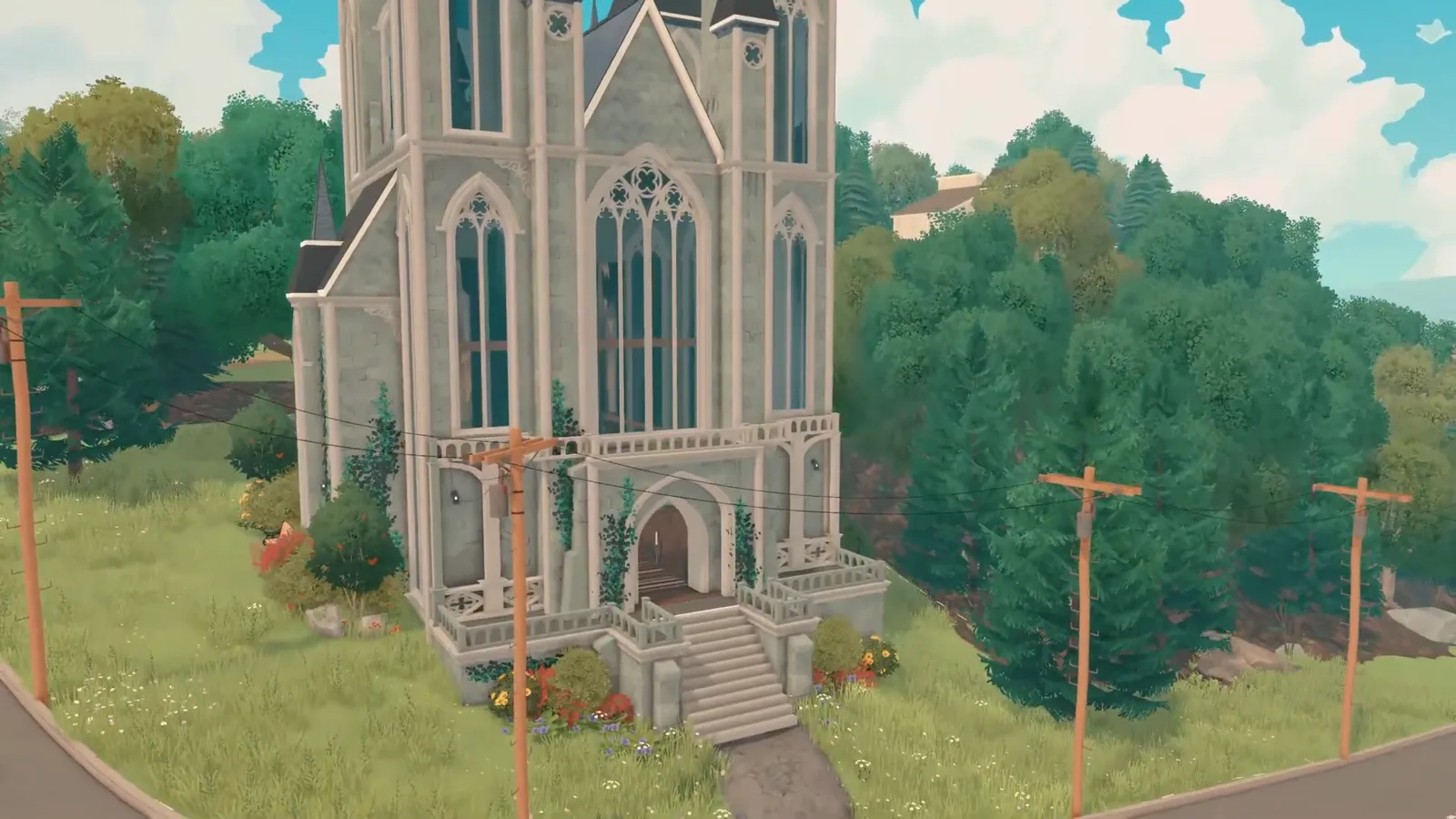
The short version
A Paralives church is ordinary build-mode parts in a sacred arrangement: walls drawn tall and in curves, roof cones standing in as spires, arch mouldings turning the windows gothic, letter tiles nailing up the cross, and pews with candles finishing the nave.
- Draw the footprint in walls first — a curved corner becomes the apse
- Height is the trick: tall walls read as church before any decor goes up
- Conical roof pieces make the spires; the context menu rotates them 45° at a time
- Molding Mode carves the tracery; arched window pieces bring the coloured glass
- Letter-tile wall decor builds the cross — a Letter T costs P$10
- Pews, candles and a Style Creation stain finish the sanctuary
The footprint
Plan the church in walls, not floor plans
Every church starts as a wall drawing. These four steps set the plan — straight nave, curved apse or a one-plaza chapel — and get the height that makes the volume read sacred before a single ornament exists.
- 1
Draw the footprint with walls — curve the apse
The cathedral opens with wall drawing, not floor plans: straight wall runs lay out the nave on the corner lot, and a curved wall segment swings the apse into the street corner. Curves behave like any wall while the run is live, and the placement menu lists Don't Snap to Angles on Alt (hold) for the moments the grid fights the arc.
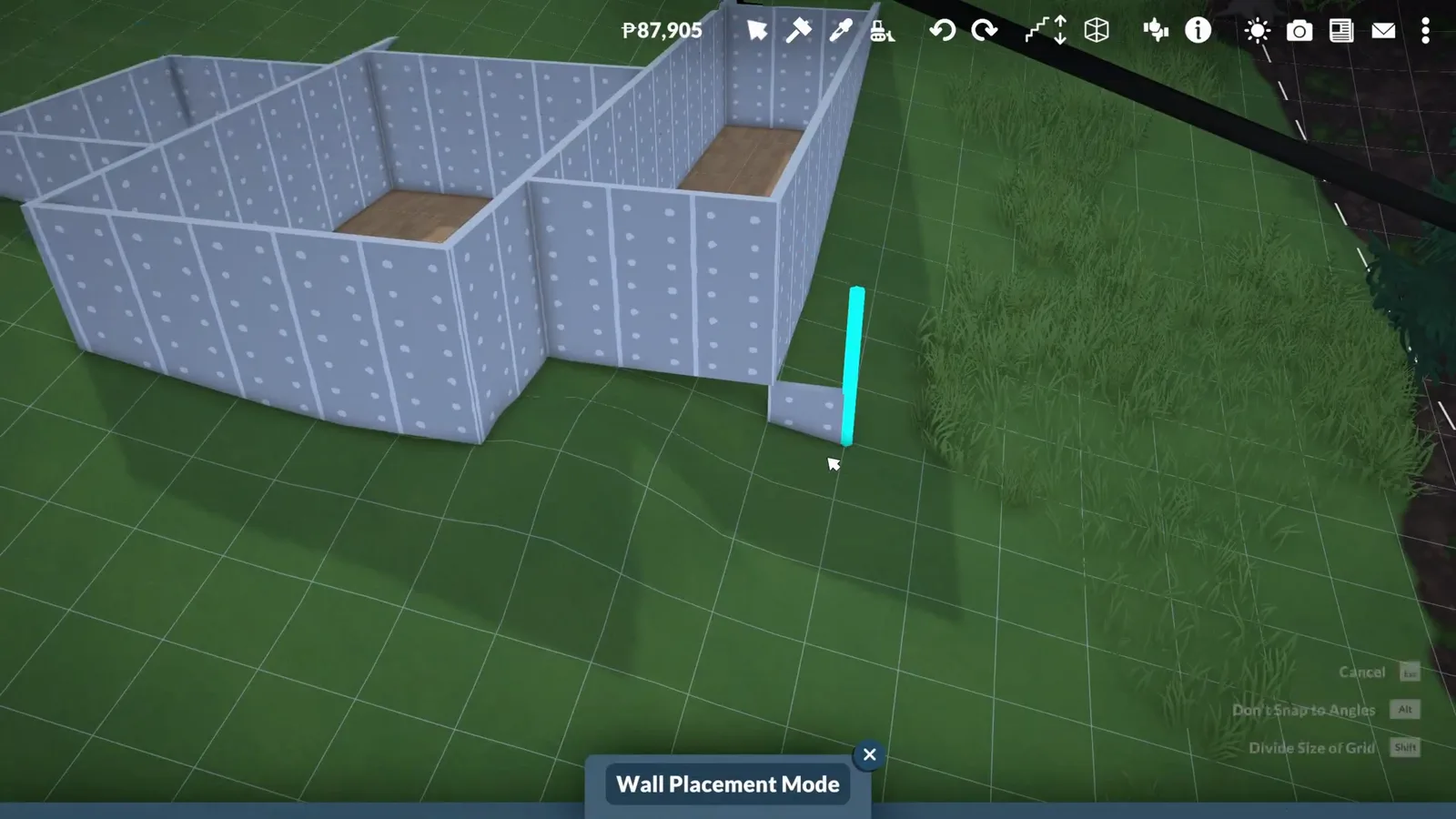
The plan goes down at wall height — curve included.Watch at 0:35 - 2
Stretch the walls until the volume reads sacred
Nothing says church like height. The cathedral drags the wall-height handle up on the nave and tower sections before any detail exists — one plain white mass first. The seaside chapel's creator says the same thing in words: the building should stand slightly taller and more imposing than its neighbours.
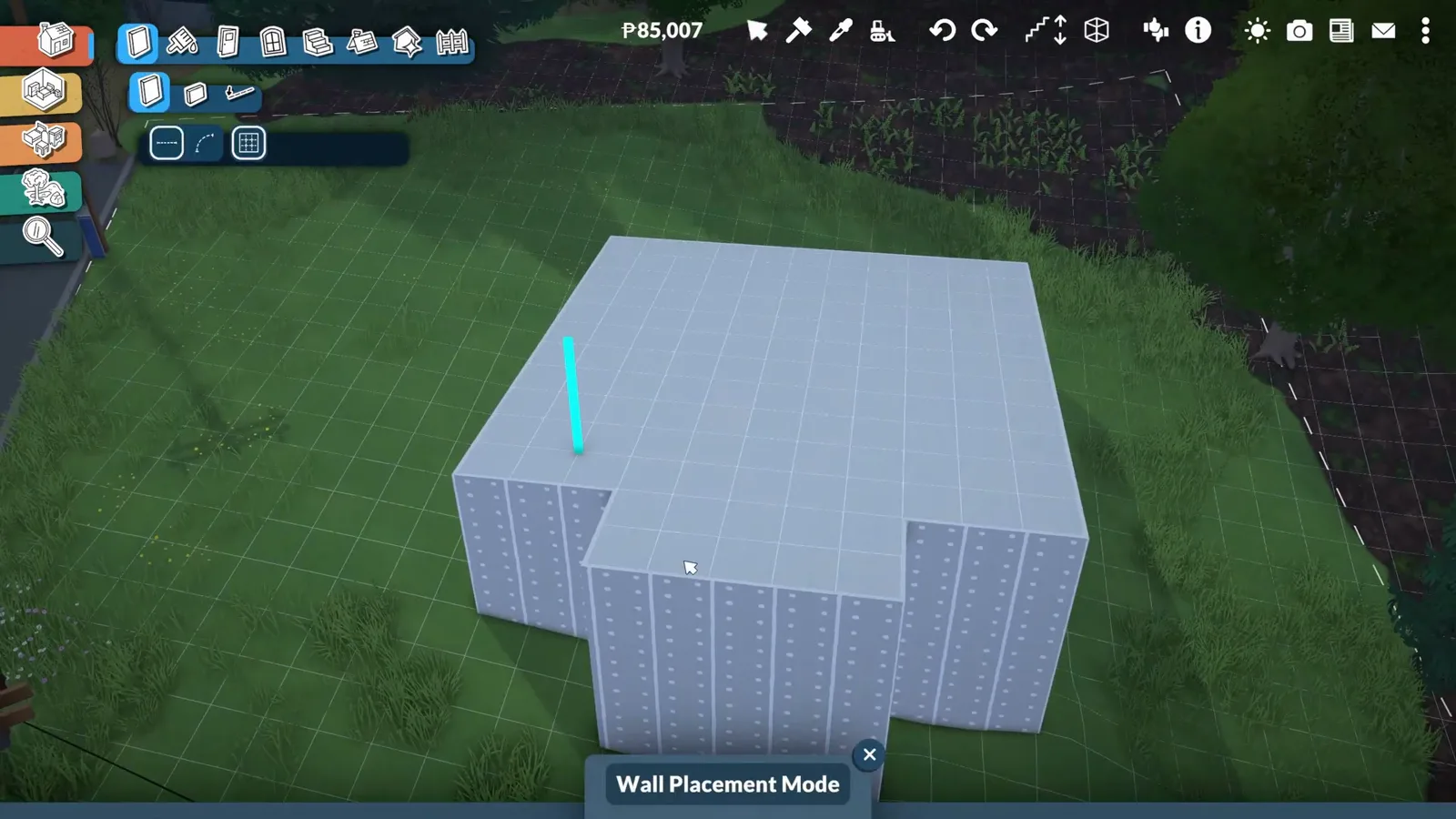
Height first, decoration later.Watch at 1:32 - 3
Stack a plain tower shell at the front
The bell tower begins as a featureless box: four walls, several storeys, no openings yet. Building this high comes with a catch the chapel creator admits on camera — the Paralives camera gets jumpy at belfry height — so expect to chase the view a little while the top storeys go up.
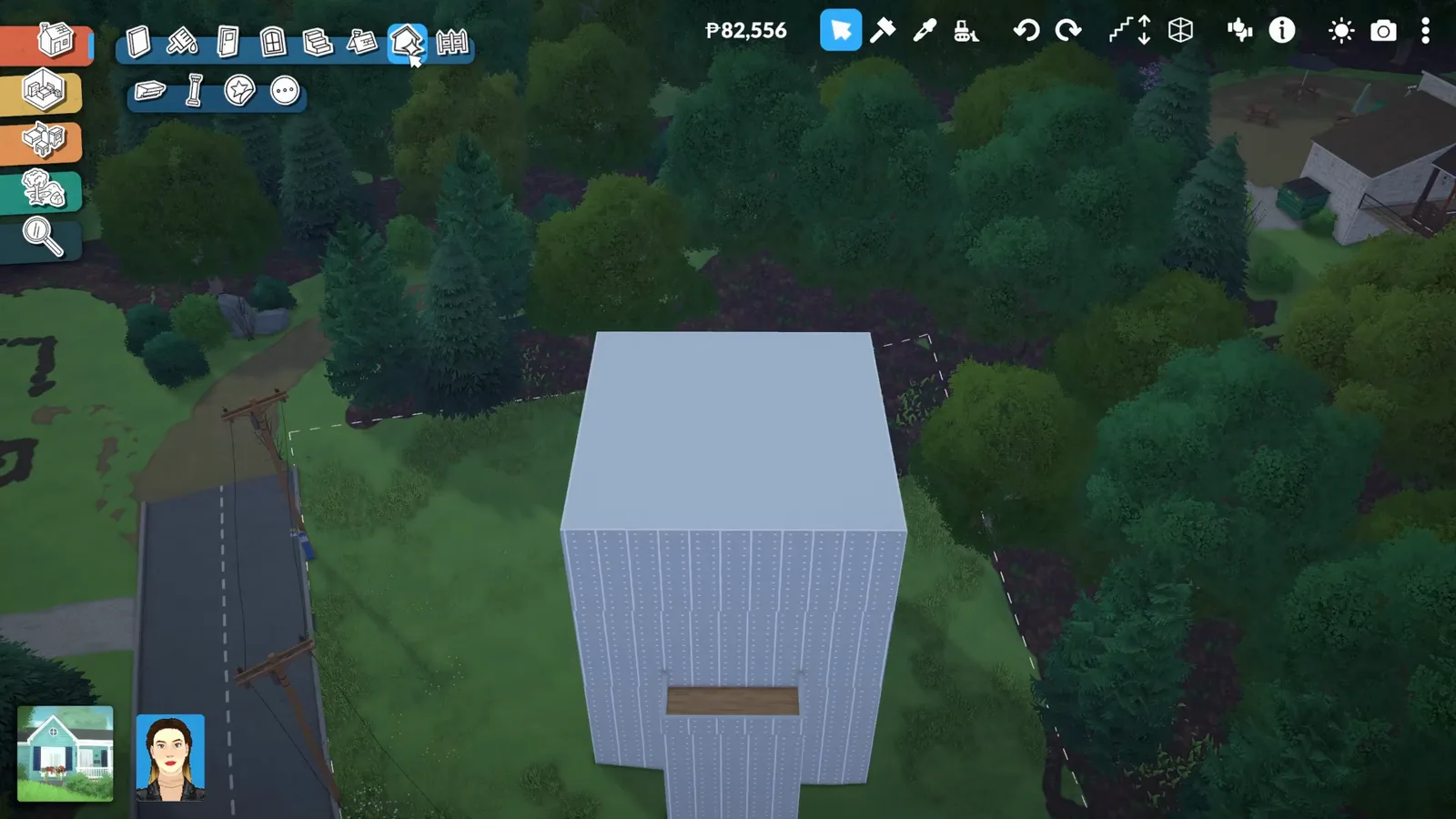
A featureless box now; a landmark after the spire.Watch at 2:26 - 4
Or go smaller: the one-plaza chapel plan
Not every church needs a cathedral footprint. The seaside chapel lays a cross-shaped plan of white walls around a single wood floor — small enough to share a beach plaza with the market stalls, big enough for the belfry to dominate it. Overhead is the angle to judge a plan from.
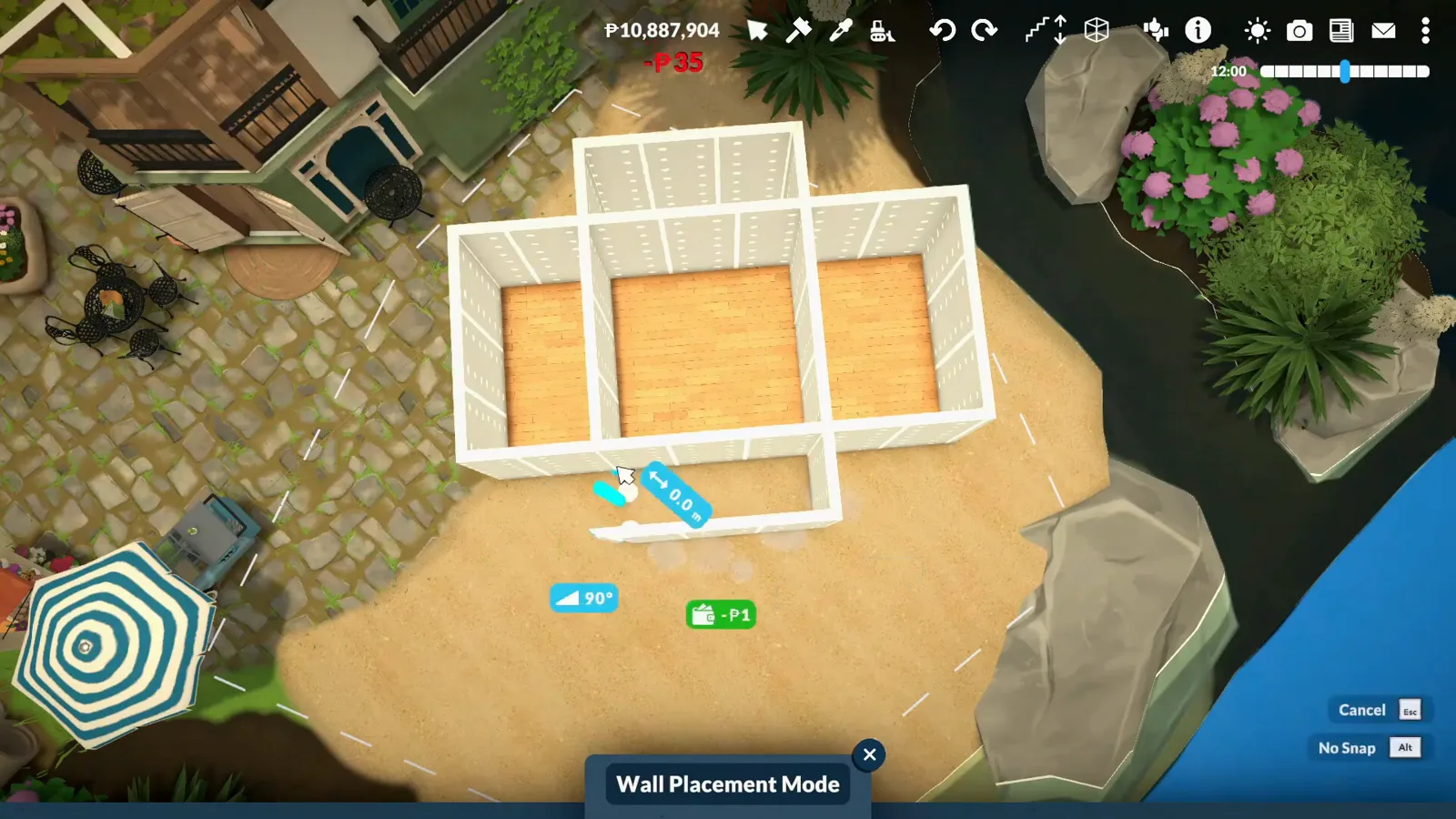
A chapel plan that fits one plaza.Watch at 2:11
Tower & spire
Make the skyline: towers, spires, bells and crosses
The tower is what separates a church from a hall. Three different builds show three answers: roof cones as spires, a bell in an open belfry, white columns flattened into pilasters — and a cross that is secretly typography.
- 5
Crown the turrets with conical roof pieces
The spires are roof-catalogue cones: dark red cone pieces dropped onto each corner turret and the stair turret, then squared up with the context menu's X and 45-degree turns. The catalogue itself warns that roof blocks fit awkwardly on off-grid builds — Paralives plans more flexible roof tools — so nudge, rotate and repeat.
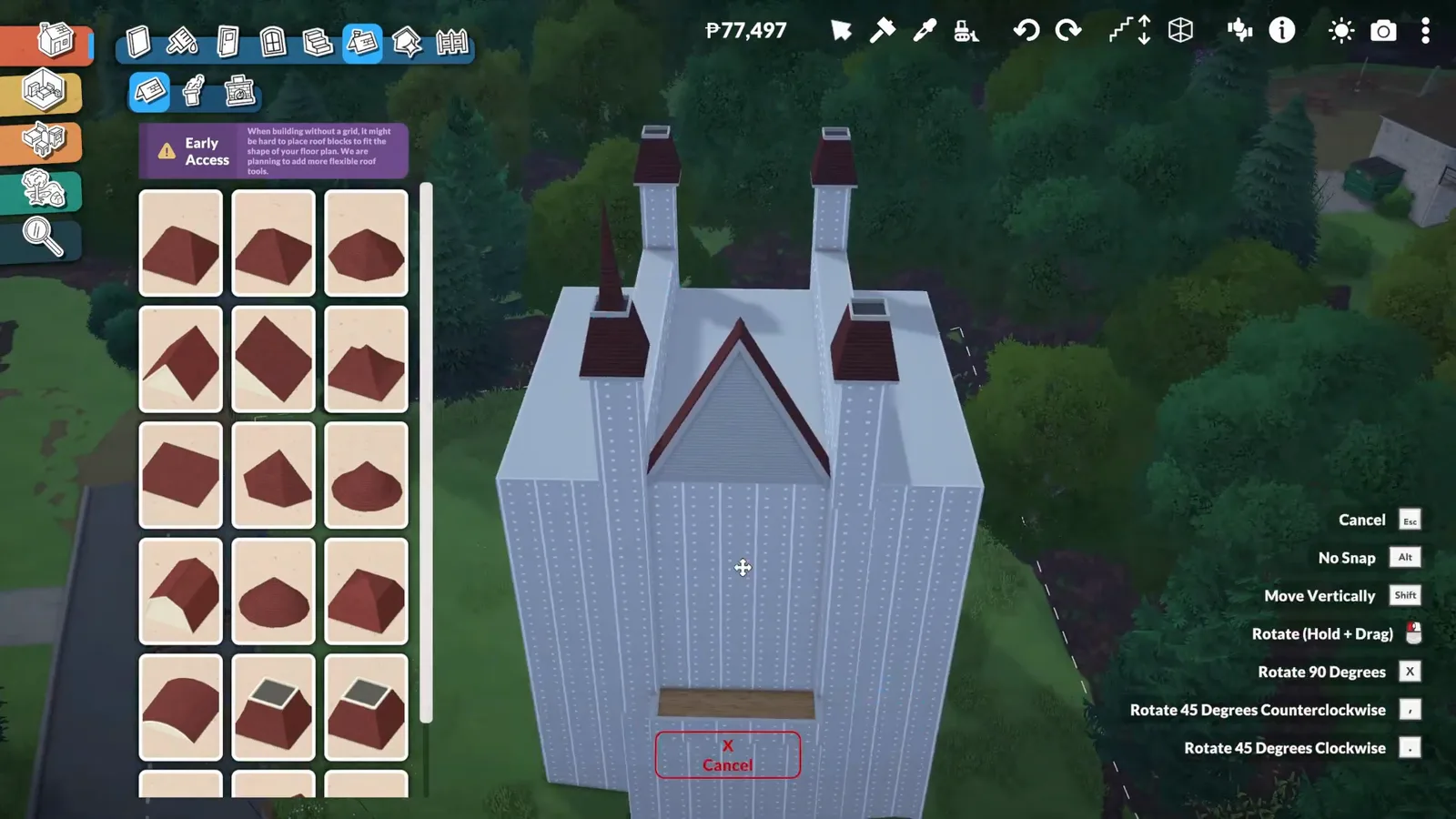
Roof cones on spire duty.Watch at 4:00 - 6
Hang a bell in an open belfry
The chapel's tower tops out in an arched opening with the bell hung inside — selected, the bell shows its resize and rotation gizmos right in the belfry, so it can be scaled to fill the arch. The item's tooltip on screen reads Chiti; whether it is base game or Workshop is not stated in the video.
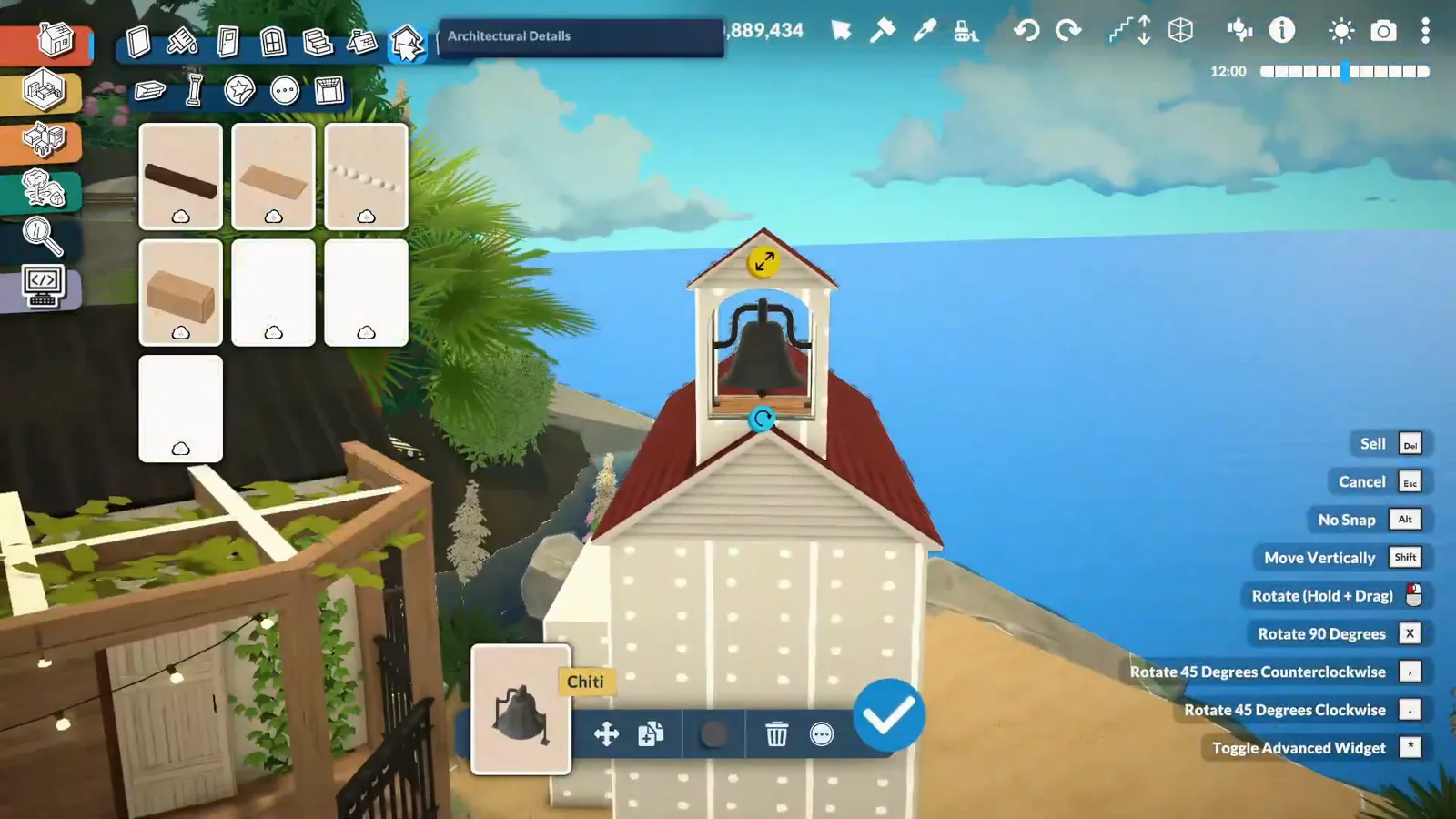
One bell, one arch, instant church.Watch at 1:15 - 7
Rhythm for brick: columns pressed into pilasters
The red-brick community church gets its vertical rhythm from white column pieces placed flat against the brickwork as pilasters. The advanced transformation widget — the * (numpad) rings — stands each column upright and seats it against the wall, and the catalogue tooltip prices the piece at P$5.
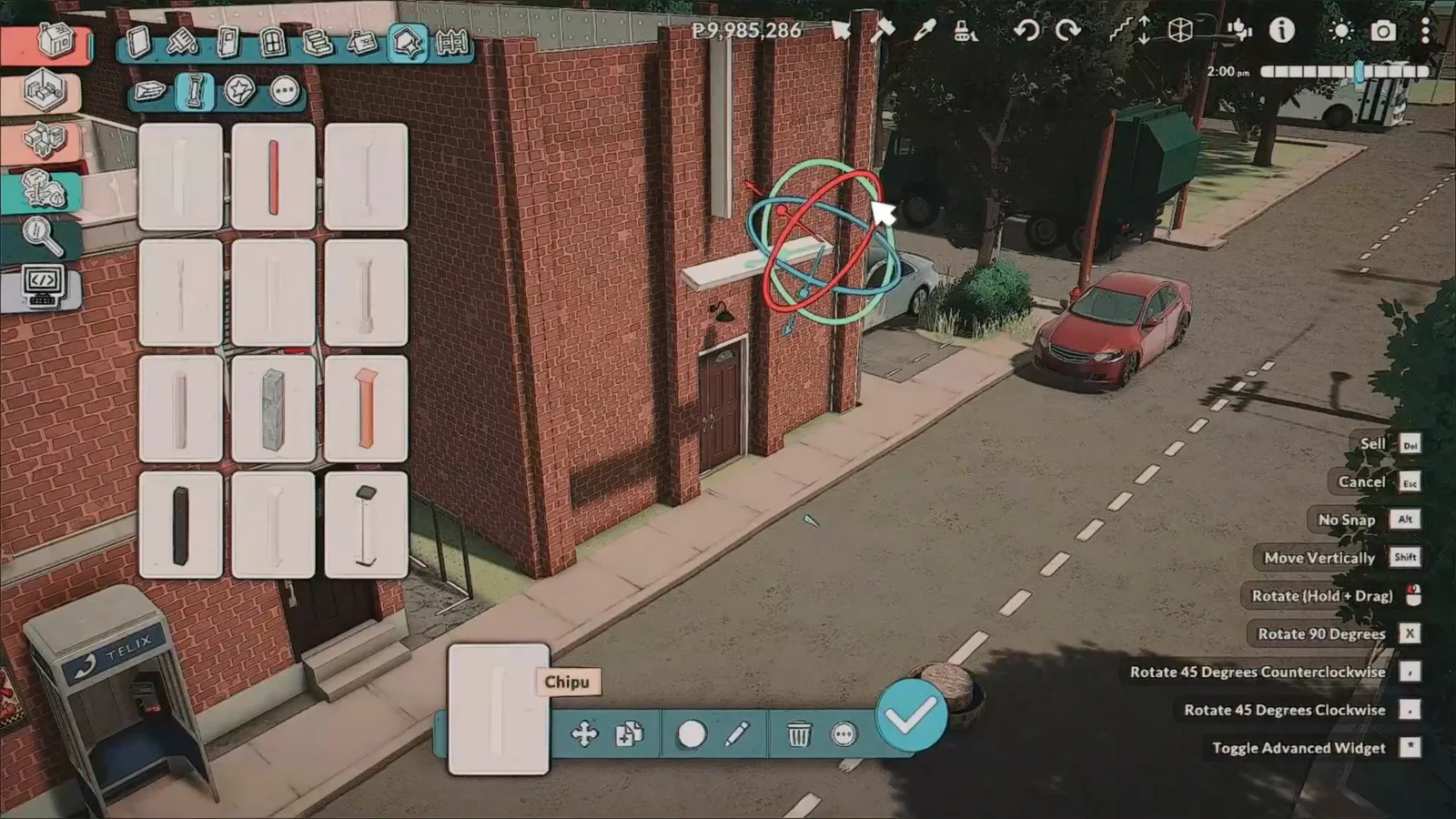
Columns pressed flat become pilasters.Watch at 10:25 - 8
Build the cross out of letter tiles
The gable cross is typography in disguise: the decor catalogue carries letter tiles, the tooltip prices a Letter T at P$10, and rotated onto the tower top the T reads as a cross. Style Creation recolours it — the same build shows white, green and black versions of the trick.
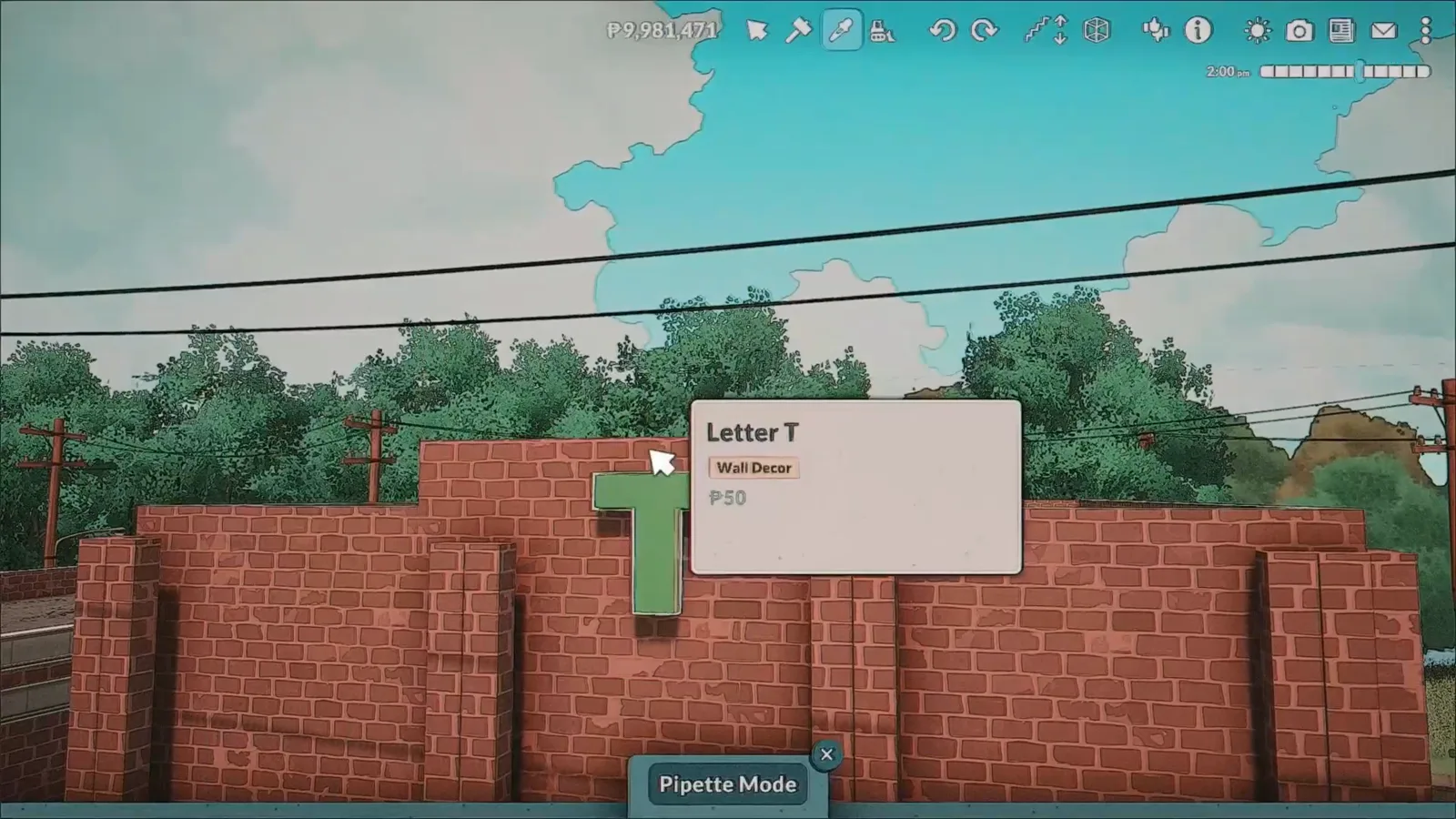
The cross is a letter in costume.Watch at 13:20
Windows & openings
Arches, tracery and the gothic face
Gothic is a moulding job. The same arch logic frames a coloured-glass window, a carved facade and a wall-sized front door — and all of it stays reversible, because every piece is an object you can rescale.
- 9
Frame every opening with an arch moulding
Windows get gothic the same way doors do: a coloured glass arch sits in the wall, then an arch surround from the moulding catalogue — Chitadiki, in this build — wraps it. The arch pieces come in several widths and materials, so a stone arch outside and a warmer wood one inside can share the same window.
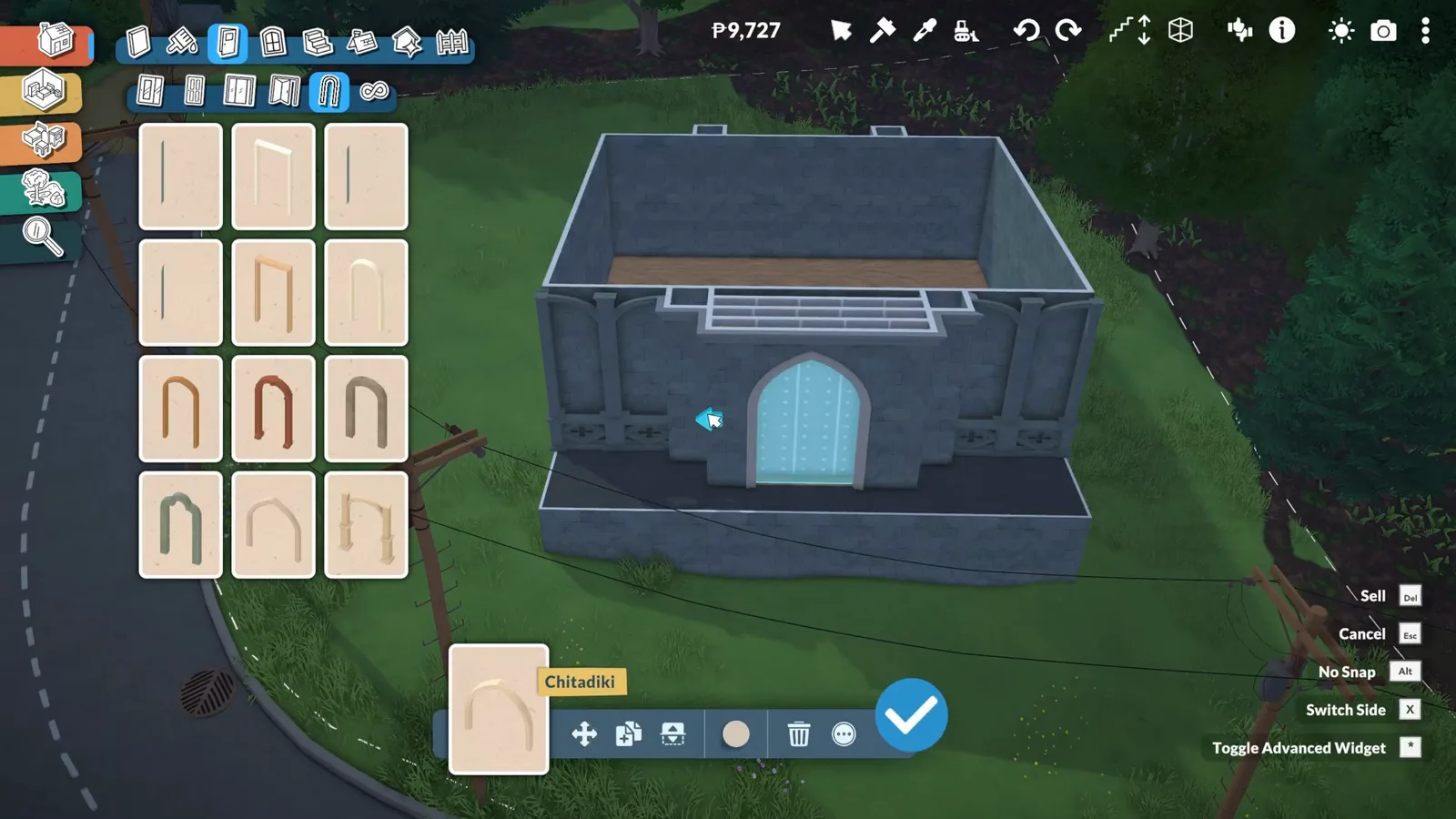
Glass in the wall, arch around the glass.Watch at 10:30 - 10
Carve the tracery with Molding Mode
Molding Mode is where the facade turns gothic: arch tops, string courses and cornice strips from the moulding catalogue sketch pointed arches and horizontal bands across the grey stone, no wall rebuild needed. Selection works per wall section, so the twin towers get dressed one face at a time.
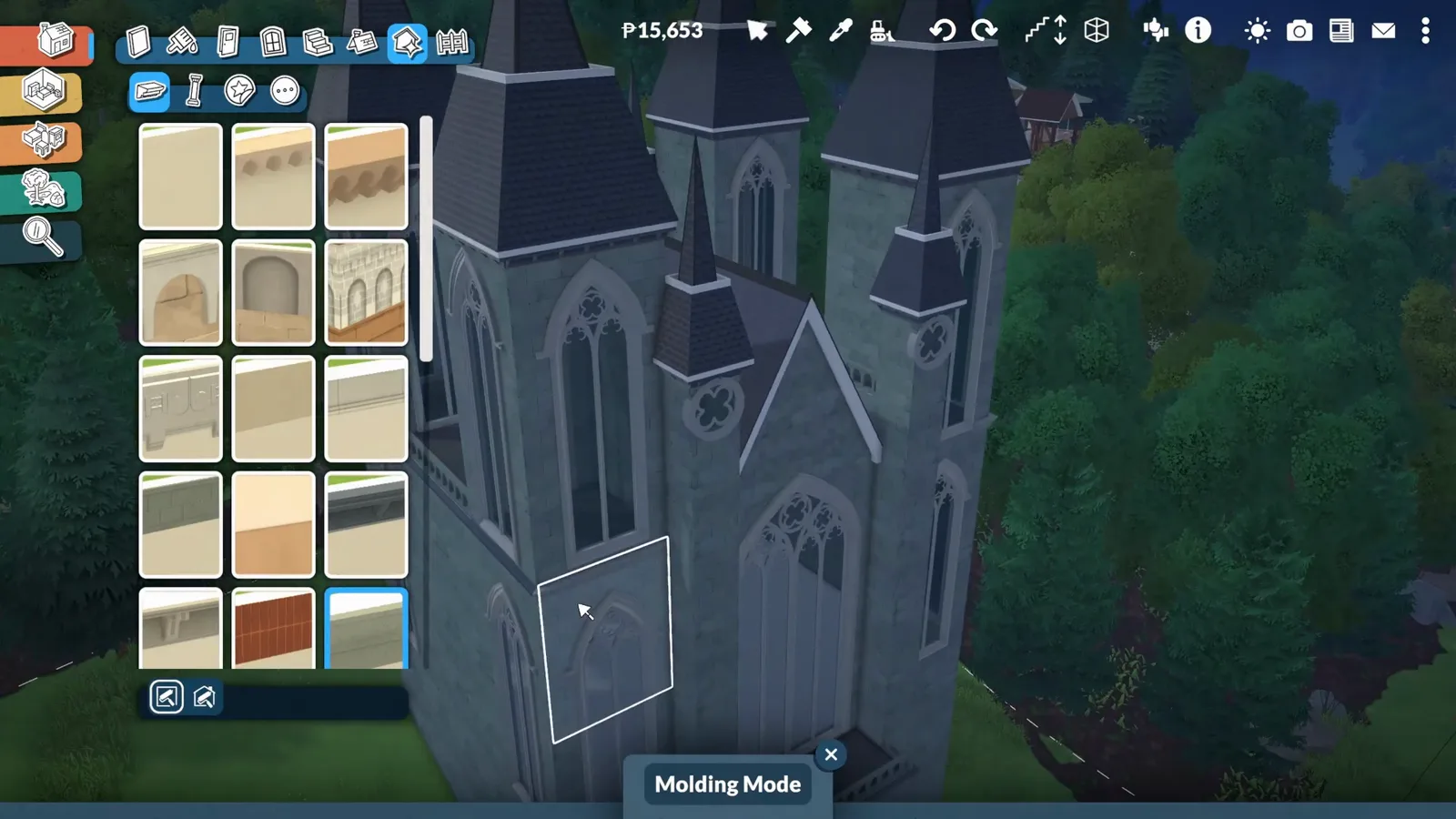
Moldings do the gothic heavy lifting.Watch at 9:05 - 11
Scale pinnacles onto the facade ledges
Dark pinnacle ornaments from the decor catalogue dot the facade ledges — placed small, then stretched with the resize arrows until they crown the moulding bands. Scaling decor up is the whole trick: one pinnacle model does duty at three sizes across the front.
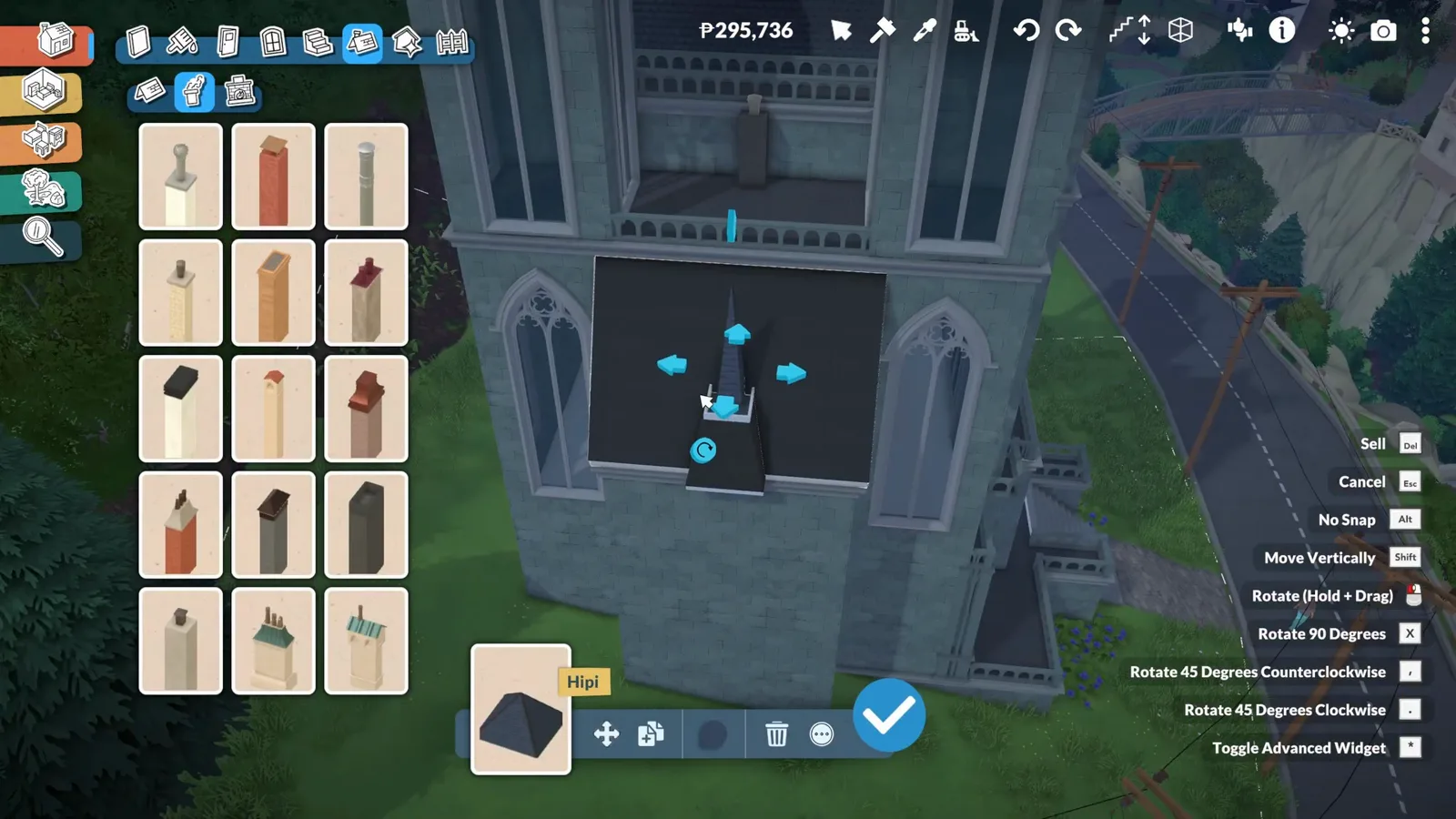
Buy small, scale tall.Watch at 16:30 - 12
Give the facade one wall-sized arched door
The chapel's entrance is a single arched double door — Peke in the door catalogue — set into a plain white wall. The creator's reasoning holds for any church: old churches have few windows, so the door carries the facade while the coloured glass lives higher up.
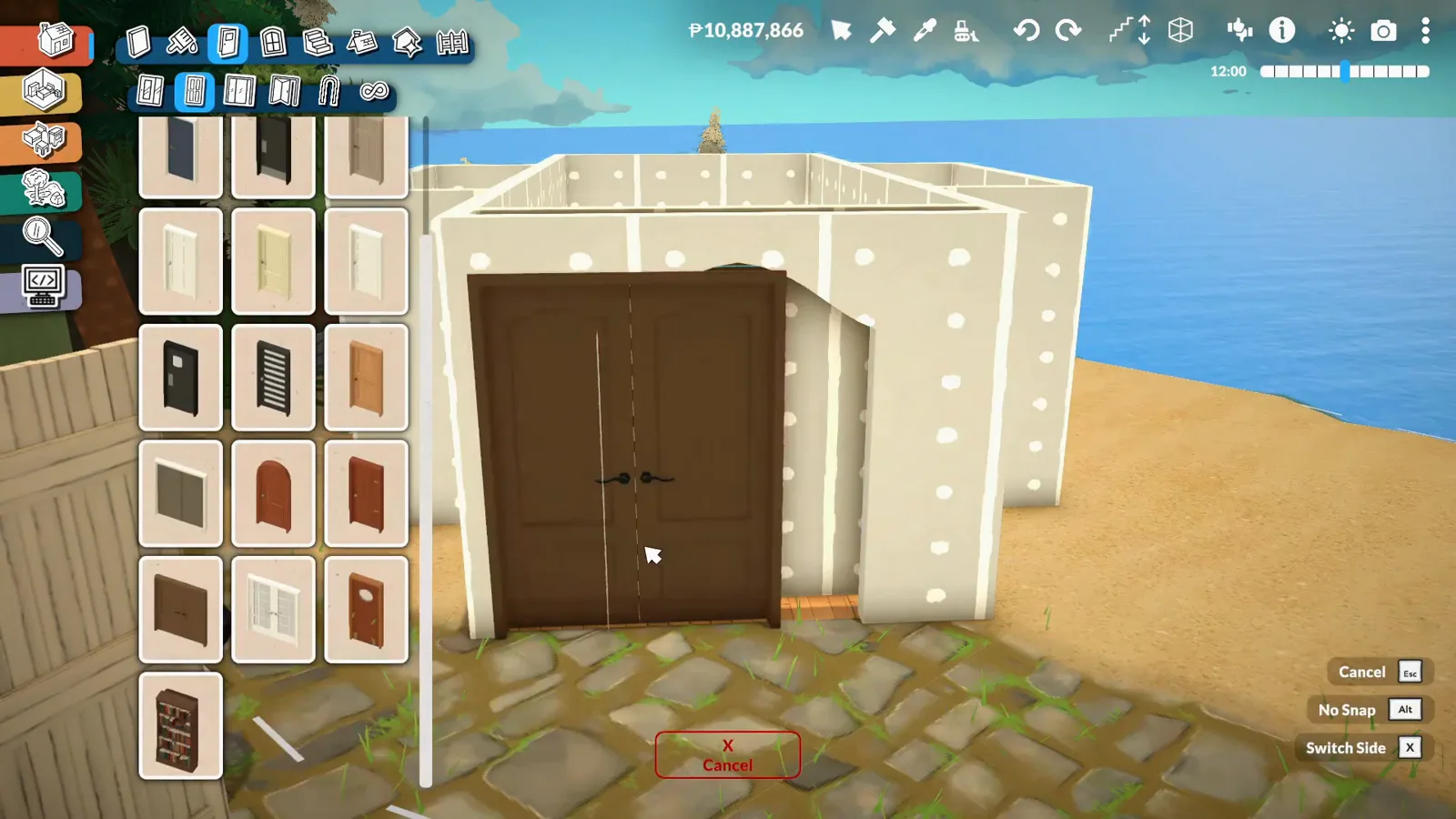
One door, sized like a wall.Watch at 2:29
Interiors & grounds
Finish the nave, then age the stone
Inside, the church is furniture logic: pews in blocks, candles at the front, one custom wood stain tying it together. Outside, ivy does the ageing — and a final look from above tells you whether the silhouette holds.
- 13
Row the nave with pews and candles
Inside, the nave fills with furniture logic: blocks of dark wood pews either side of a centre aisle, candle stands marching up the front, and small clutter from the decor catalogue so the benches look sat in. The aisle width is the one real decision — everything else repeats.
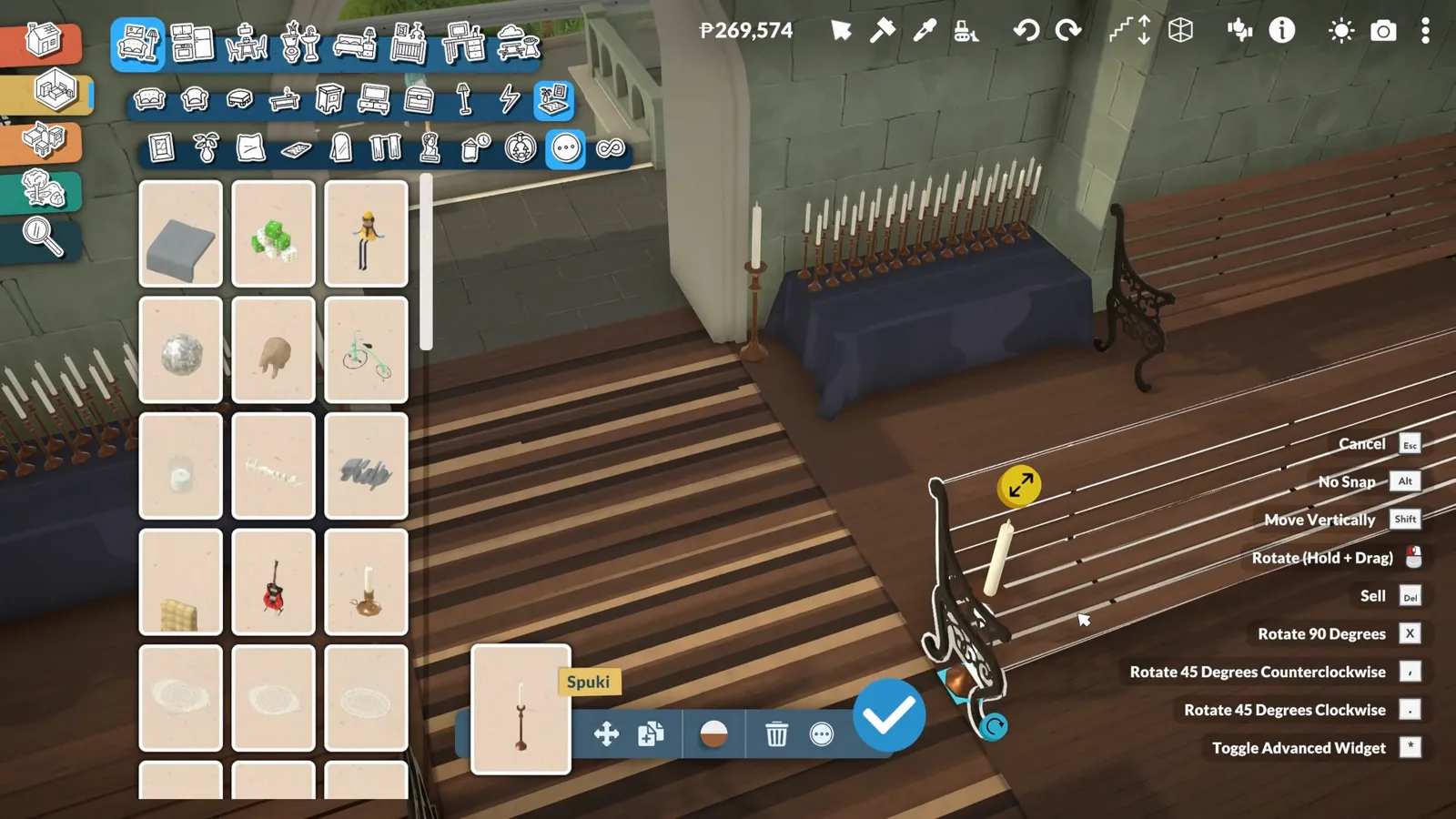
Two pew blocks, one aisle, done.Watch at 26:05 - 14
Stain the sanctuary wood with Style Creation
The altar rail and front furniture take one custom finish: Style Creation opens on the piece, the colour wheel mixes a deep red-brown for the frame, and the saved style repeats across the wood so the sanctuary matches. The swatch grid stores the mix for the next build.
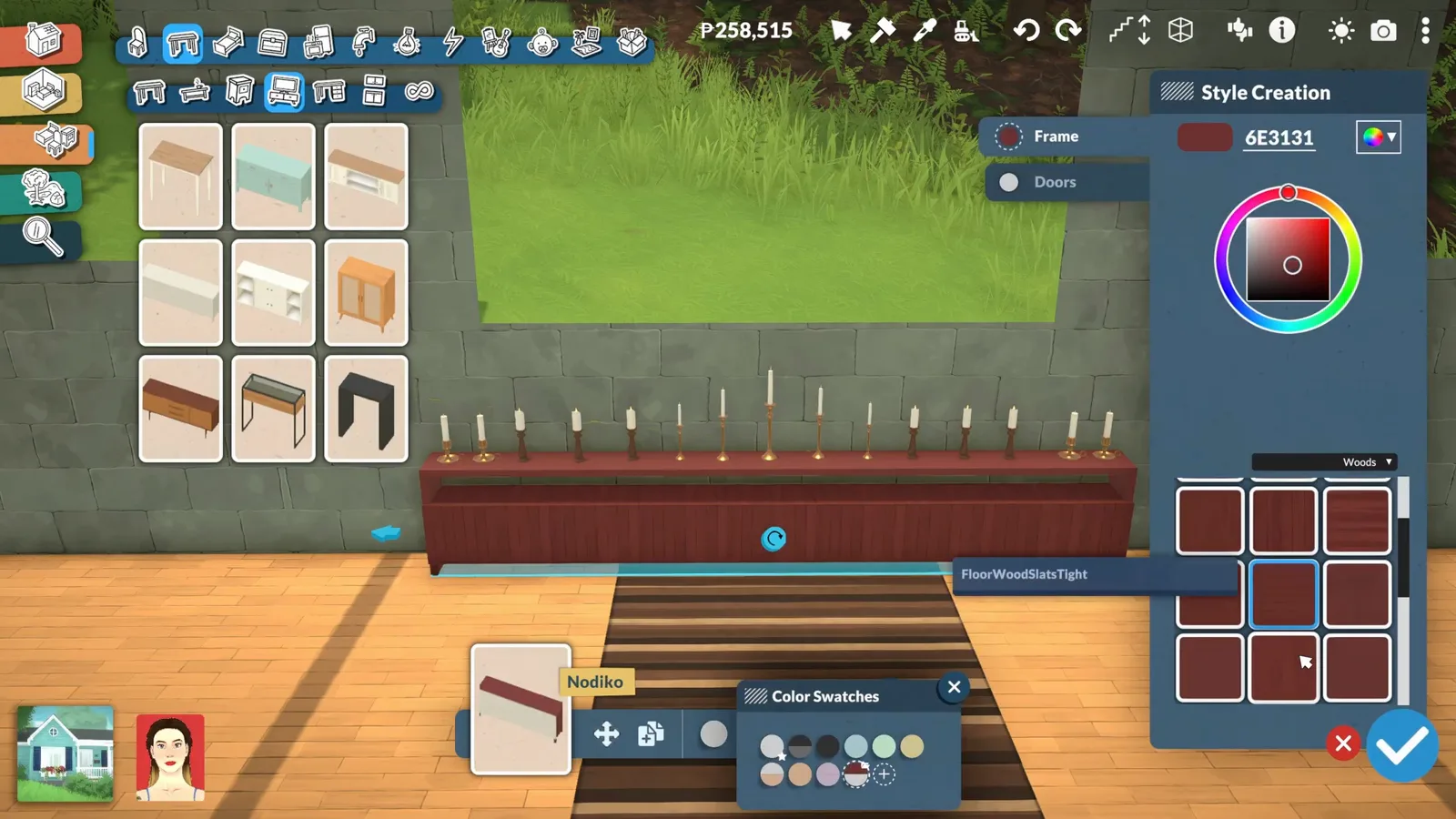
One stain, whole sanctuary.Watch at 27:58 - 15
Age the stone with climbing ivy
The finishing trick is botanical: climbing ivy pieces — Chepi is one of the catalogue's two — go up the tower corners and around the entrance arch so the new stone reads centuries old. The plants snap to walls and climb as high as you drag them.
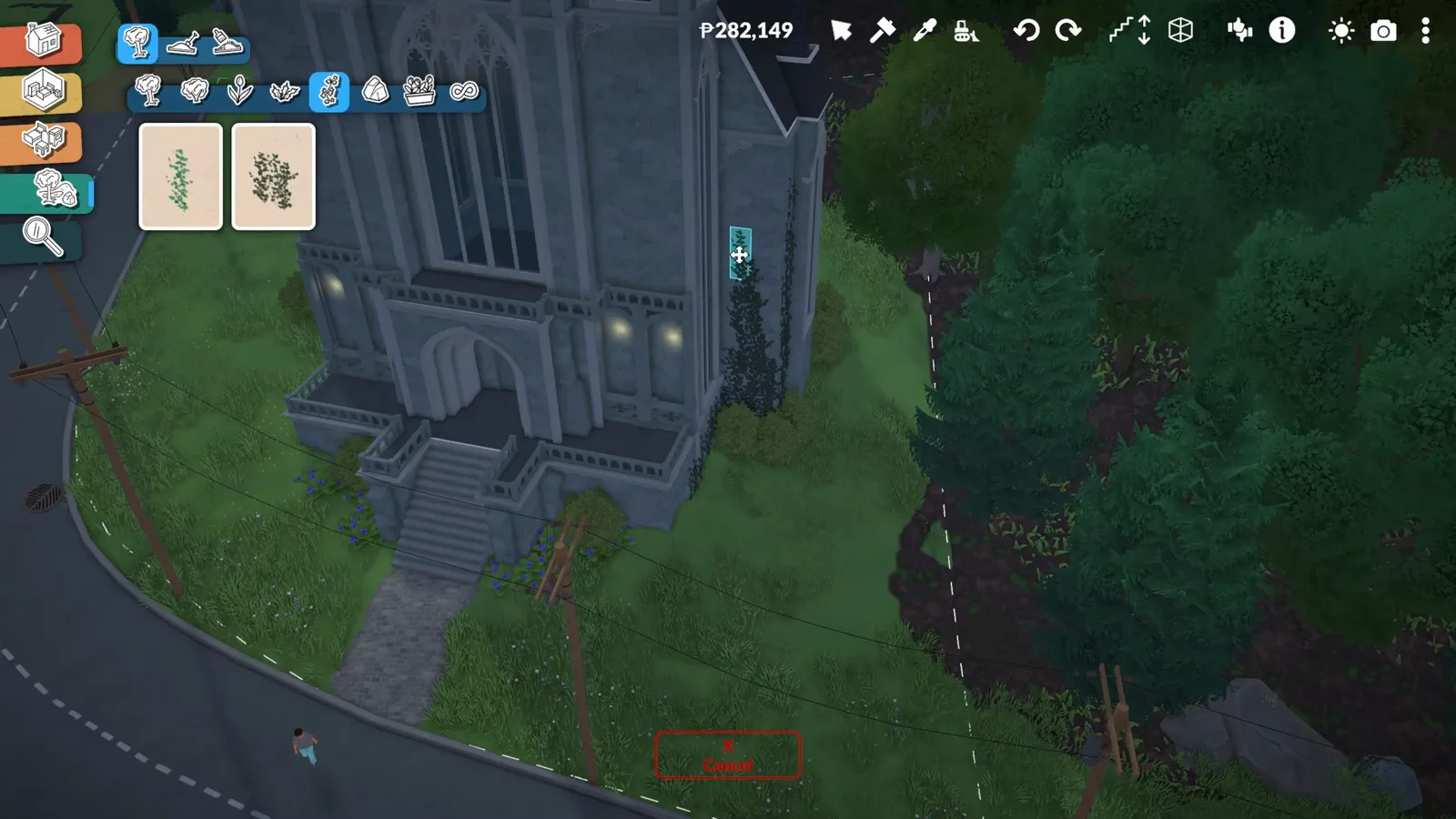
Ivy ages a build five centuries.Watch at 21:45 - 16
Step back: judge the church from the air
The last test needs no tools — pull the camera up. Twin spired towers, the nave roof running to the apse, the chapel's bell tower over its cross plan: the silhouette either reads as a church landmark or it does not, and this is the angle that tells you.
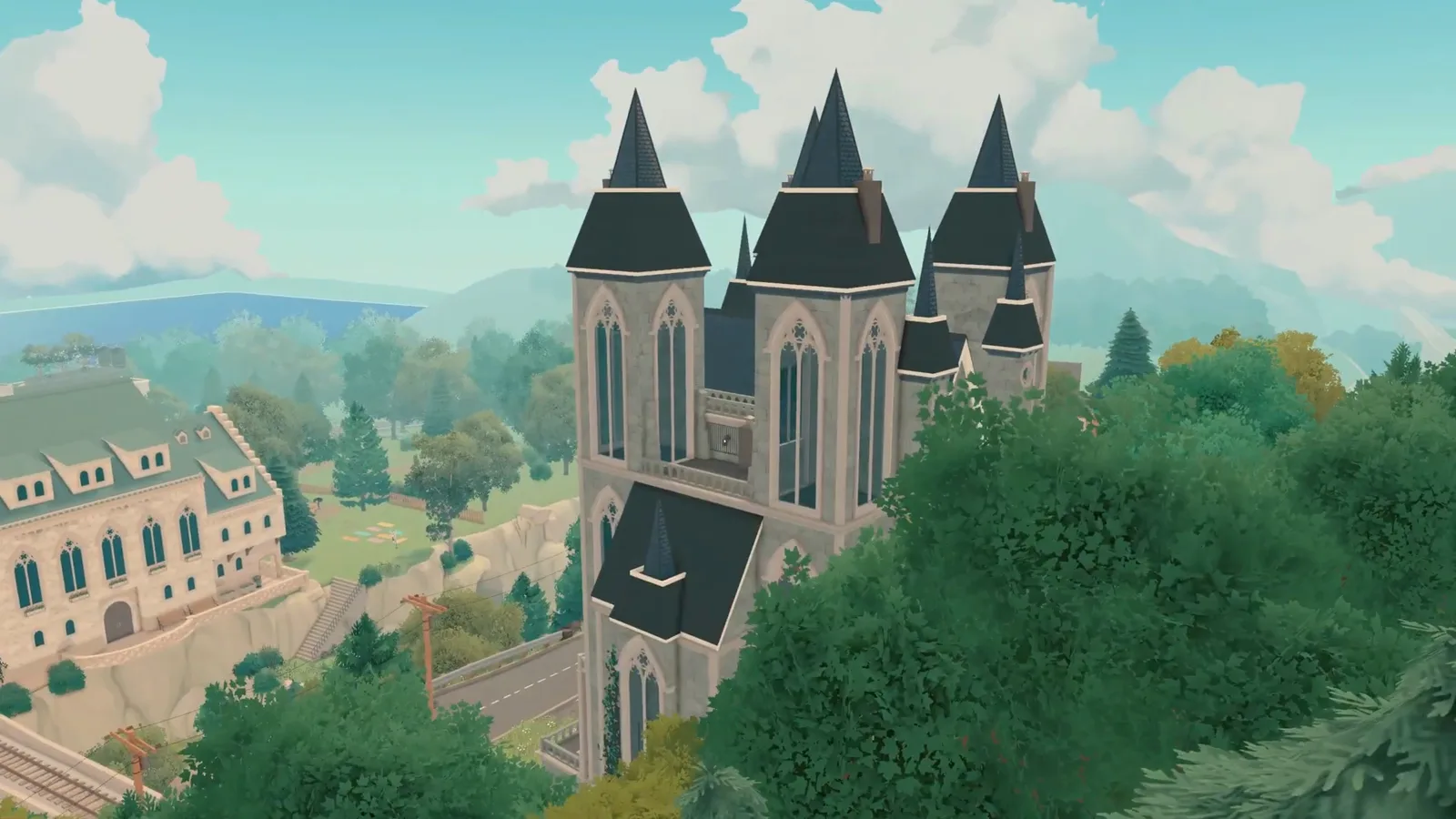
Towers, spires, nave — the silhouette holds.Watch at 30:45
Three churches, three ways to say sacred
The cathedral way (Tiny Blocksmith): height and repetition. Extra-tall walls, twin towers with conical spires, moulding bands and pinnacles — the gothic toolkit keeps scaling because every piece is an object you can stretch.
The parish way (ParaMamaGamez): brick and rhythm. Red brick walls, white columns flattened into pilasters, a flat-topped tower crowned with letter-tile crosses — a town church that fits a street. This build mixes in a Workshop roof piece, so check your own catalogue if you rebuild it exactly.
The chapel way (Panda Builds): one volume, one arch. A cross-shaped plan small enough for a beach plaza, a belfry with a real bell, and a single arched door carrying the facade — proof the silhouette matters more than the scale. In this build the church is a set piece: the creator converted it into a restaurant with dining in the courtyard.
Church build FAQ
- Is there a church lot type in Paralives?
- No. The community wiki documents no church lot type, and Melino — the launch town — tracks 28 named places with no church among them: stores, parks, cafés, a library, a museum, schools, a community centre and a train station. A church in Paralives is a build, not a venue the game recognises — which is why this page covers construction technique only.
- Cathedral or church — what actually changes between them?
- Scale and repetition, not new tools. The cathedral stacks extra-tall walls, doubles the towers and repeats moulding bands and pinnacles; the parish church keeps one tower, leans on brick plus pilasters and finishes with letter-tile crosses; the chapel compresses the whole idea into a cross-shaped plan with a single bell tower. Every step above works at any of the three sizes.
- How do you get coloured stained glass?
- The arched window pieces do the work: set a coloured glass arch into the wall and wrap it with an arch moulding from the catalogue, as the cathedral build does with its teal entrance arch. Deep walls make the glass read like stained glass from a distance; Molding Mode adds the tracery around it. Recolouring the glass itself is not shown in these builds — treat it as whatever colour the piece ships with.
- Is the bell or the cross a base-game item?
- The cross is: it is the decor catalogue's letter tiles — the build's tooltip prices a Letter T at P$10 — rotated into shape and recoloured. The bell is less certain: the chapel video's tooltip reads Chiti, but neither video states whether the bell ships with the base game or came from the Steam Workshop, and we have not verified it either way.
- Is there a height limit for church towers?
- Nobody has published one. Both tower builds stack walls more than four storeys high without hitting a cap, but the chapel creator notes the camera gets jumpy at belfry height — the practical limit most builders feel. If a documented maximum exists, it has not appeared in the official patch notes yet.
- Do church builds do anything in game — weddings, events?
- No. Paralives has no religious system, wedding venue mechanic or church events in Early Access, and no official source announces one. The builds on this page are set pieces: the seaside chapel works as a restaurant with courtyard dining, and a cathedral can house whatever lot function your save needs. Build the church for the look; the game supplies no liturgy.
Keep building
Castle guide
Moats, keeps and curtain walls — the other landmark silhouette, scaled up even further.
Gothic house
The domestic side of the same arches and steep roofs, at house scale.
Haunted house guide
When the church spire needs a curse: crooked roofs and graveyard staging.
Roofs
Every roof tool explained — the catalogue behind the conical spires and nave planes.
Windows & doors
Snapping, resizing and the arch pieces this build leans on for every opening.
Blueprints & floor plans
Start from a real cruciform plan before you draw the first wall.