
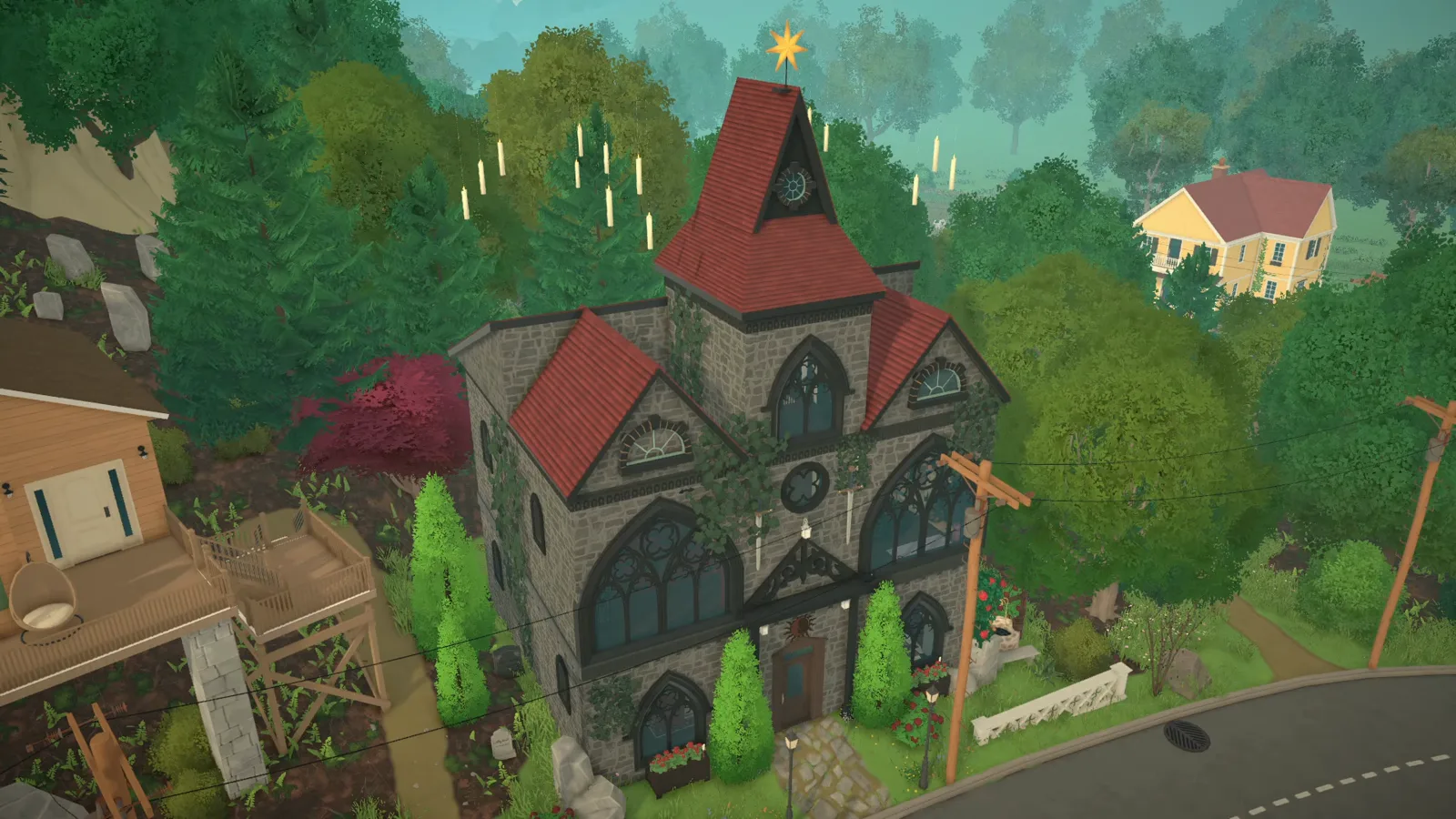
The short version
There is no gothic item pack in Paralives, so this build gets there with materials instead: convert a church-like shell, keep the huge nave windows and the spire, re-dress the walls in dark gray stone, and let ivy, bats and a raven do the haunted-abbey work. Inside, the palette goes darker — deep greens, oxblood red, black tile — while the plan bends around windows you can barely shrink.
- Gothic windows are huge and barely shrink — raise the wall height instead of fighting the resize arrows.
- Dark gray stone with black trim reads gothic faster than any single decor item.
- The build catalogue has no cross — a gold star ornament closes the spire instead.
- Ivy, bat motifs and a raven over the door sell the converted-church story for pocket change.
- Split one long ground floor with the separator tool: checkerboard where the kitchen works, rugs where it doesn't.
- Add lights last and audit them at night — some fixtures barely glow, and dark walls drink the rest.
Slope & shell
Set the slope and dress the shell in stone
A converted church has to look like it has sat on its lot for two centuries, and that starts with the ground. Raise and smooth the slope, paint the shell dark gray stone with black accents, run a blind arcade under the eaves, then stack three steep roof segments and one near-black spire. Nothing here is complicated — the silhouette does the gothic work.
- 1
Raise and smooth the slope before you build
The corner lot leans, and a converted church lives or dies by how it sits. Terrain Height Elevate Mode pulls the ground up along the wall line, Smooth Mode blends the hump into the lawn, and Lower Mode digs the path back down. The builder notes the game has no official foundation tool yet — raising a platform first is the community workaround if you want the shell off the ground.
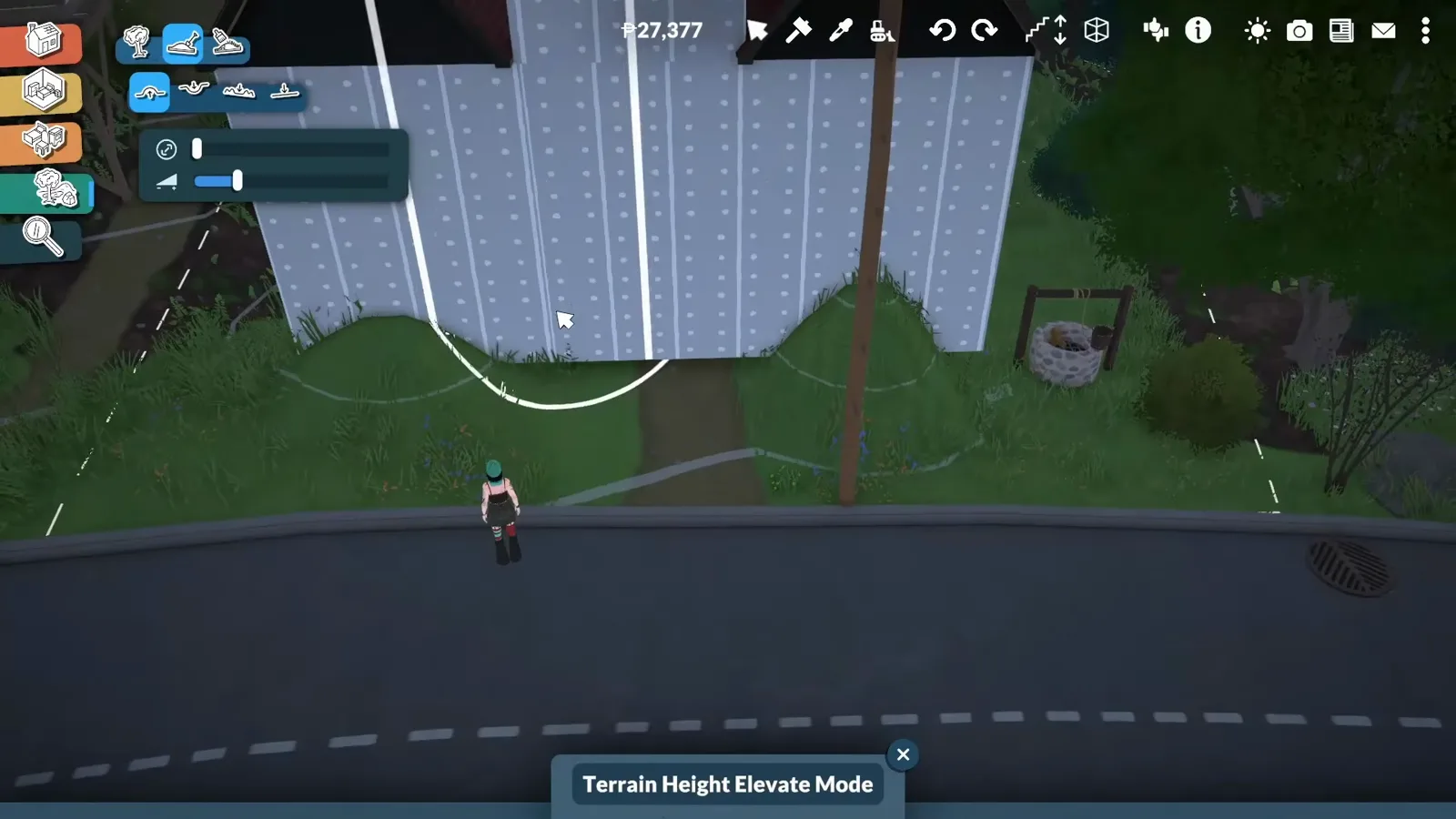
Elevate lifts the lawn where the walls will sit; Smooth Mode blends the seam afterwards.Watch at 2:53 - 2
Paint the shell dark gray stone
The first plan was an all-black church, but flat black swallows every detail. The fix: dark gray stone on the main walls, with black kept for trims, frames and roofs — contrast first, mood second. Wall Painting Mode takes a swatch per wall, so the sunlit front and the shaded back can wear different mixes.
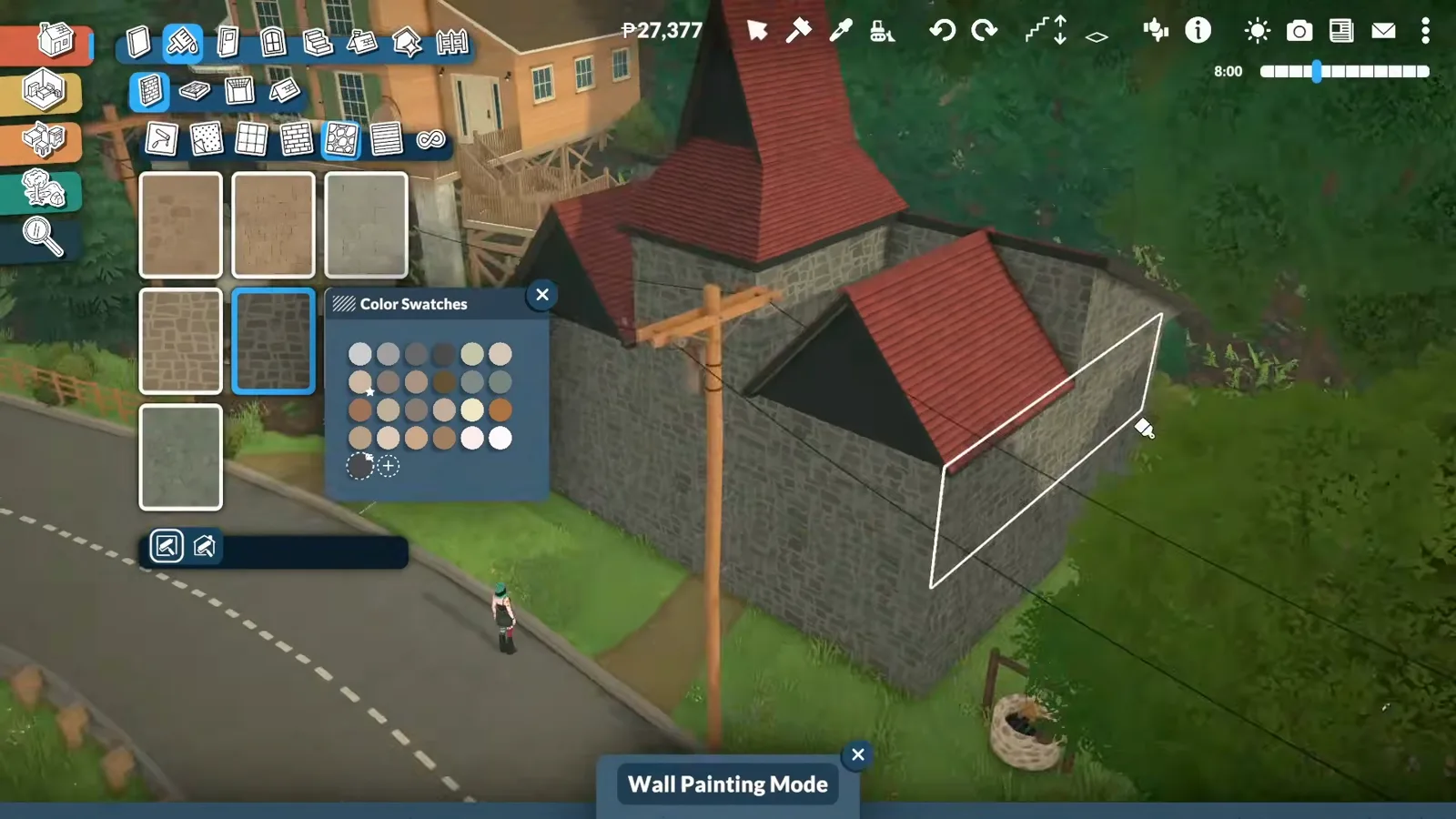
Gray stone carries the walls; black stays an accent so the texture keeps its depth.Watch at 4:10 - 3
Run a blind-arcade frieze under the roofline
Flat walls are the enemy of gothic. Molding Mode adds trim runs, and a band of shallow arches under the eaves fakes the solidity of real stonework. This is also where columns and small architectural triangle details get auditioned — place, zoom out, delete, repeat, until the front stops reading as a warehouse.
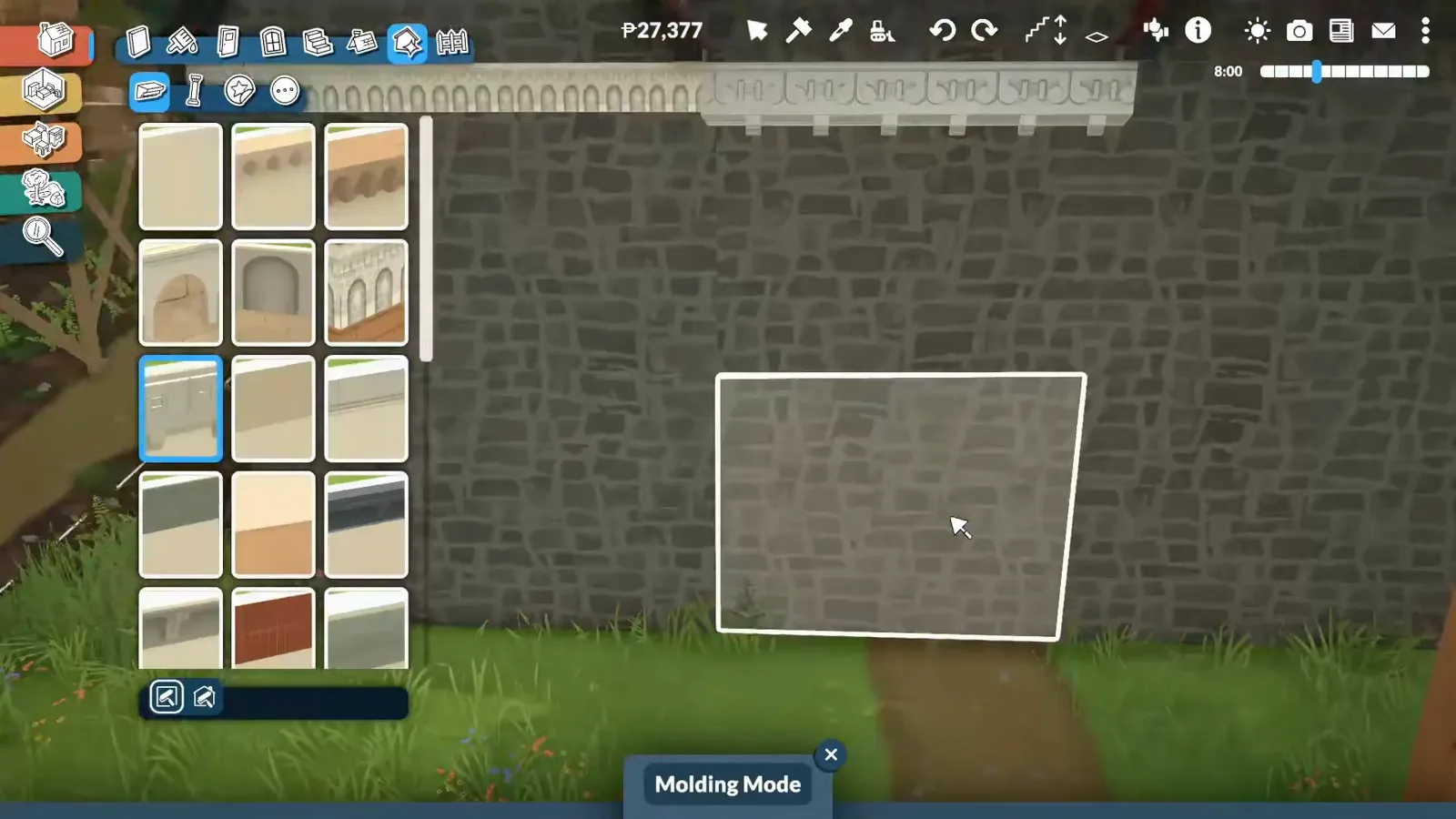
A frieze of shallow arches under the eaves — molding does the stonemason's work.Watch at 4:26 - 4
Stack three roof segments and one dark spire
The reference church kept a flat front but showed three distinct roofs, and that is the whole trick: steep dark-red planes stepping down the nave with a near-black spire at the crossing. Roofing to an angled plan is fiddly — the builder calls it a learning curve — so get every silhouette rough first, then nudge the overlaps until nothing pokes through.
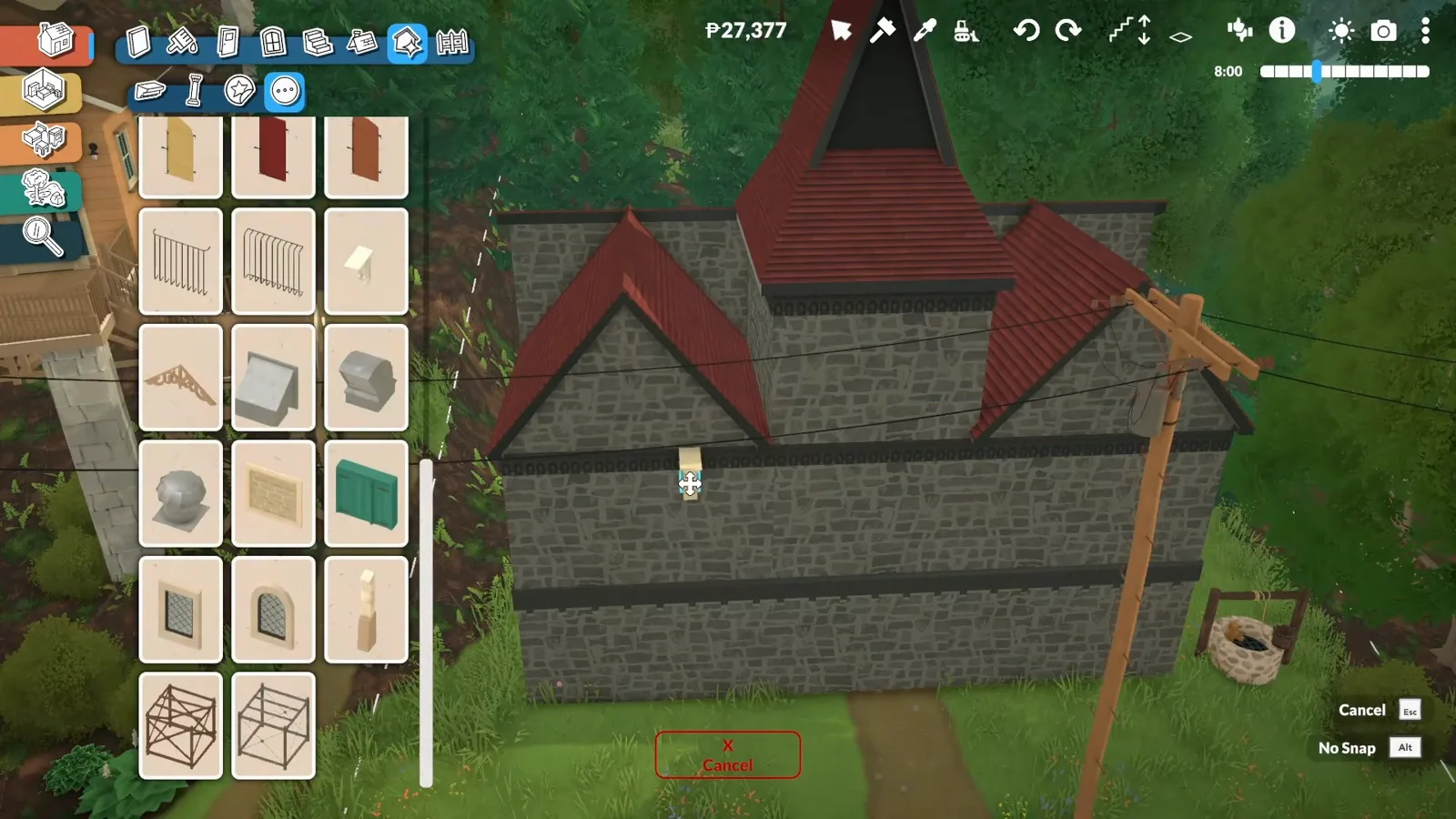
Three roof segments, one spire — the silhouette does the gothic heavy lifting.Watch at 5:10
Windows & ornaments
Pointed windows, ivy and a star where the cross should be
This is the layer that turns a stone box into a gothic house. The famous pointed-arch windows are bigger than any wall expects, so the walls grow to meet them. An ornamental gable crowns the door, ivy ages the stonework fifty years, and the spire gets a gold star — because the game ships no cross.
- 5
Fit the huge pointed windows by raising walls, not shrinking glass
The gothic-arch windows in Paralives are enormous, and the resize tool only shrinks them so far. The workaround that saved this build: raise the wall height until the windows sit in proportion. Above the entrance they land as a three-part composition with a round window on the tower — repetition with variation is what reads as church rather than haunted house.
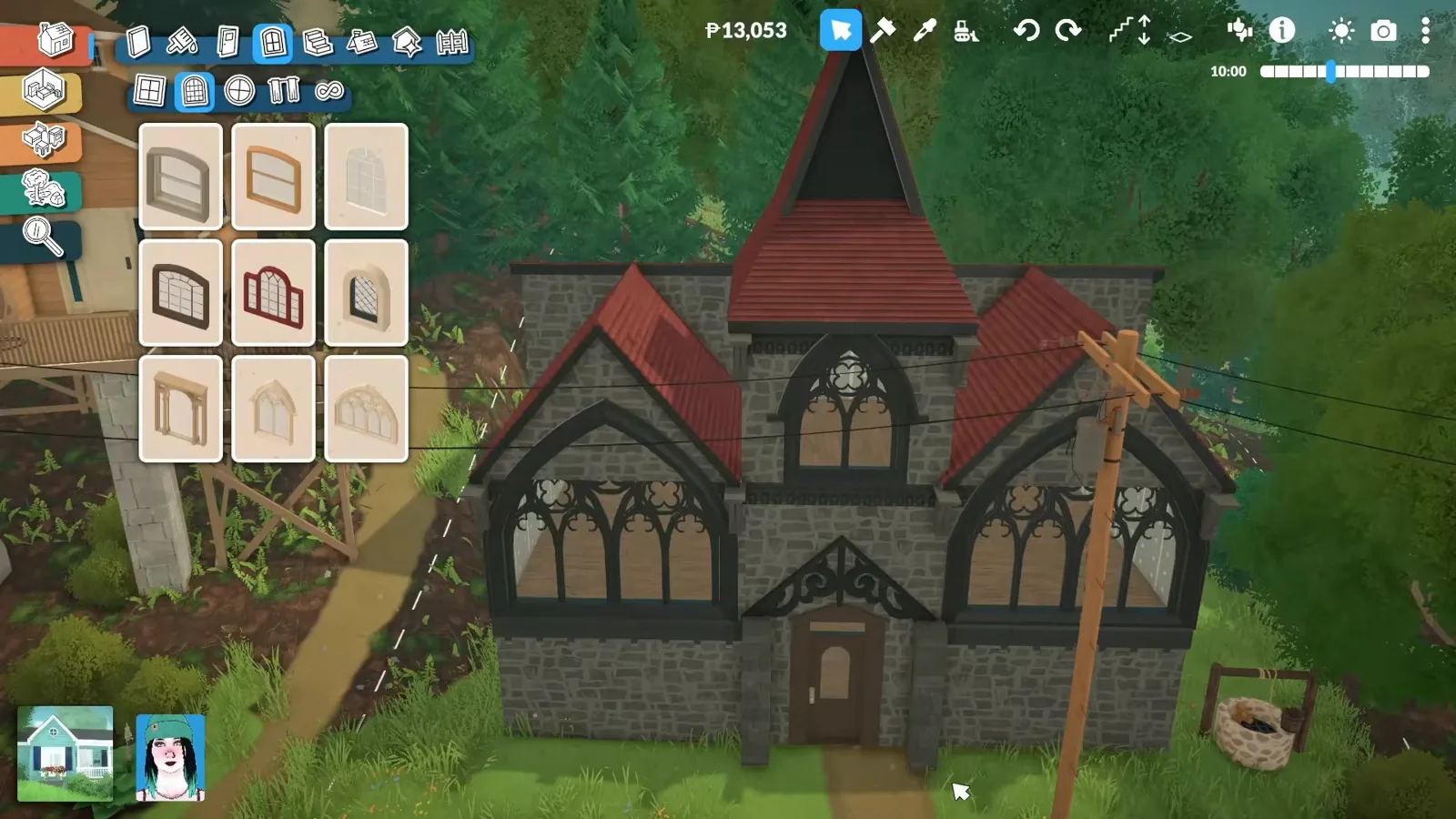
The arches stay huge; the walls grow to meet them.Watch at 7:18 - 6
Crown the door with an ornamental gable
Over the front door goes the game's ornamental tracery gable — one carved-looking piece that reads as centuries of stonemasonry. Free placement and the transform tool let it hover exactly over the door, which is also how the raven gets perched above it later without touching a wall.
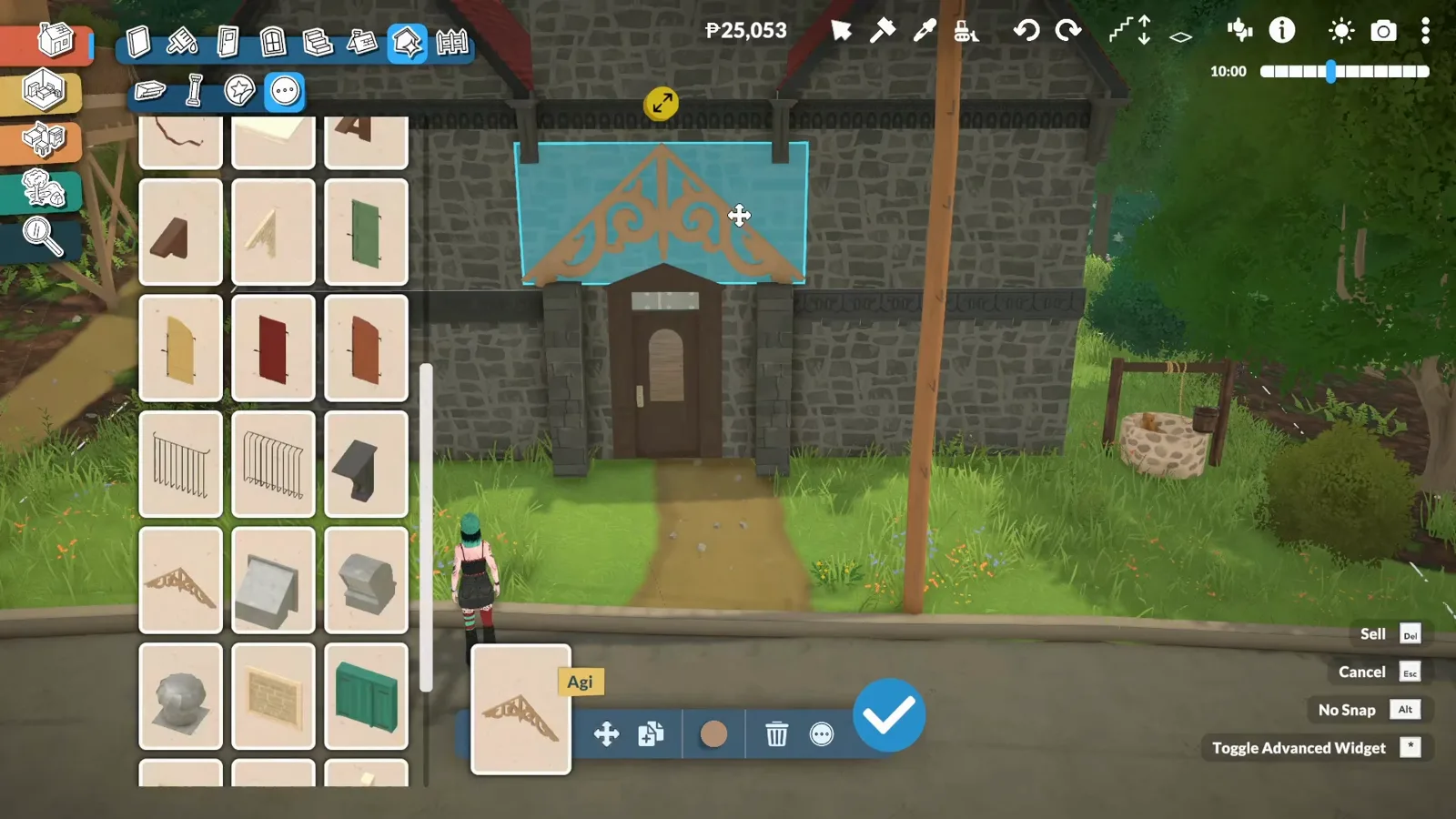
One tracery piece over the door — the converted-church signature.Watch at 6:30 - 7
Let ivy and dark foliage climb the walls
Ivy ages young stonework fifty years in one click; it frames the tower windows and spills over the porch arch. One gripe from the build: planters resize as a whole, with no elongate handle, so long borders get patched with repeated bushes and flower beds. Rocks and dark trees finish the overgrown-churchyard look.
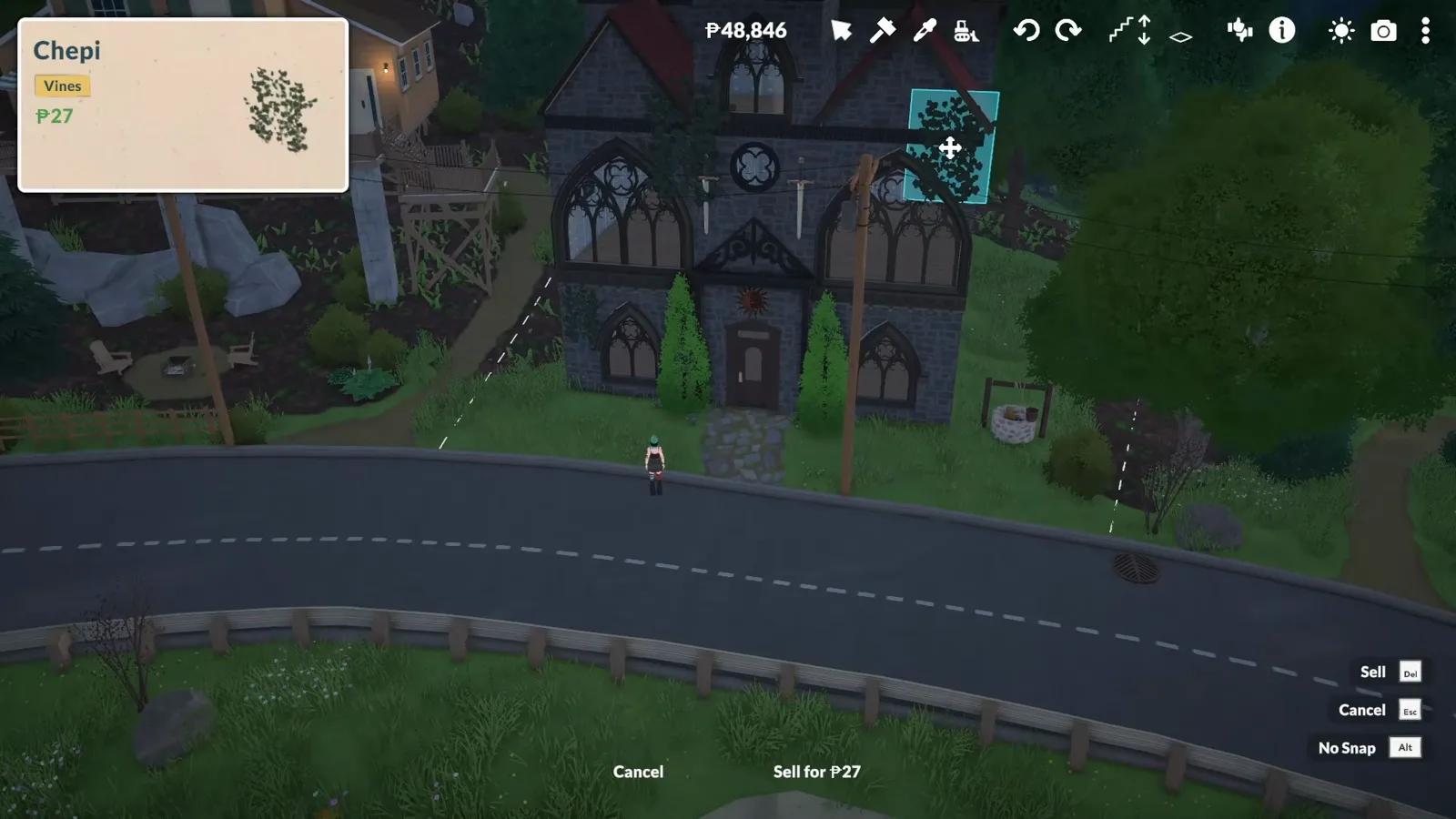
Ivy around the tower windows — instant age for a young building.Watch at 12:16 - 8
Top the spire with a star (there is no cross)
A church silhouette wants something at its tip, but the build catalogue ships no cross. The creator's workaround: a gold star ornament, auditioned first as a weather vane and then upgraded. Bat motifs flank the tower, and a raven ends up watching the door — free placement again, so it perches exactly where visitors' heads would be.
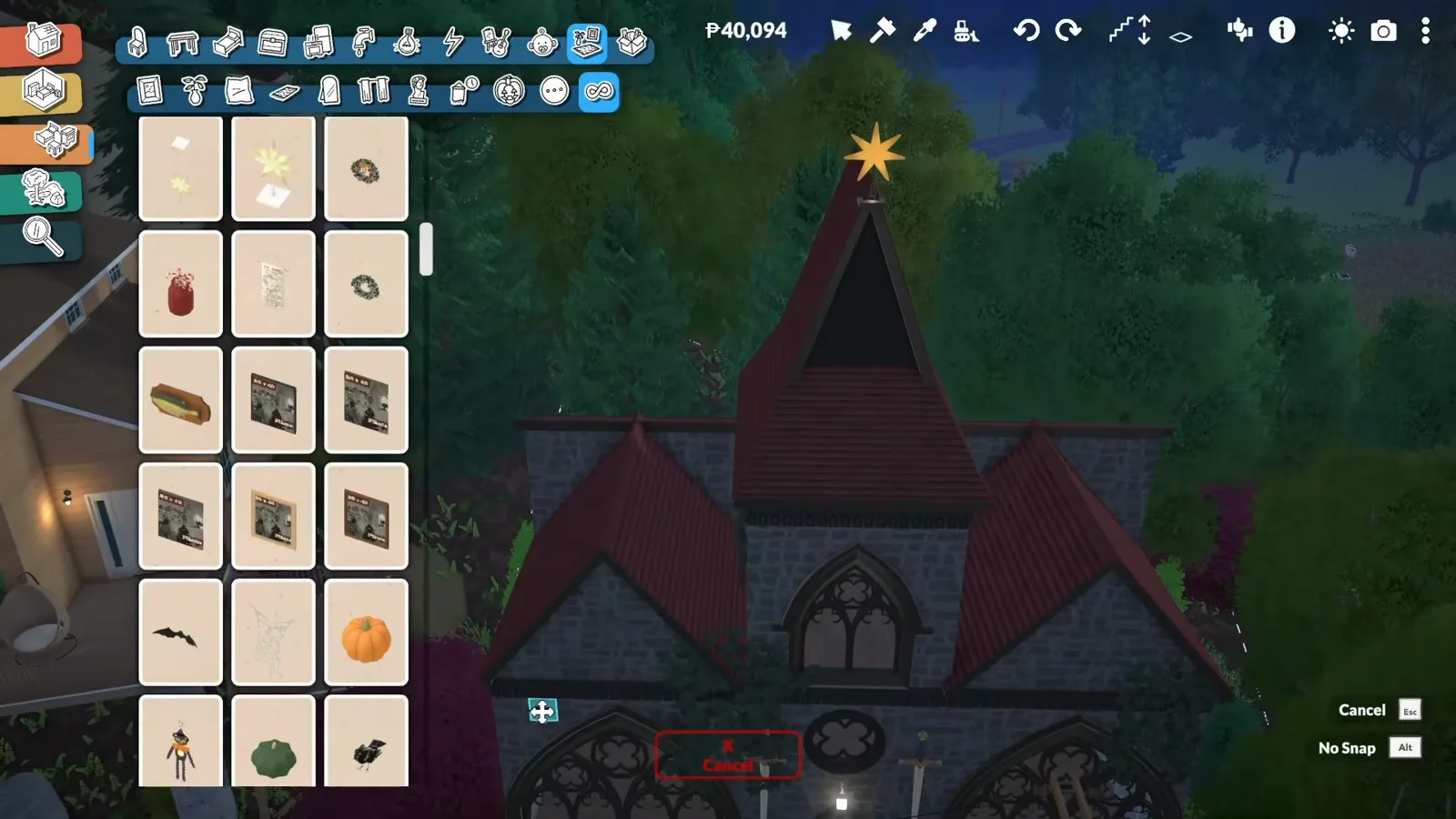
No cross in the catalogue — the star closes the spire.Watch at 15:16
Inside the nave
Plan rooms around glass you cannot shrink
The interior video of this conversion starts where the exterior ended: keep the tall stair hall, paint the coffered ceilings, then split the long ground floor so the kitchen works in tile while the dining end keeps wood and rugs. Every room ends up arranged around windows that refuse to shrink — and that is exactly what makes the plan interesting.
- 9
Plan the floors around the stair hall
Inside, the renovation keeps its church proportions: a tall stair hall with dark wood railing, then rooms wrapped around it. The builder lays stairs and railings before any furniture, and passes on two hard-won lessons — the game has a built-in way to surround stairwells from the upper floor that she missed, and a stray floor clip at the very top never fully healed.
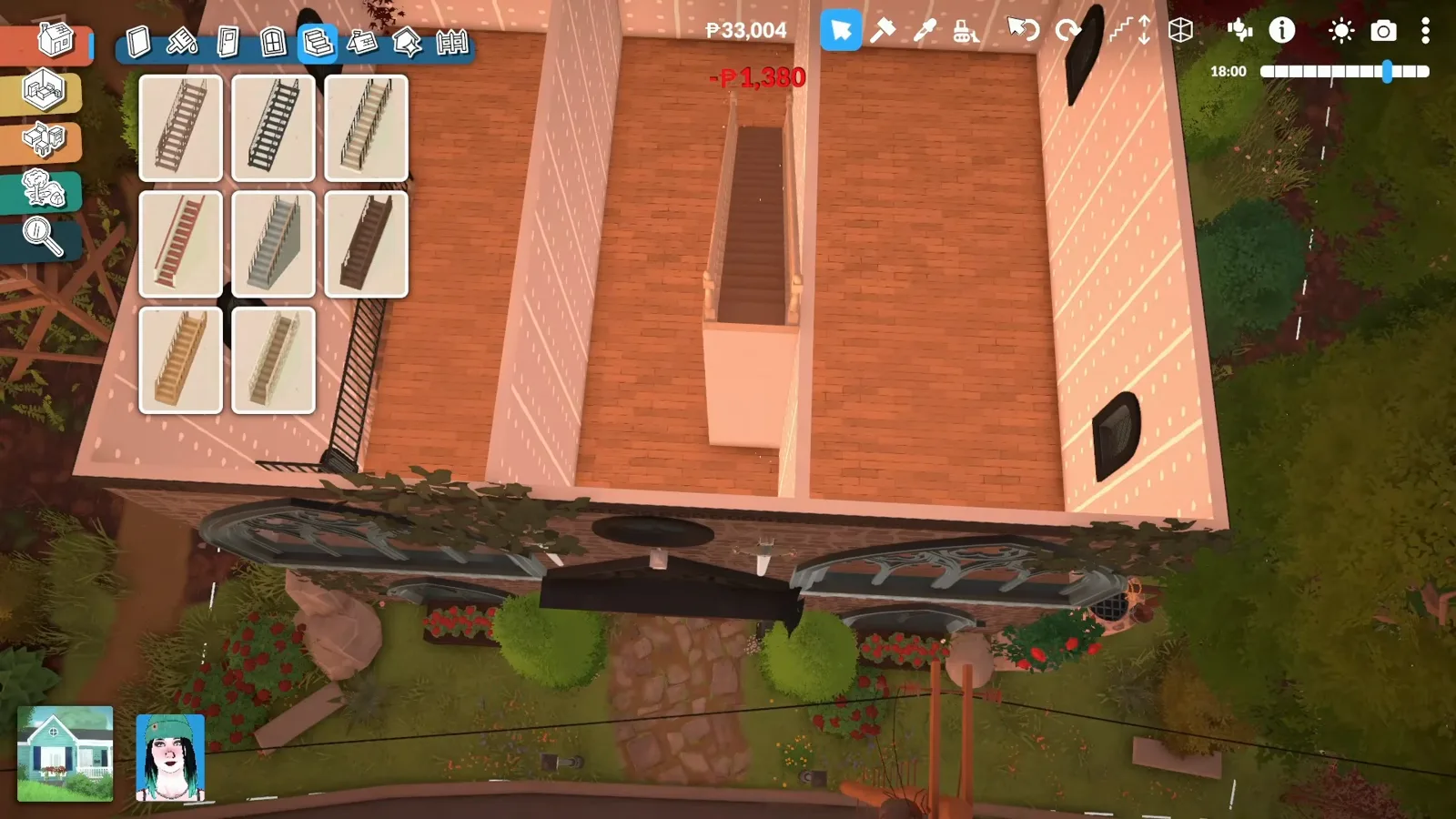
Stairs and railing first — the rooms inherit whatever space is left.Watch at 1:27 - 10
Paint the coffered ceilings like a church
Ceiling Painting Mode is where the building admits what it used to be. The deep coffered ceiling takes a warm plaster tone with wood trim, and the porch soffit gets its own pass from outside. A small step with an outsized effect — tall dark rooms live or die by what is overhead.
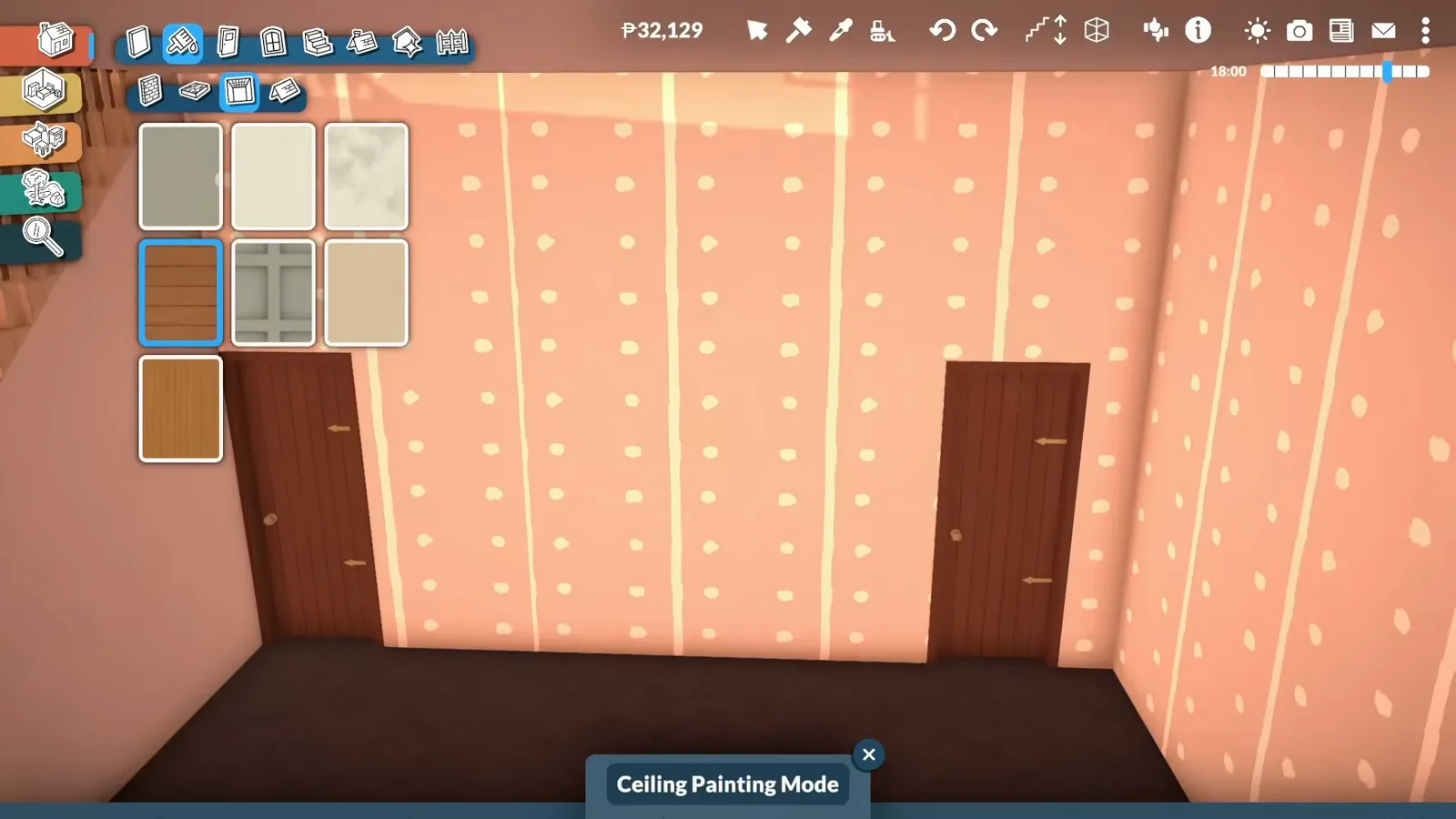
Coffered ceilings take paint per room — the church still shows through.Watch at 2:05 - 11
Split the floor where kitchen meets dining
One long ground floor wants two materials. The separator tool divides the room, Floor Painting Mode lays black-and-white checkerboard in the working half, and a worn red rug warms the dining end. The same trick later carves a walk-in shower out of the bathroom — one tool, two rooms.
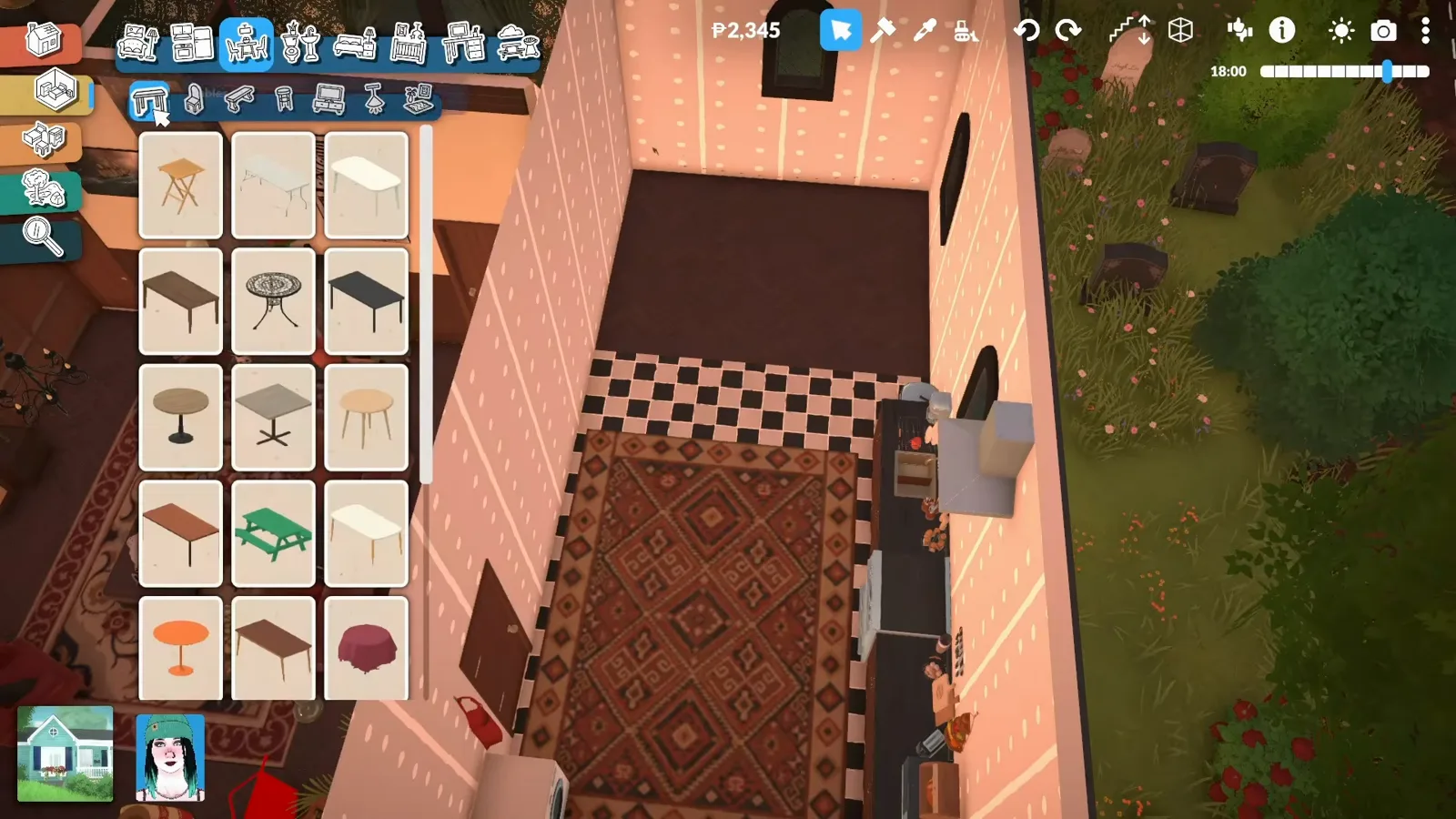
Checkerboard for the kitchen, rug for the table — one room, two jobs.Watch at 15:33 - 12
Run the kitchen under the gothic windows
Dark wood cabinets and black counters line the wall beneath the tall arches, with the washer and dryer tucked in British-style where the plumbing would be. In hindsight the builder would swap kitchen and dining — the big gothic windows belong to the table, not the sink — and mirrored pairs either side of the window patch the missing mirror-above-the-sink.
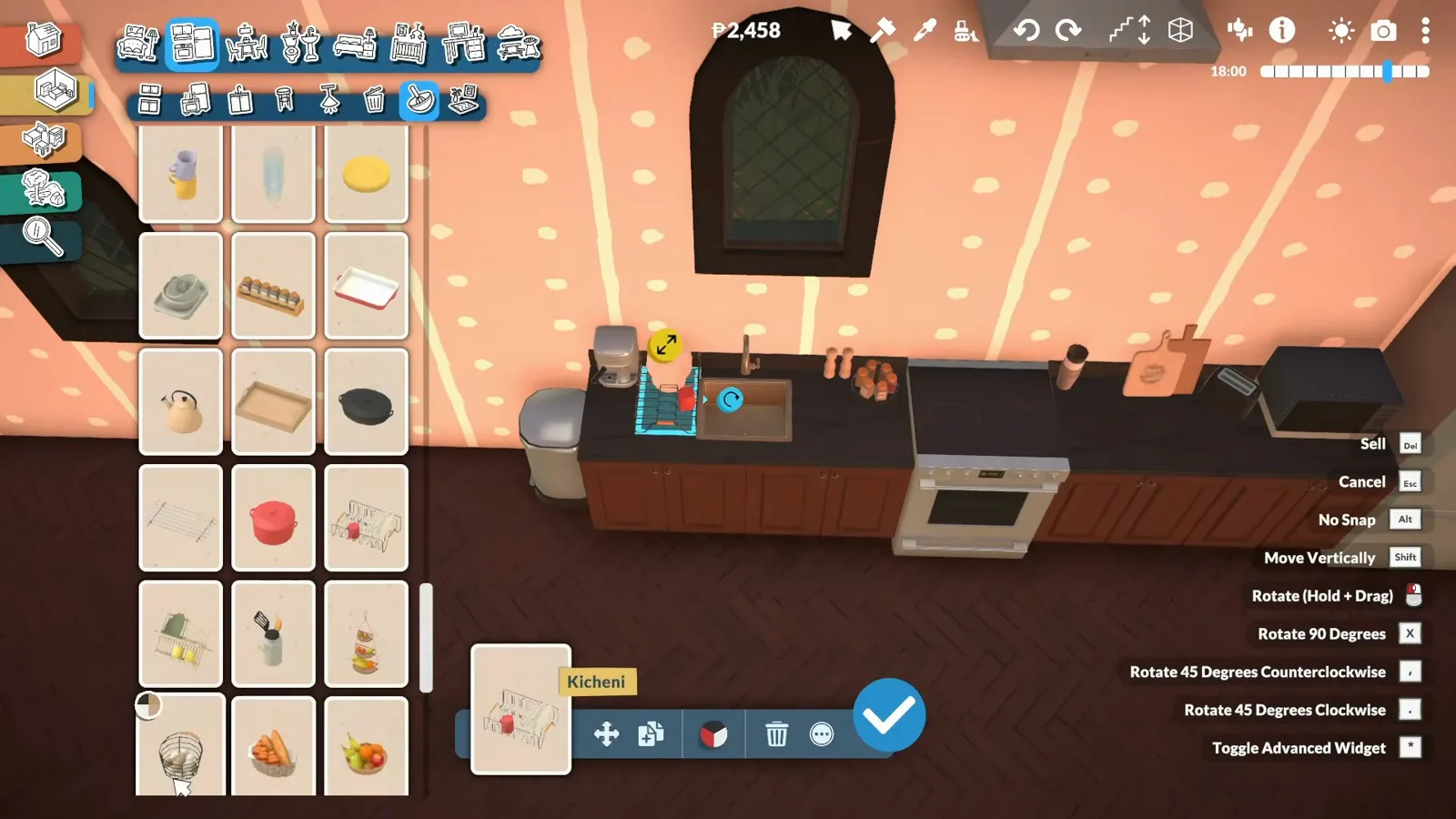
Dark cabinets disappear against the stone; the arches stay the feature.Watch at 15:13
Rooms & the night test
Dark-palette rooms, then check the lights at night
The gothic rule indoors is saturated and dim, never gray and flat: near-black tile in the bathroom, navy walls under the spire, oxblood blankets on the beds. Then comes the step most builds skip — flip to night and audit every fixture, because some lights barely glow and dark walls drink what is left.
- 13
Go near-black in the bathroom
The builder's favourite room in the house: near-black walls, patterned tile, a red vanity with a black counter and an arched window doing the decorating. Dark greens, dark reds and dark browns are the palette rule everywhere upstairs — gothic means saturated and dim, never gray and flat.
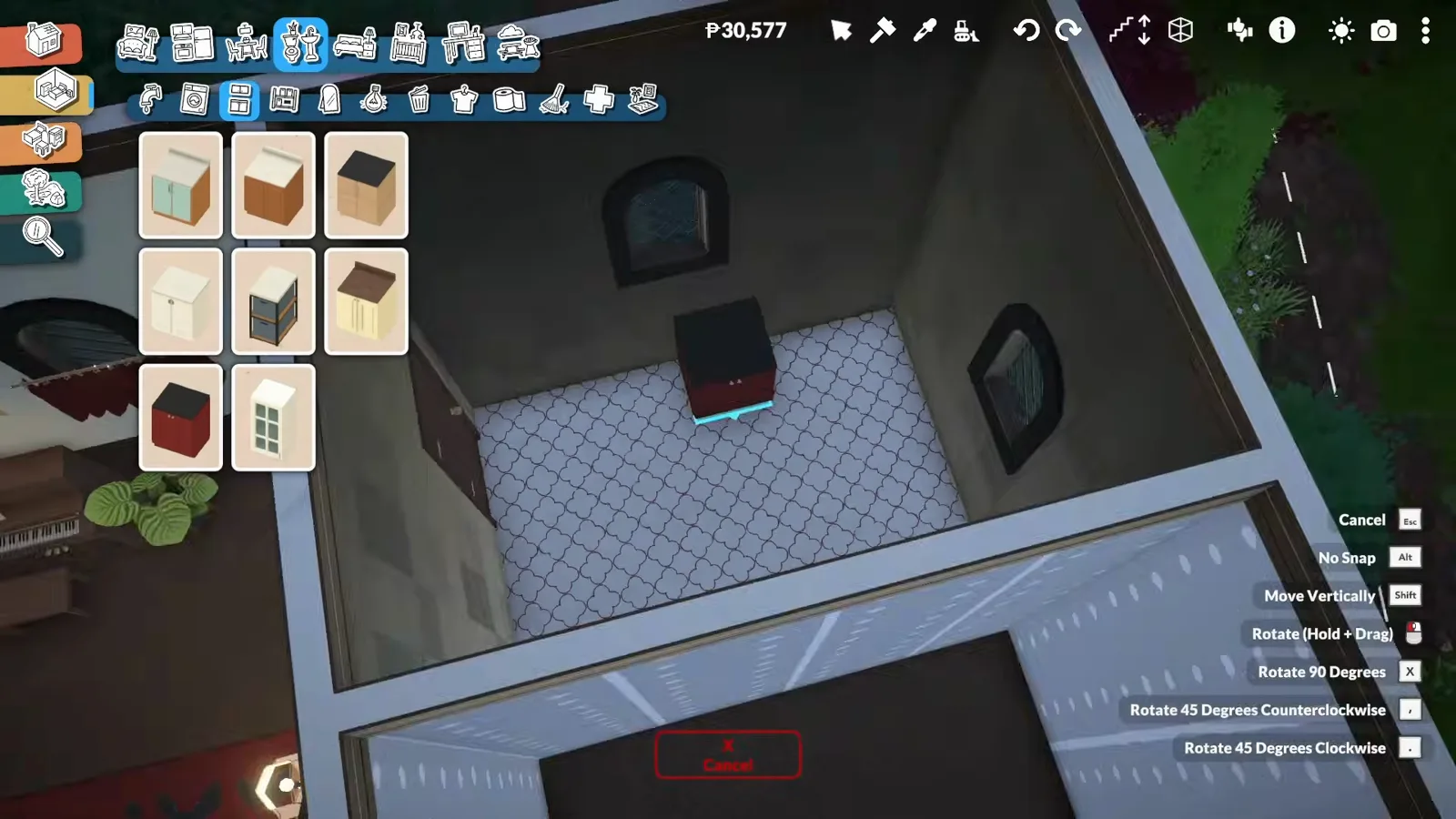
Black walls, red vanity, one good arch — the moodiest room in the house.Watch at 22:50 - 14
Give the turret the best bedroom
The room at the top of the tower ends up the most lived-in space in the house: navy walls, an oxblood blanket, one lamp left glowing. The builder calls it the room she would keep if she lived here — tucked under the spire with string lights over the bed. Attic rooms reward clutter, so this one collects toys, instruments and a wall of art.
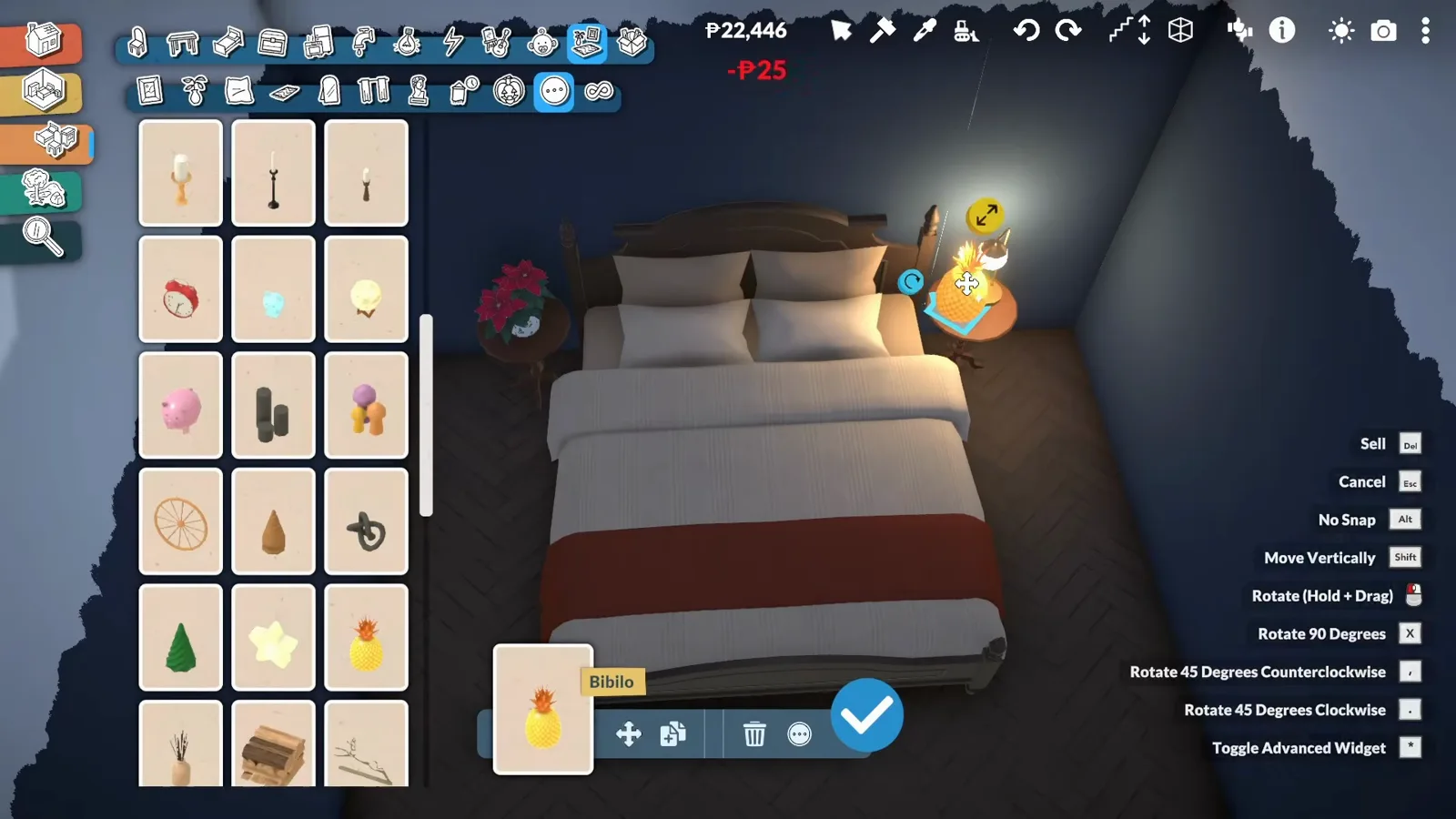
Navy walls under the spire — the room worth climbing three floors for.Watch at 25:25 - 15
Switch to night and audit every light
The final lesson cost a full re-tour: rooms furnished in daylight can be caves after dark. Some fixtures cast an honest pool of light, others barely glow, and dark walls drink whatever is left. Walk every floor at night, swap the weak lamps, then take the payoff shot — pointed windows glowing over the churchyard.
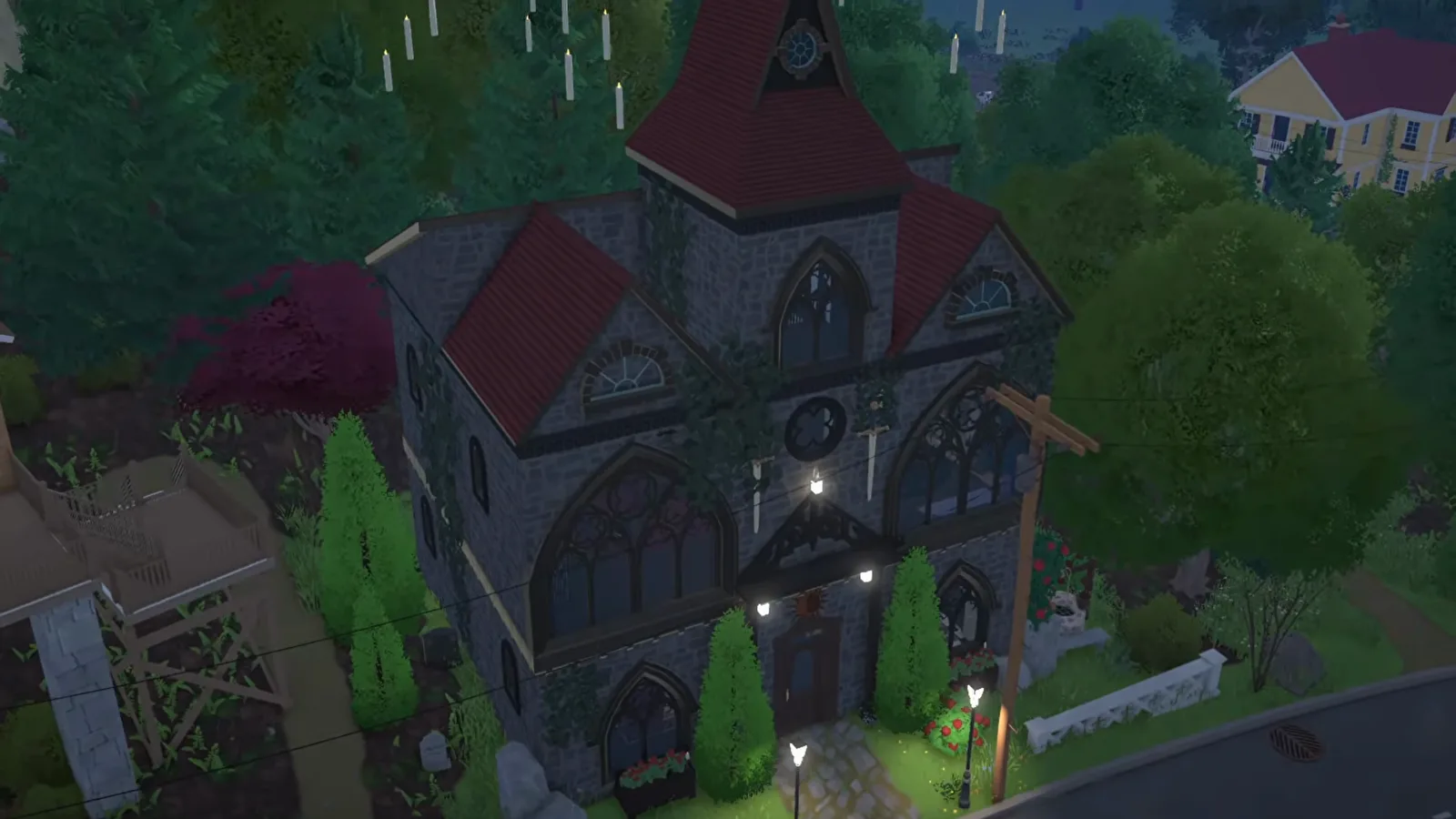
The night test: weak lamps exposed, pointed windows glowing.Watch at 18:04
Paralives gothic house FAQ
- Can you build a gothic house in Paralives?
- Yes. There is no gothic item pack, but every ingredient exists in the base game: pointed-arch windows, stone wall textures, steep roof planes, molding trims and plenty of bat-and-ivy decor. Both videos this guide follows use vanilla items only, and Steam Workshop mods can fill any gaps.
- How do you make gothic windows fit in Paralives?
- The gothic-arch windows are huge and can only shrink a little. Raise the wall height instead, so the windows sit in proportion — that is the workaround this conversion used after resizing alone failed.
- Is there a cross decoration in Paralives?
- Not in the build catalogue when this build was filmed. The creator topped the spire with a gold star ornament instead, and pointed to the Steam Workshop as the place a modded cross would come from.
- How do you convert a church into a home in Paralives?
- Keep the shell and its tall windows, re-dress the walls in dark gray stone with black trim, split the long ground floor with the separator tool, and give the tower rooms to bedrooms. That is exactly the sequence the exterior video here follows on a sloped corner lot.
- What colors work best for a Paralives gothic build?
- Dark and saturated: gray stone with black accents outside, then dark greens, oxblood reds and browns inside, with near-black tile in the bathroom. Both builders warn against flat gray — gothic needs depth, not emptiness.
- Why are my Paralives rooms so dark at night?
- Fixtures differ a lot in how much light they actually cast, and dark walls absorb the rest. The interior build forgot the upstairs lights entirely and had to go back room by room — audit lighting at night before you call a dark build finished.
Keep building
Paralives house ideas
A gallery of build concepts to steal from — the lots, the footprints and the houses that fit them.
Paralives Victorian house build
Turrets, curved roofs and period rooms — the era most gothic builds borrow from, step by step.
Paralives Japanese house build
A different tradition entirely: engawa, sliding panels and a roofline built from gentle slopes.
Related guides
Decorating guide
Color, clutter and the free-placement habits that make rooms feel lived in.
Build mode tips
The settings, shortcuts and workflow habits worth setting up before your next build.
Paralives cottagecore build
The opposite mood board: soft pastels, wild gardens and a thatch-heavy roofline.
Witch house tutorial
Another fantasy build — a timber witch cottage with a potion shop and a secret cauldron room.
Hobbit house tutorial
A hillside hobbit hole with a round door and a painted rock roof.