
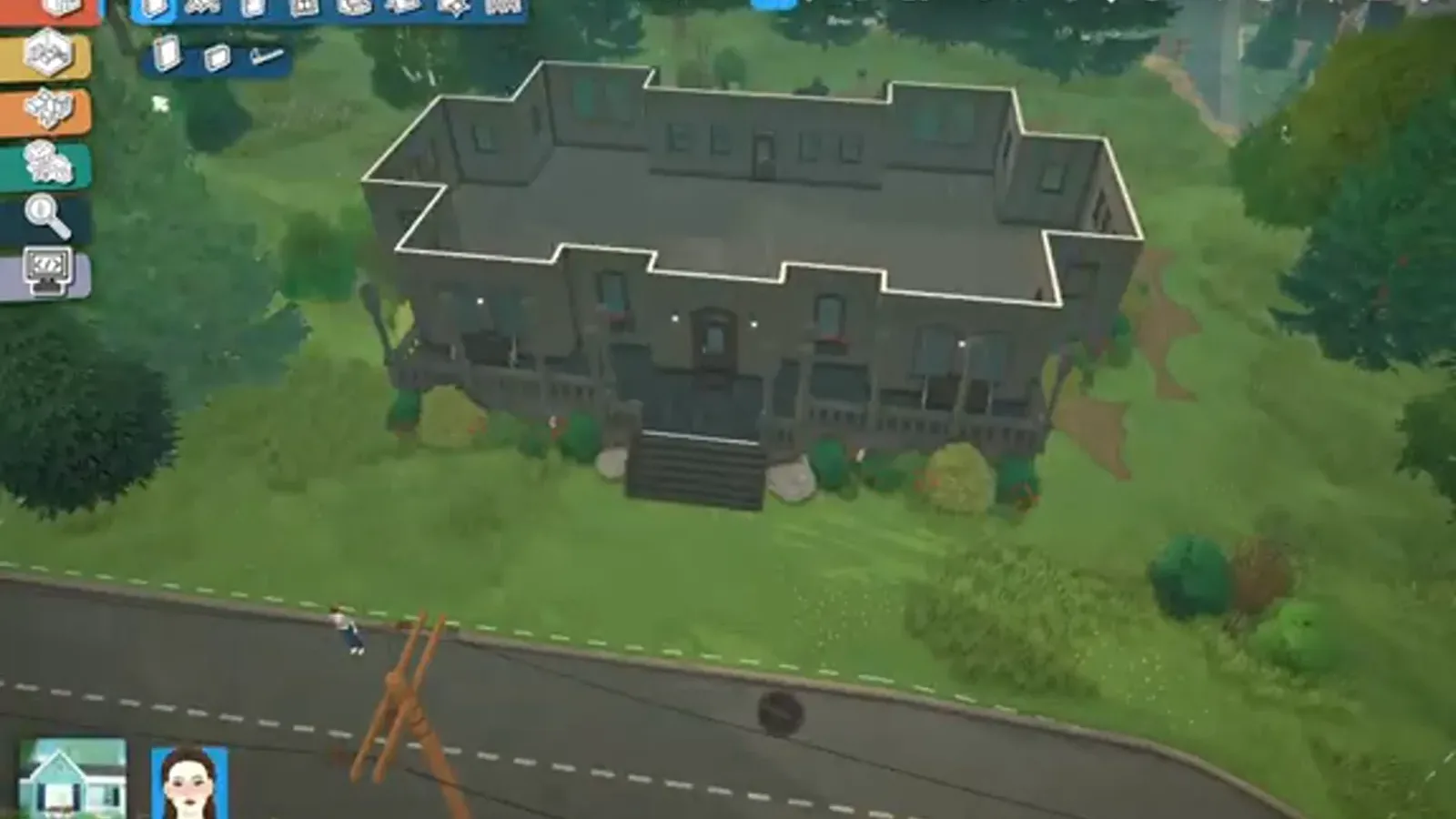
The haunted mansion formula
Tall and narrow beats wide. Draw a deep multi-floor shell, dress it in the darkest roof pieces the catalogue has, fake the corners the roof tool cannot close, then bring the whole thing down to earth with harsh grey ground and a thin-railed porch. Nothing here needs mods.
- Draw the shell tall — this build lands at six or seven storeys
- Corner roofs do not close cleanly: cap 1x1 rooms with chimneys instead
- Dark red and black roof pieces carry the whole look
- Place trim one piece at a time — and keep it off inside walls
- Terrain paint has no soft edges; harsh patches read as gloomy ground
- The featured build is exterior-only — furnish it your own way
Group 1 · The shell
Draw it tall and let it lean
A haunted house reads by silhouette, so the shell does the heavy lifting. Walls can be any length at any angle in Paralives, and every floor can keep its own wall height — which is exactly what a crooked Victorian needs.
- 1
Draw the first walls long and mean
The build opens in wall placement mode: a long, off-centre footprint with a stub wing, drawn freehand on the terrain. Nothing is gridded — walls in Paralives can be any length at any angle, so the asymmetry that makes a mansion feel wrong in the right way is just… drawing.
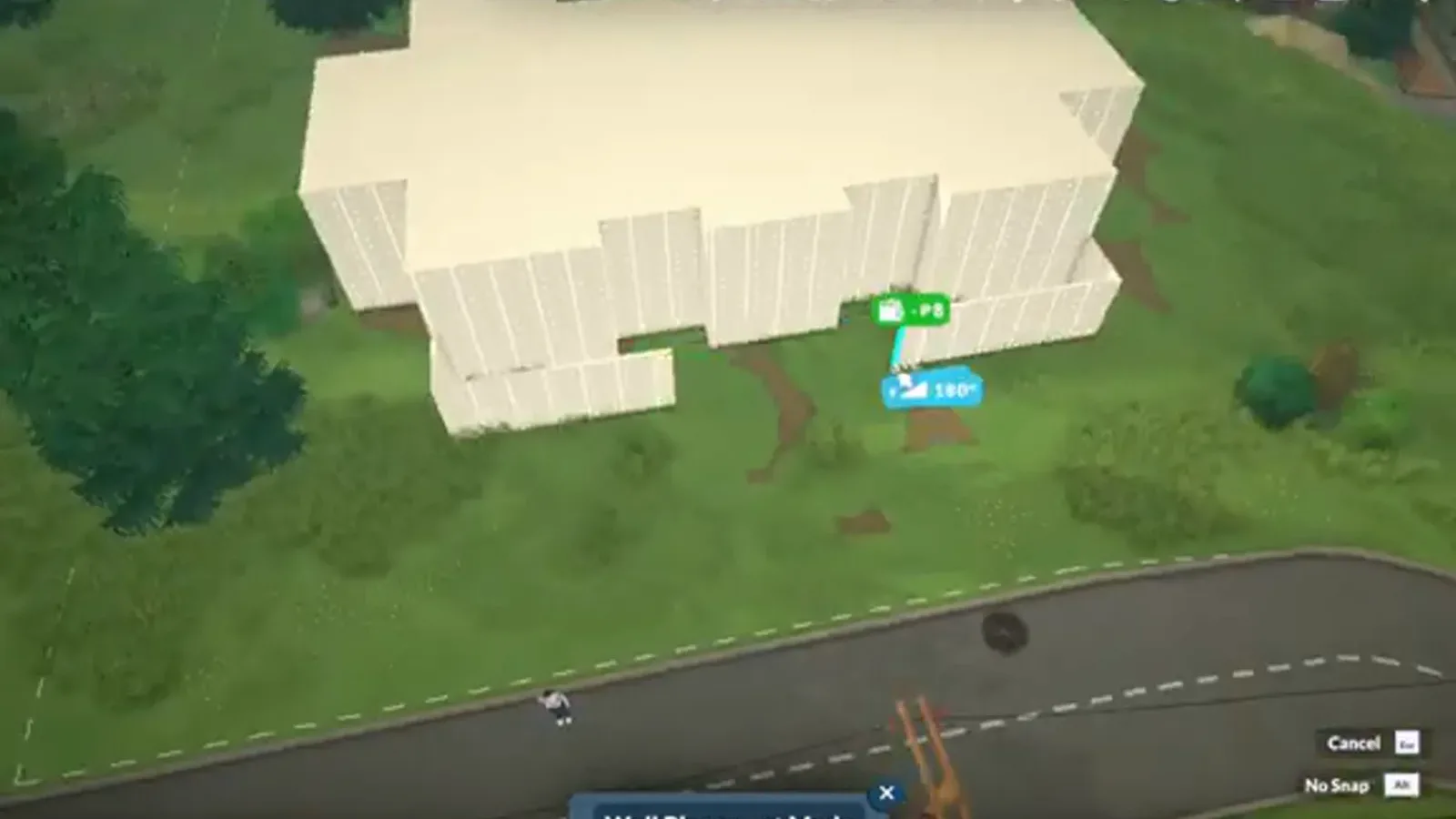
The footprint leans before it climbs.Watch at 1:00 - 2
Stack the storeys and vary their heights
Level after level goes on the same footprint. Wall height is adjustable per floor, so short servant-storeys can sit under tall piano-nobile rooms — the creator picked heights floor by floor for exactly this effect. She finished counting at six or seven storeys; no source documents a build limit, so aim as tall as your lot allows.
Uneven floor heights make the tower feel older than it is.Watch at 4:00 - 3
Rework the massing while it is cheap
A haunted mansion is a shape you argue with: wings move, a storey shrinks, a stub gets erased. The sledgehammer removes any wall run cleanly, and re-visiting the bare shell at every stage keeps the final silhouette deliberate instead of accidental.
Naked shell, honest silhouette.Watch at 5:00
Group 2 · The roof work
Dark pieces, stubborn corners
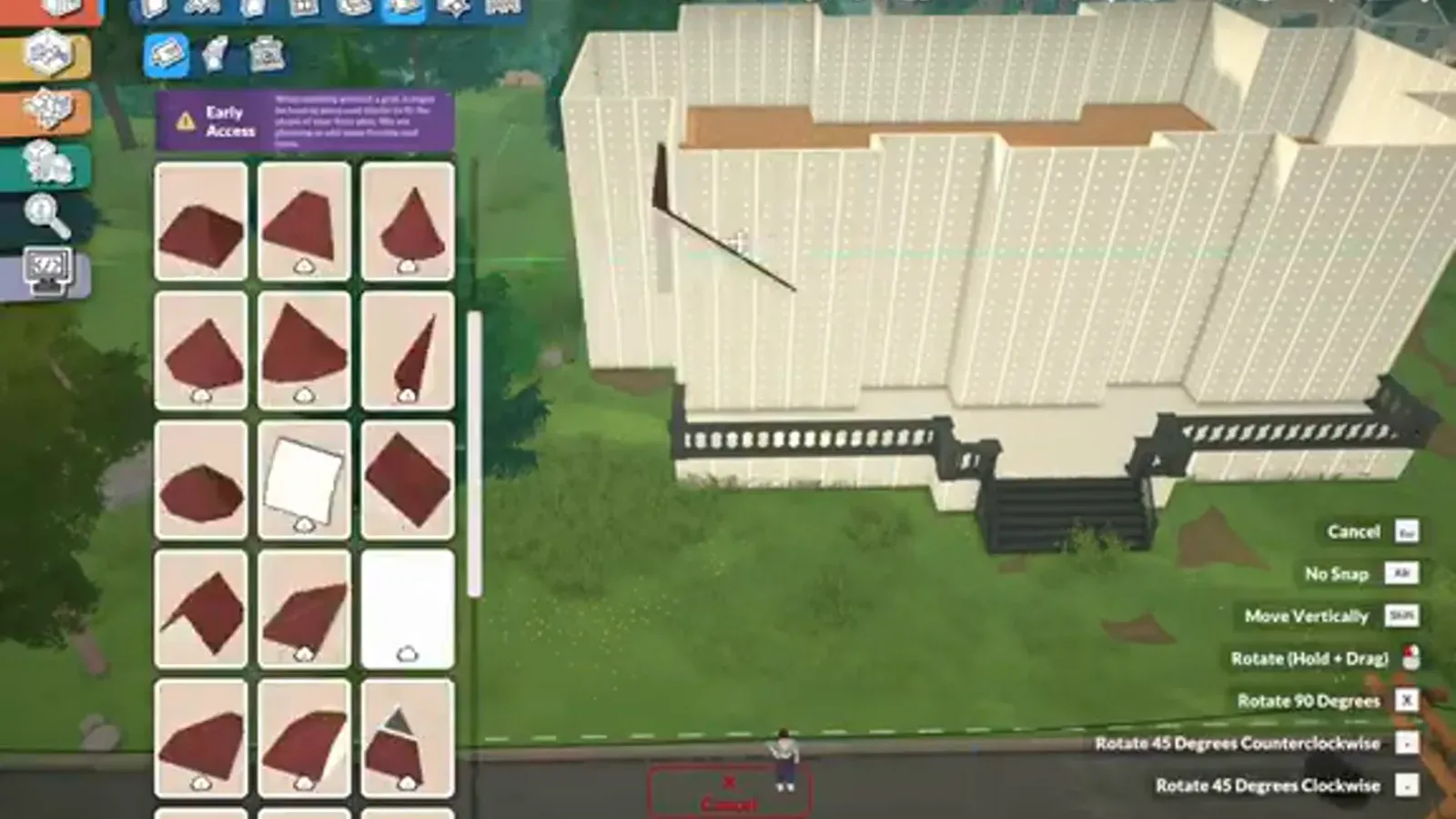
Roofs are flagged as an Early Access feature in-game, and this build shows it: the big pieces behave, but wrap-around corners refuse to close. The fix the creator lands on is a classic — stop fighting the corner tool and park chimneys on top of tiny rooms instead.
- 4
Lay the first dark roof pieces
The roof catalogue is where the mood arrives: deep reds and near-blacks go on first, piece by piece, over the tallest volumes. Each piece resizes by dragging, so the same gable stretches across wings of different widths.
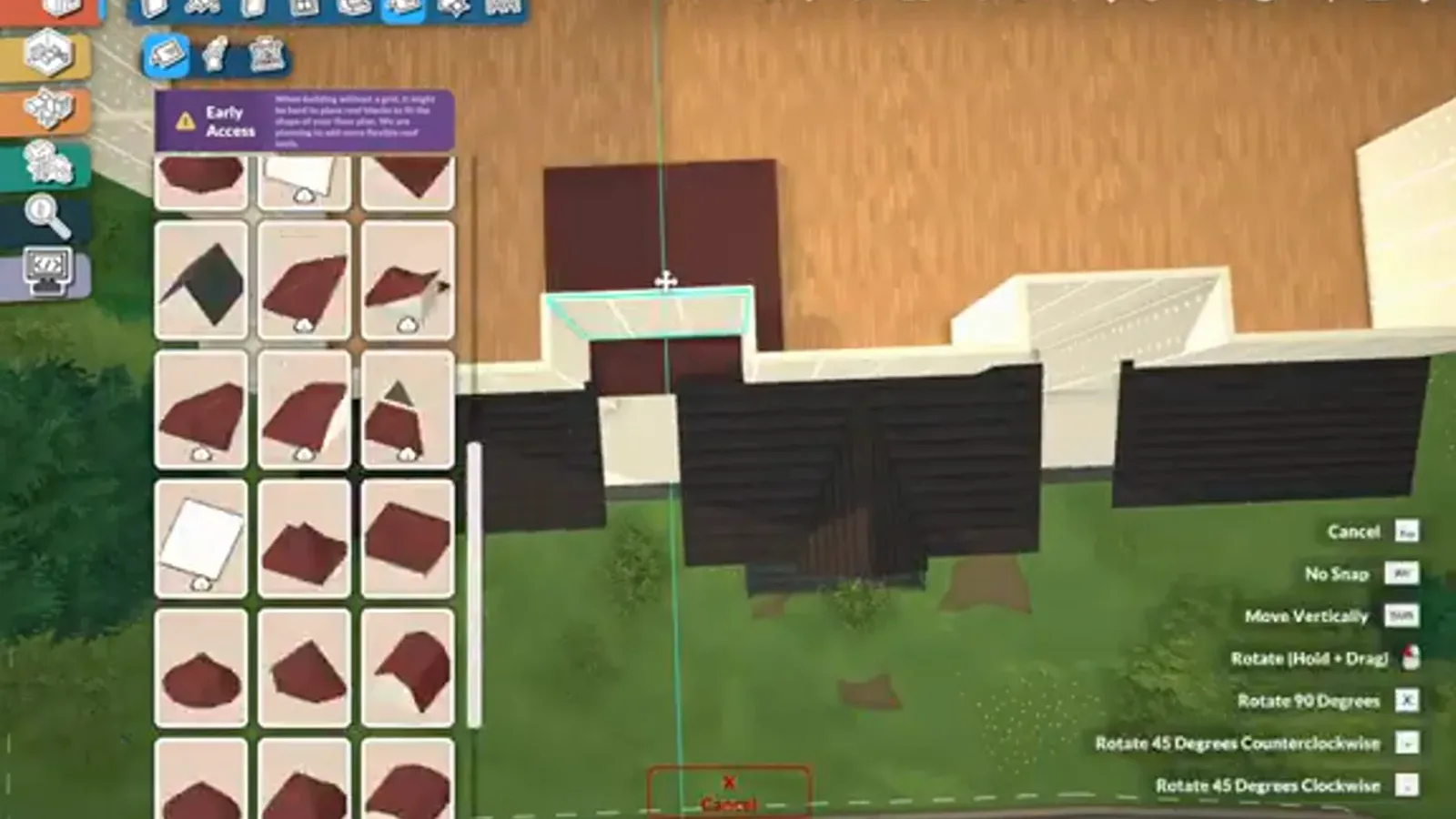
One palette, whole roofline.Watch at 6:00 - 5
Meet the corner that will not close
Where two roof runs meet at an inside corner, the pieces overlap or leave a gap instead of meeting cleanly — the creator wrestles this for a long stretch of the video and keeps every attempt in. It is the single most time-consuming quirk of the build.
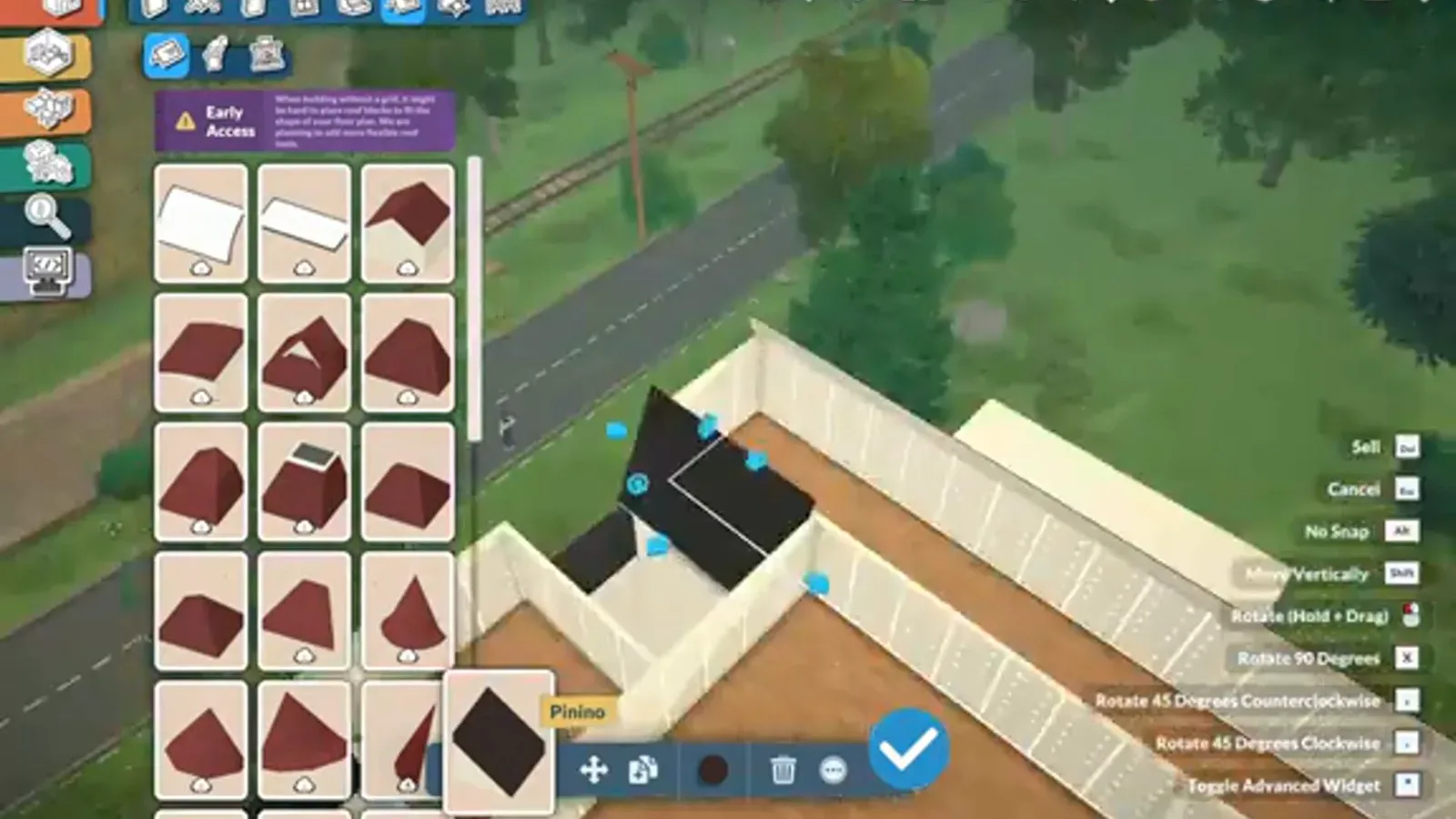
The gap that ate twenty minutes.Watch at 7:00 - 6
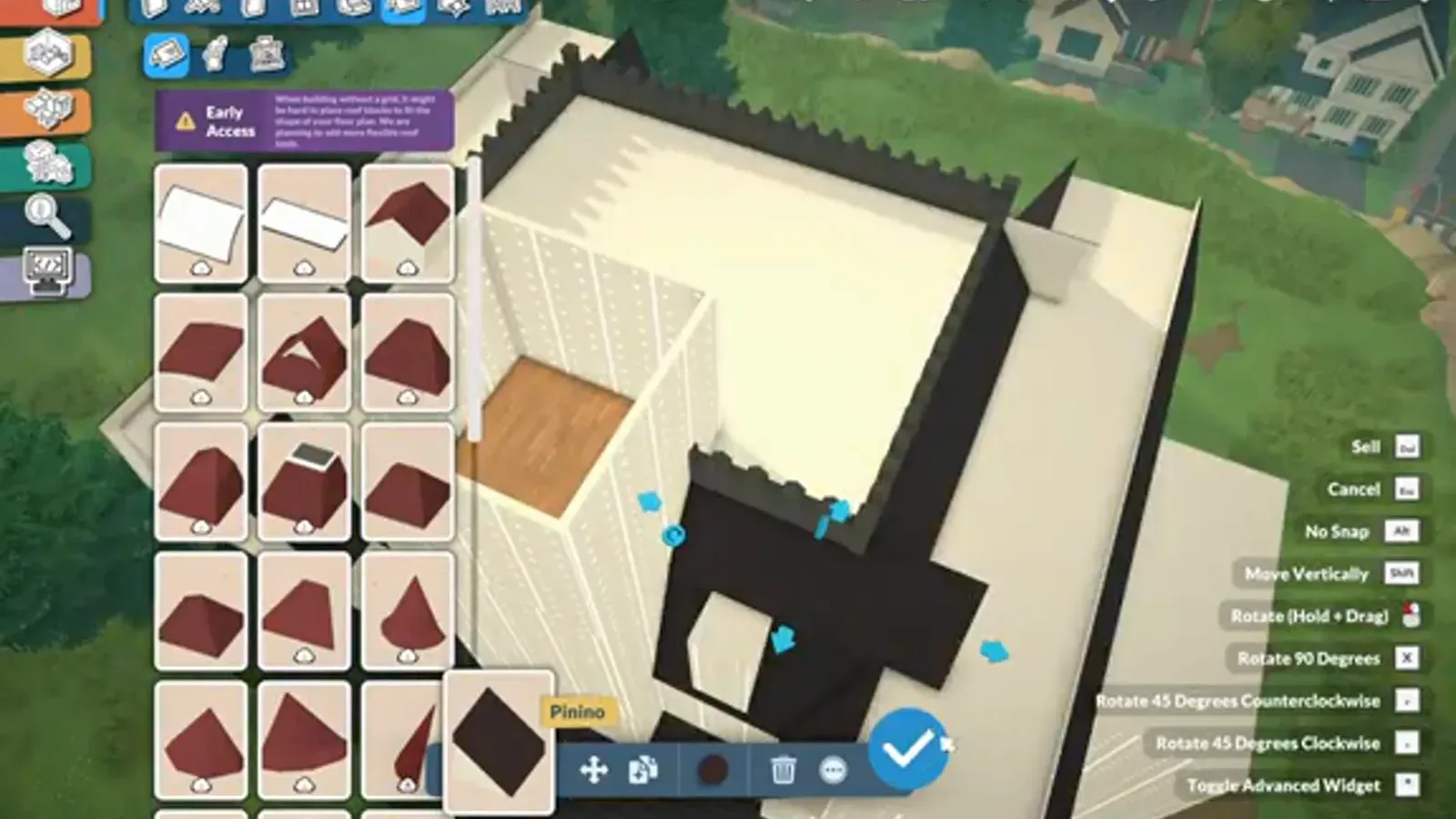
Fake the corners with 1x1 chimney rooms
The workaround she settles on: wherever a corner will not close, build a tiny one-tile room up the roofline and cap it with a chimney. Repeated along the roof, the little chimney boxes read as Victorian chimney stacks — a workaround that ends up looking intentional.
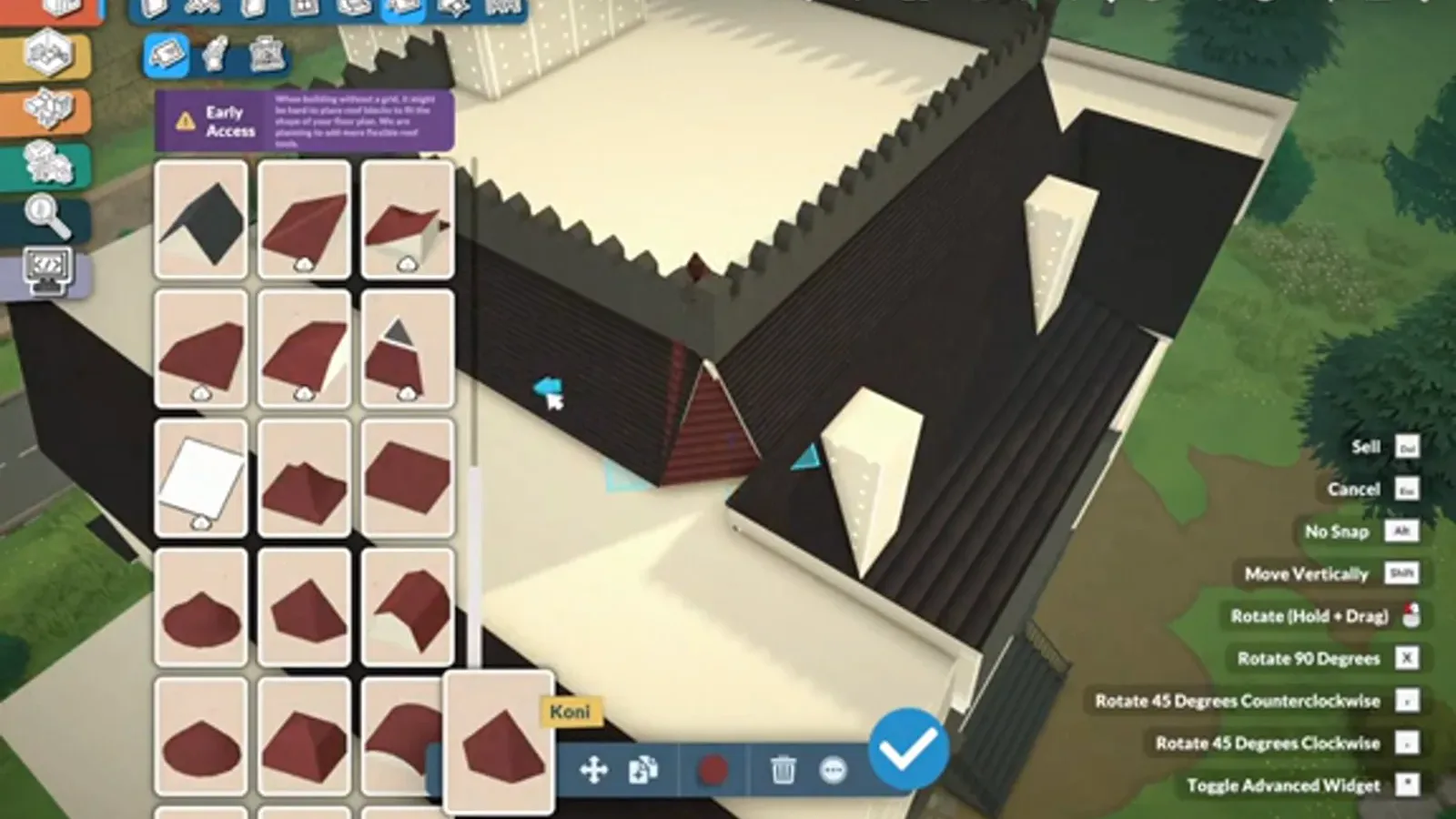
A bug-hunt turned into a chimney parade.Watch at 12:00 - 7
Punch dormers into the roof plane
Dormer windows sit in the window catalogue: place one on a sloped plane, resize it, and the roof opens to receive it. Rowed along the front face they break up the big dark planes — and they are the cheapest way to suggest an attic nobody will ever see.
Attic daylight, purely decorative.Watch at 13:00 - 8
Top the tower with a spire
The stair-tower gets its crown from the steepest roof pieces, rotated into place with the roof widget until the point lines up. This is the silhouette moment — from the street, the spire is the first thing anyone sees.
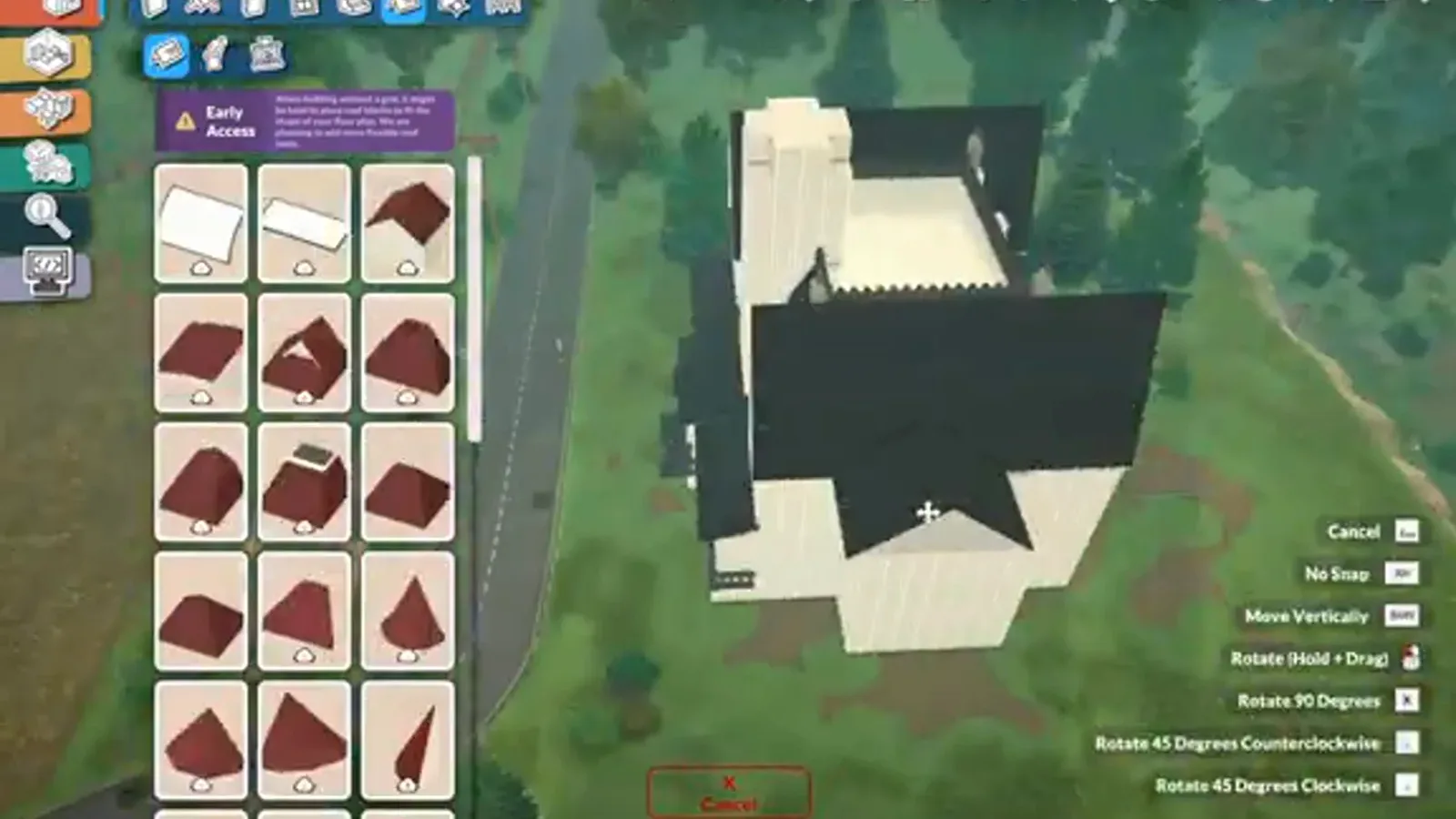
Every haunted house needs one pointy accusation.Watch at 15:00 - 9
Mind the wall-height error
Join two wall runs of different heights and Paralives refuses with "Cannot connect clusters of walls of different heights" — this build trips it exactly as the red toast shows. Even out the two runs, or let a door or half-wall absorb the transition; our walls guide documents the error in full.
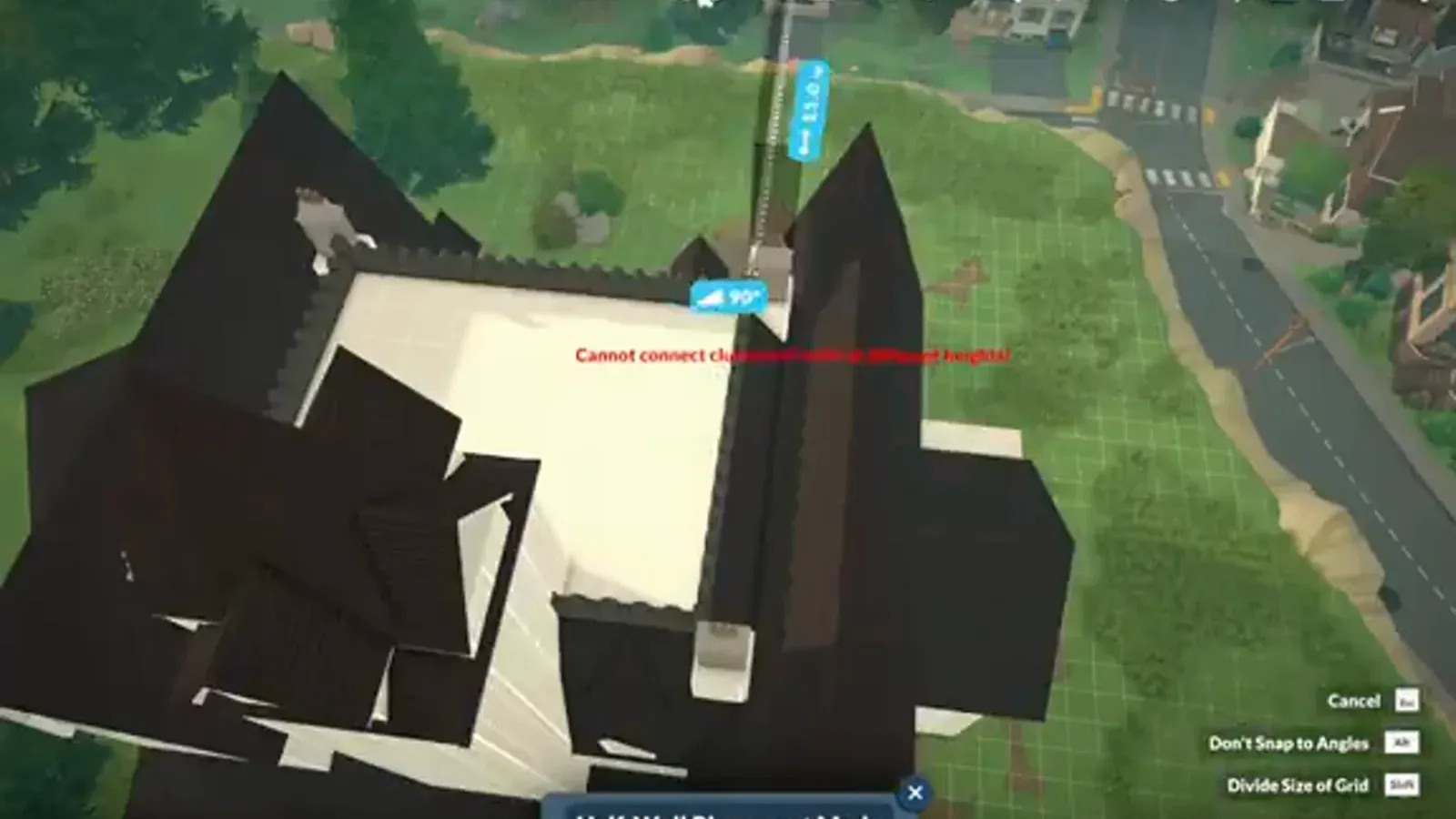
The toast every tall build meets.Watch at 16:45
Group 3 · The dark dressing
Paint it funeral-grey
With the bones done, the palette does the haunting: deep greys and greens on the walls, narrow dark-framed windows, a thin-railed porch, and trim placed painstakingly by hand.
- 10
Paint the body funeral-grey
Wall painting mode goes over every surface with the deepest greens and greys in the catalogue. The trick is one colour family across the whole house, slightly desaturated — anything brighter snaps the fantasy straight back to dollhouse.
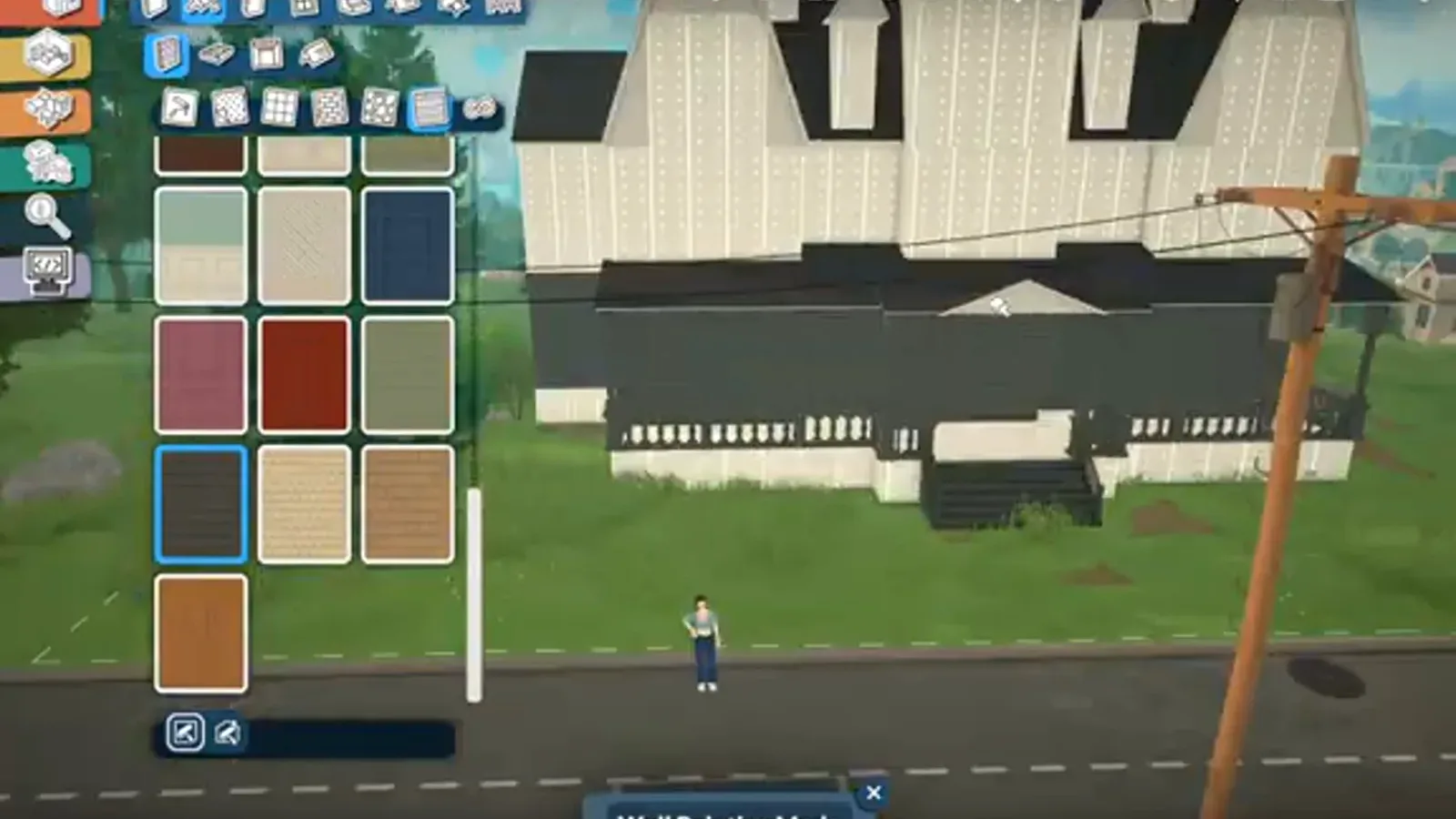
Desaturate until it broods.Watch at 19:00 - 11
Pick narrow, dark-framed windows
Tall, narrow windows with heavy dark frames go in across every floor — unevenly, on purpose. Victorian houses grew by accretion, so windows that almost line up but not quite sell the age better than a perfect grid.
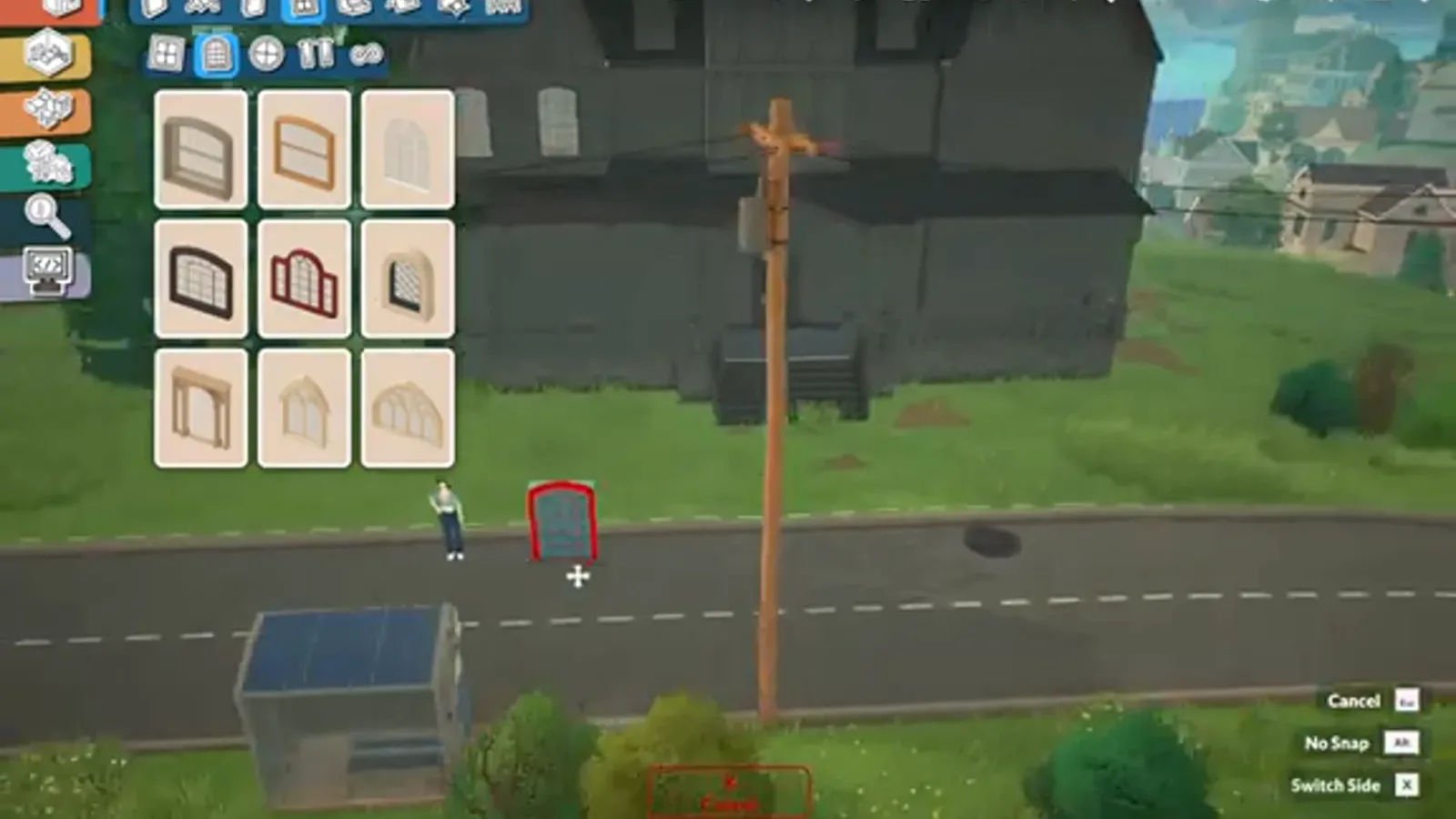
Almost-aligned is the goal.Watch at 22:00 - 12
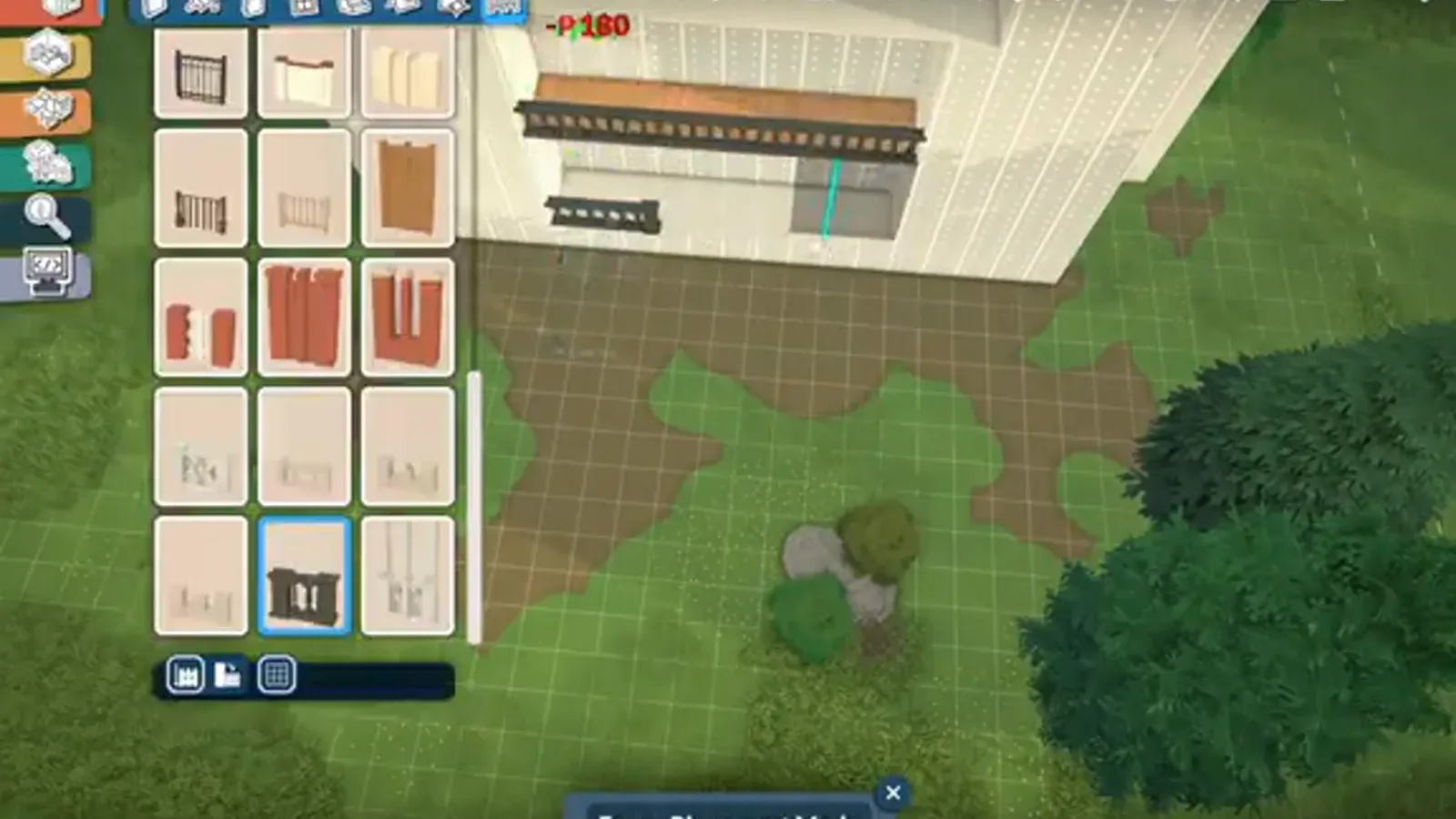
Wrap the porch in thin railings
A wrap-around porch gets the thinnest railing profile in the catalogue, run low so it reads as a fence line rather than a barrier. It also gives the ground floor a shadow line that separates the house from its yard.
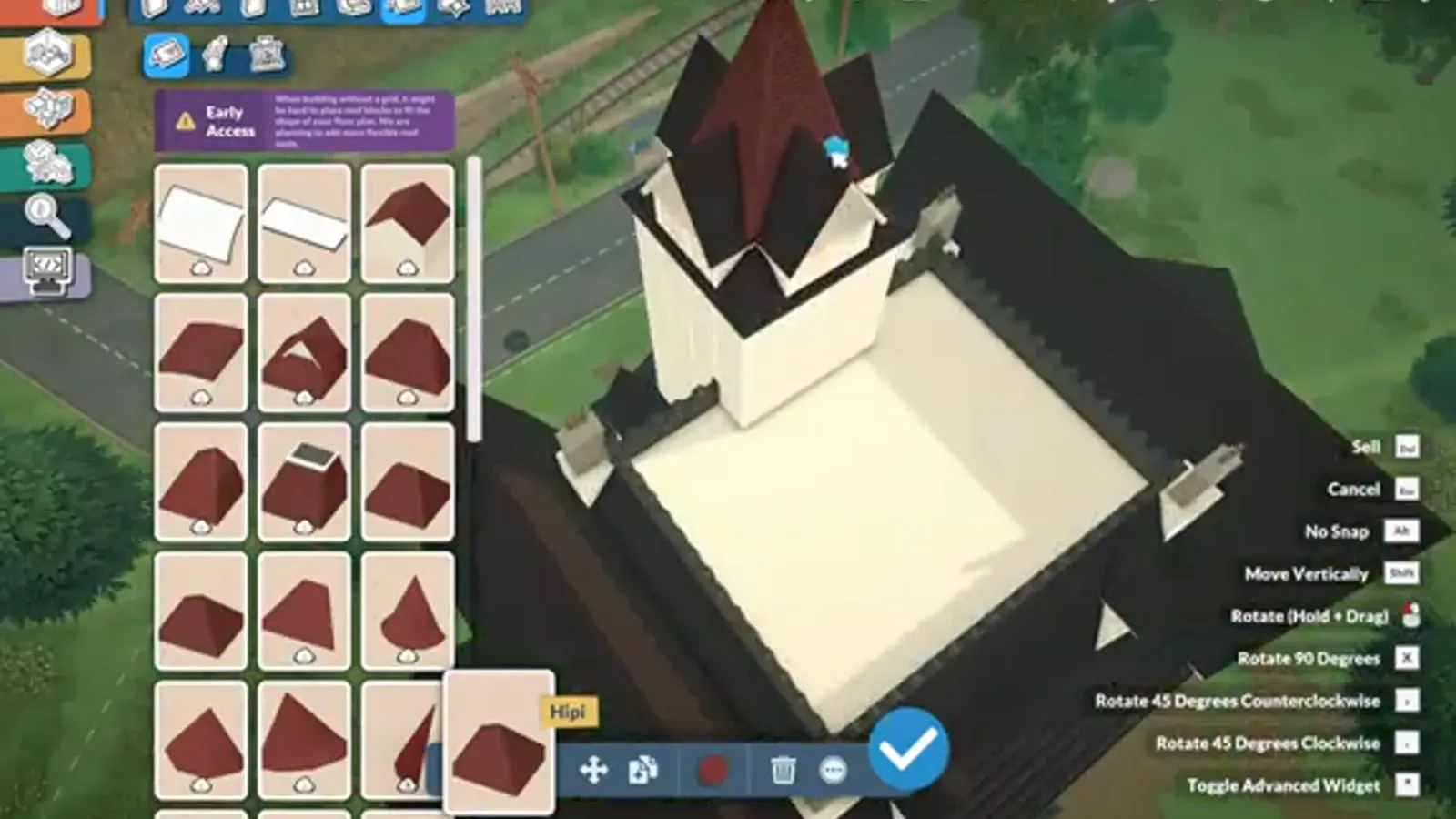
A railing thin enough to feel neglected.Watch at 16:00 - 13
Place trim by hand, one piece at a time
The least glamorous pass is the one she calls her least favourite: every length of trim raised and lowered individually to sit under each eave. Her warning from the same session — trim placed outside can show through from inside, blocking second-floor sightlines, so check both sides as you go.
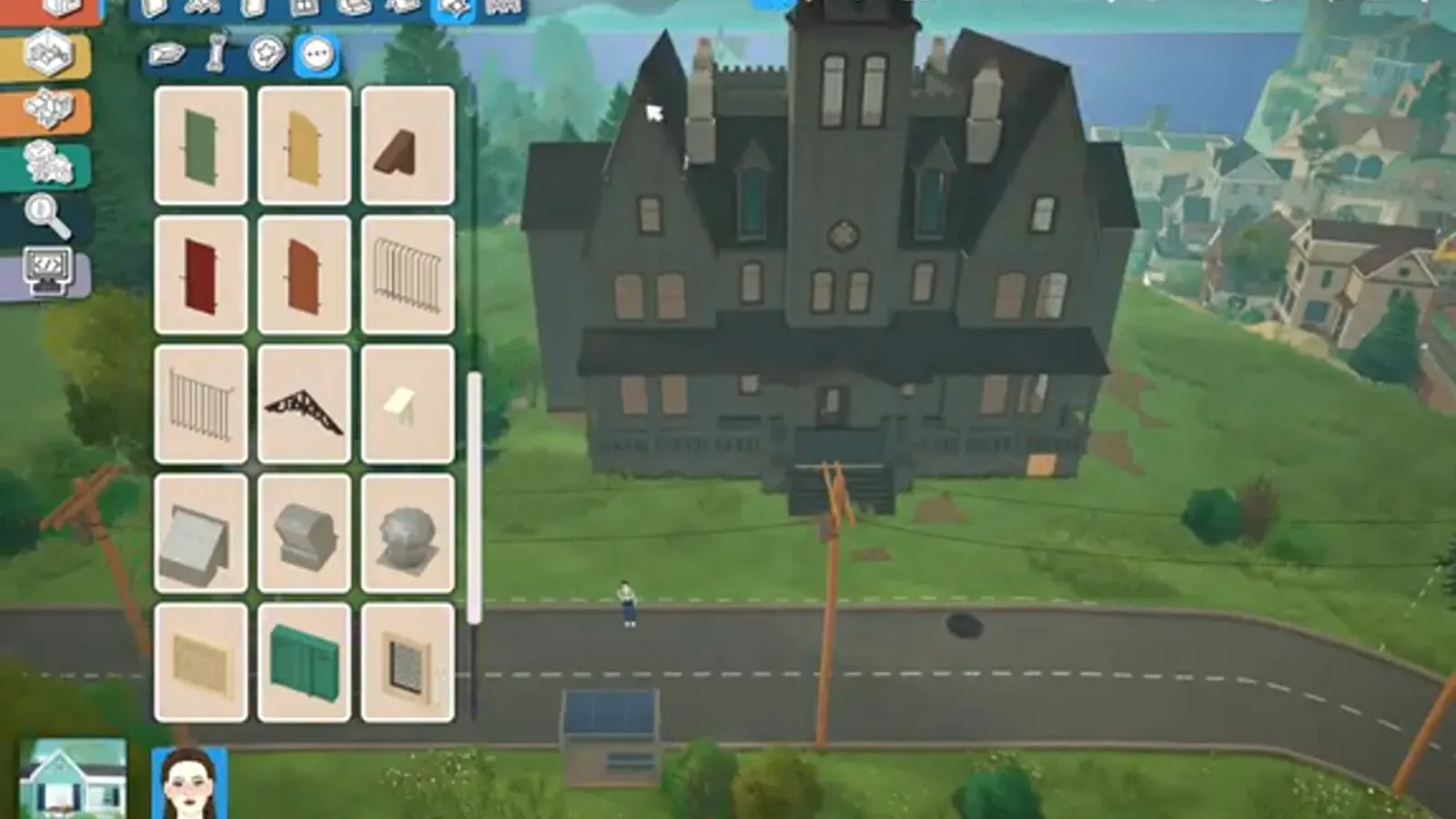
Slow, fiddly, worth it.Watch at 24:00
Group 4 · Ground and silhouette
Bring it down to earth
The last pass is all atmosphere: harsh, blotchy terrain paint (there is no soft-edge option — lean in), a landscaping sweep, and a long look at the silhouette before the final shot.
- 14
Paint harsh, moody ground
Terrain paint mode lays down grey-brown patches for dead grass and worn paths. There is no opacity slider and no edge blur — the paint lands hard-edged, which on a haunted lot simply reads as weather. The creator wishes for softer tools; until they ship, harsh is the aesthetic.
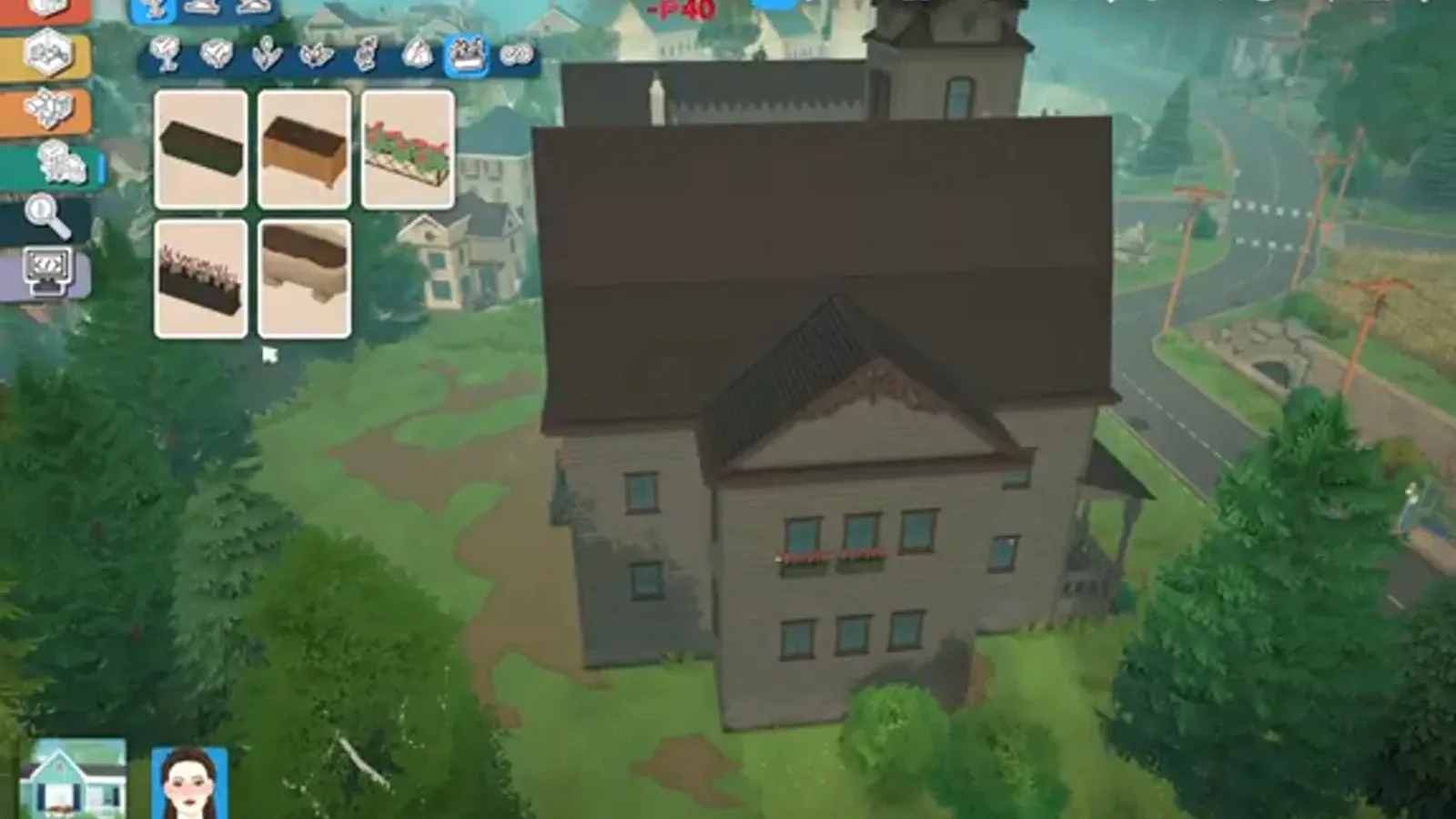
No blur tool? Call it weathering.Watch at 33:00 - 15
Step back and judge the silhouette
Zoomed out, the mansion finally reads as one object: crooked wings, the spire, chimney boxes marching along the corners. This is the moment to fix massing — anything that looks wrong as a silhouette will look wrong in every screenshot after.
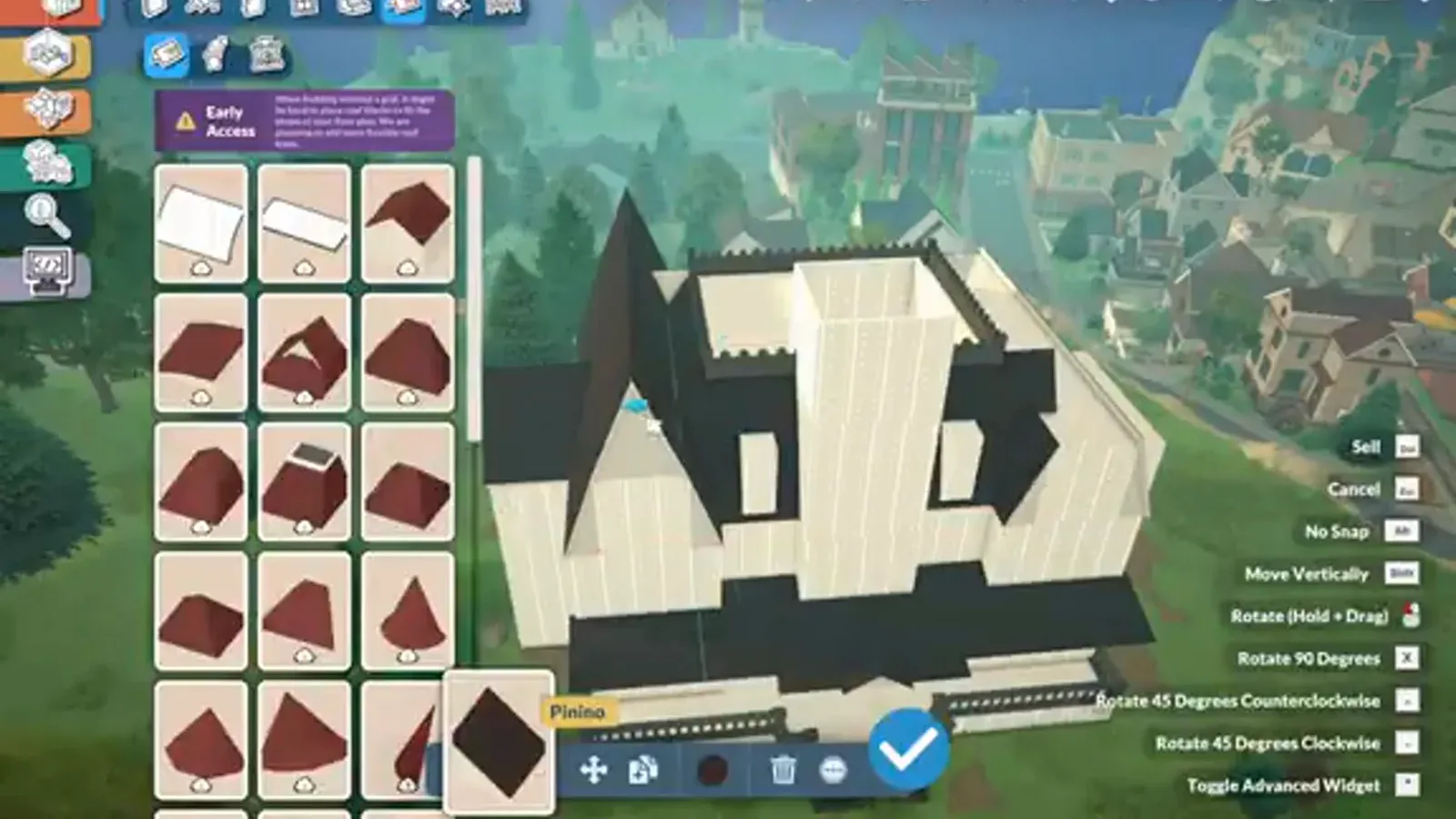
Silhouette first, details second.Watch at 14:00 - 16
Land the establishing shot
The finished front — wrap porch, dark glazing, the tower leaning over all of it — is the shot the whole build was aimed at. The creator published the exterior-only shell to the Steam Workshop, so the haunted part stays haunted: the inside is yours to fill.
Exterior by the creator; hauntings sold separately.Watch at 35:00
Haunted house FAQ
- Is there a haunted house lot type in Paralives?
- No. Paralives has no haunted mechanic, no ghost NPCs and no special lot type — a haunted house is an ordinary residential lot dressed in dark builds. Everything on this page is standard Build Mode; nothing is modded.
- How tall can you build in Paralives?
- No official source documents a maximum number of floors or a height limit. The mansion in this guide lands at six or seven storeys by its creator's own count, built on a standard lot without any fuss. Paralives also lets each floor use a different wall height, which is what makes lopsided Victorian massing possible at all.
- Why did some of my roofs disappear after restarting?
- The creator of this build reports that quitting and reloading can leave some roofs — especially pieces not sitting directly on a room — gone for good. That matches what our known-issues page tracks on reload bugs. Practical defence: save before big roof sessions, and rebuild the missing piece rather than the whole roof.
- How do I fix "Cannot connect clusters of walls of different heights"?
- That error appears in this very build when wall runs of different heights try to join. The fix is to even out the two runs, or separate them and let a door or half-wall absorb the transition — our walls guide covers the error and its solutions in detail.
- Can I furnish the inside of a haunted house?
- Absolutely — the featured build ships exterior-only, with the creator planning a separate interior session. Dark wood furniture, low lamps and clutter go a long way; our decorating guide picks up exactly where this page stops.
Keep building
Gothic house build guide
The gentler cousin: pointed arches and candle warmth instead of decay, from a full walkthrough.
Victorian house build guide
The same era with the lights on — trim, turrets and paint without the graveyard palette.
Witch house build guide
Cottage-scale spooky: floating candles, herb corners and a crooked roofline of its own.
A gothic cathedral, sixteen steps
Curved apse walls, conical-spire towers and moulding tracery.
Roofs: the full guide
Every roof tool demonstrated — gables, slopes, widgets and the quirks this page only touches.
Known issues & reload bugs
Vanishing roofs, wall errors and other Early Access sharp edges, tracked patch by patch.
All build guides
Every walkthrough and technique page on the site, one shelf.