
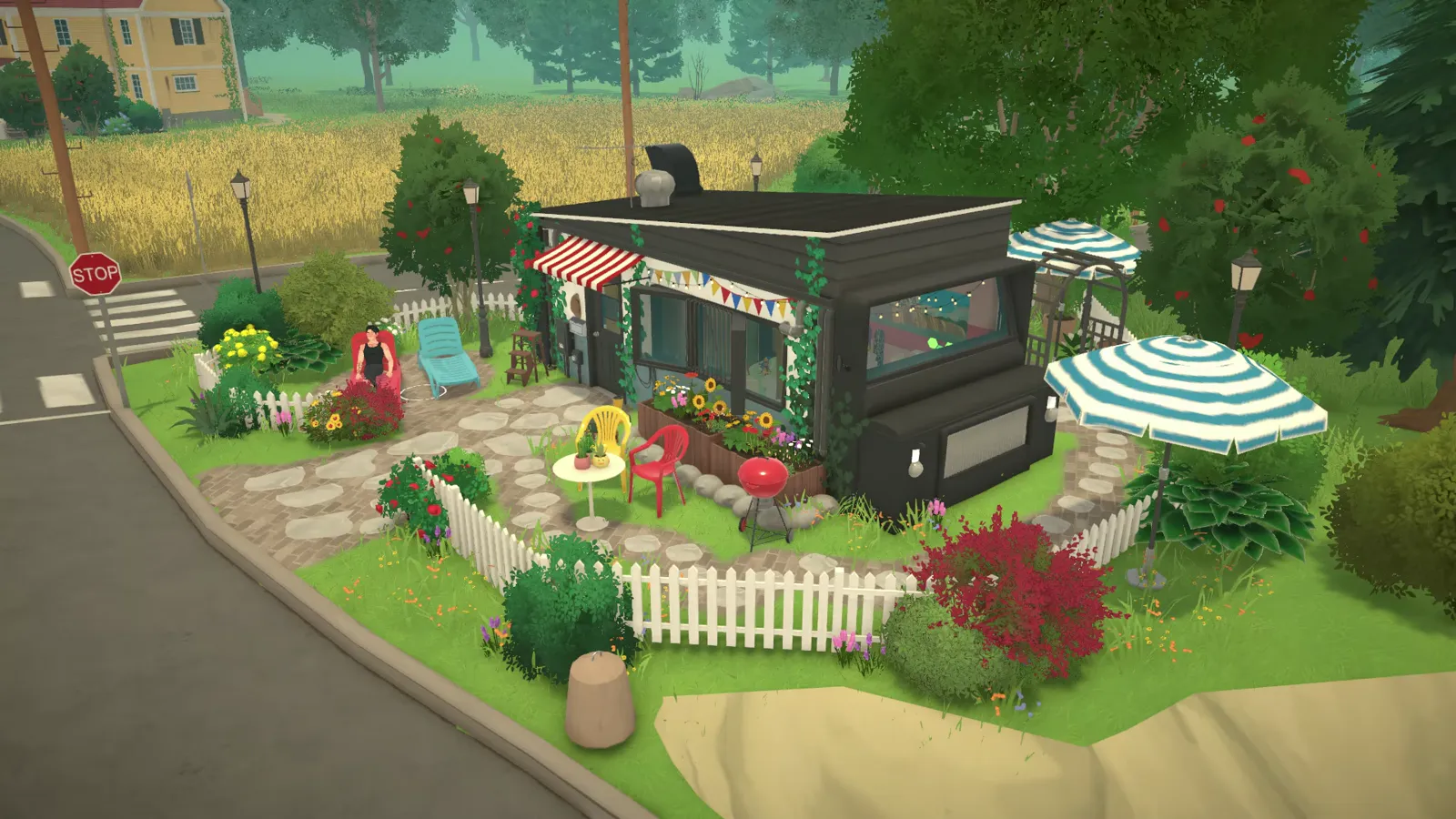
The short version
Paralives has no drivable vehicles as of 0.1.8b — nothing you build can pull away, tow, or even roll. So this camper van is honest about what it is: walls, shape pieces and furniture arranged into a van-shaped sculpture you park in a garden and stage a road trip around. This guide walks the full sixteen-step build from sims4ideas' music-only speed build — shell, fake cab, two-tone paint, a picket-fenced campsite yard, then the whole interior — with every frame deep-linked to the exact second of the video.
- No ignition, no wheels that turn: as of 0.1.8b nothing built in Paralives can drive, and this van doesn't pretend otherwise.
- The front end is a prop trick — wall lamps as headlights, a ribbed vent as the grille, glass above as the windscreen.
- The yard stages a full campsite pitch: picnic table, parasols, loungers and a kettle grill inside a white picket fence.
- Music-only source: there is no narration to lean on, so each step below is read straight off the frame it shows.
The van shell
A van body from walls, blocks and nerve
No vehicle kit exists in Paralives, so the van is conjured from ordinary building parts: one rounded box for the body, a darker block for the cab, lamps and a vent for the front end. The creator paints each section through Style Creation before the van has windows — by the time the glazing goes in, the two-tone scheme is already set.
- 1
Raise the body as one rounded box
The build opens on an empty grass lot by a road corner. The van body starts life as a single pale box with rounded corners, drawn with Paralives' shape pieces — and the game itself chimes in: an Early Access warning about building on uneven grids with small blocks appears in the corner while the base goes down. It is a reminder that techniques like this sit at the edge of what the build tools officially support.
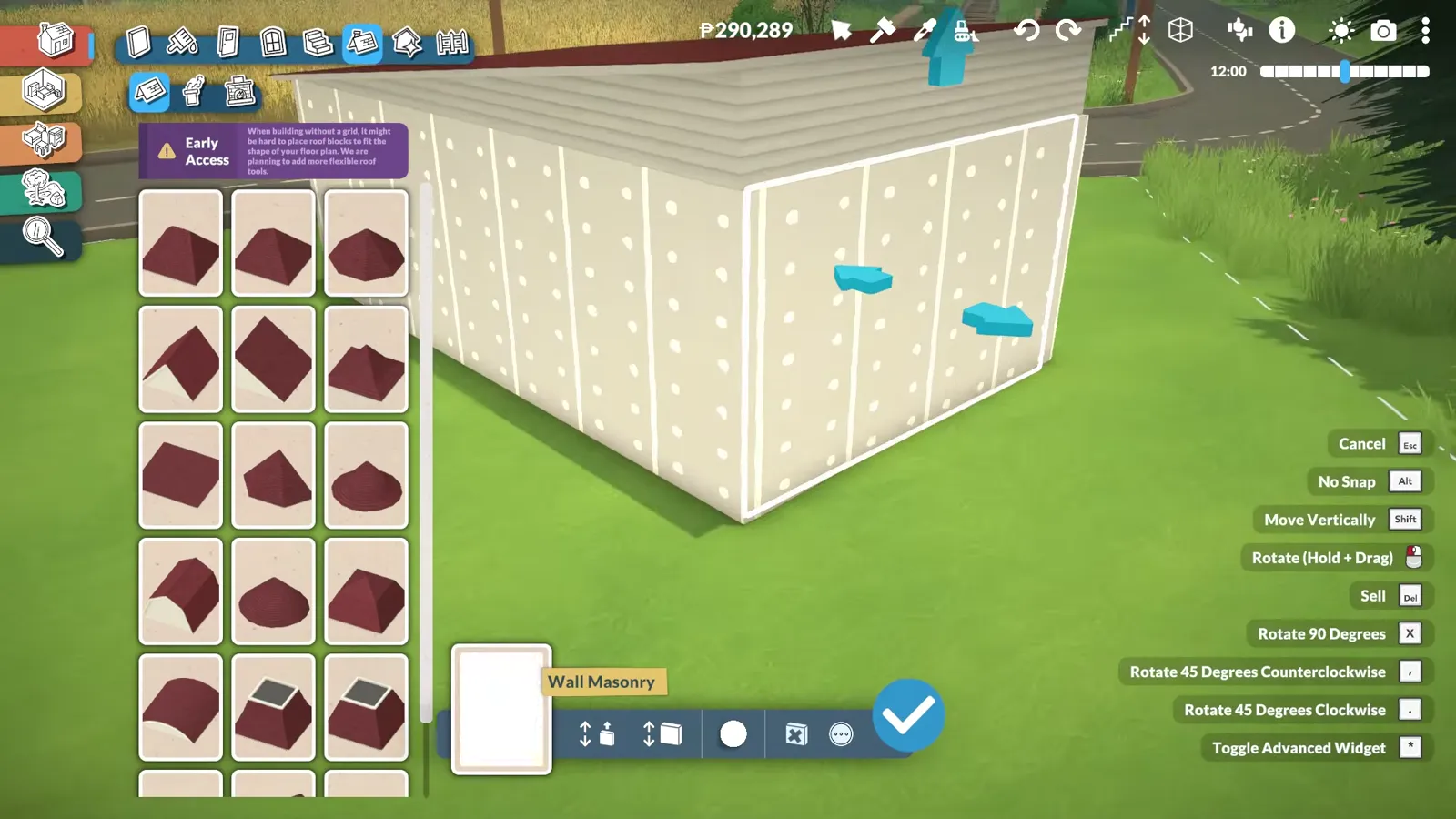
The body starts as one rounded box — Early Access grid warning and all.Watch at 1:00 - 2
Attach the cab and mix its colour
A dark block hangs off one end of the pale shell — the cab. Paralives' Style Creation panel is open through this step: the colour wheel mixes a custom shade, the hex field takes an exact value, and the Whole Item scope keeps the tint from spilling onto the body. Getting the contrast right now means the paint step later only has to handle the lower band.
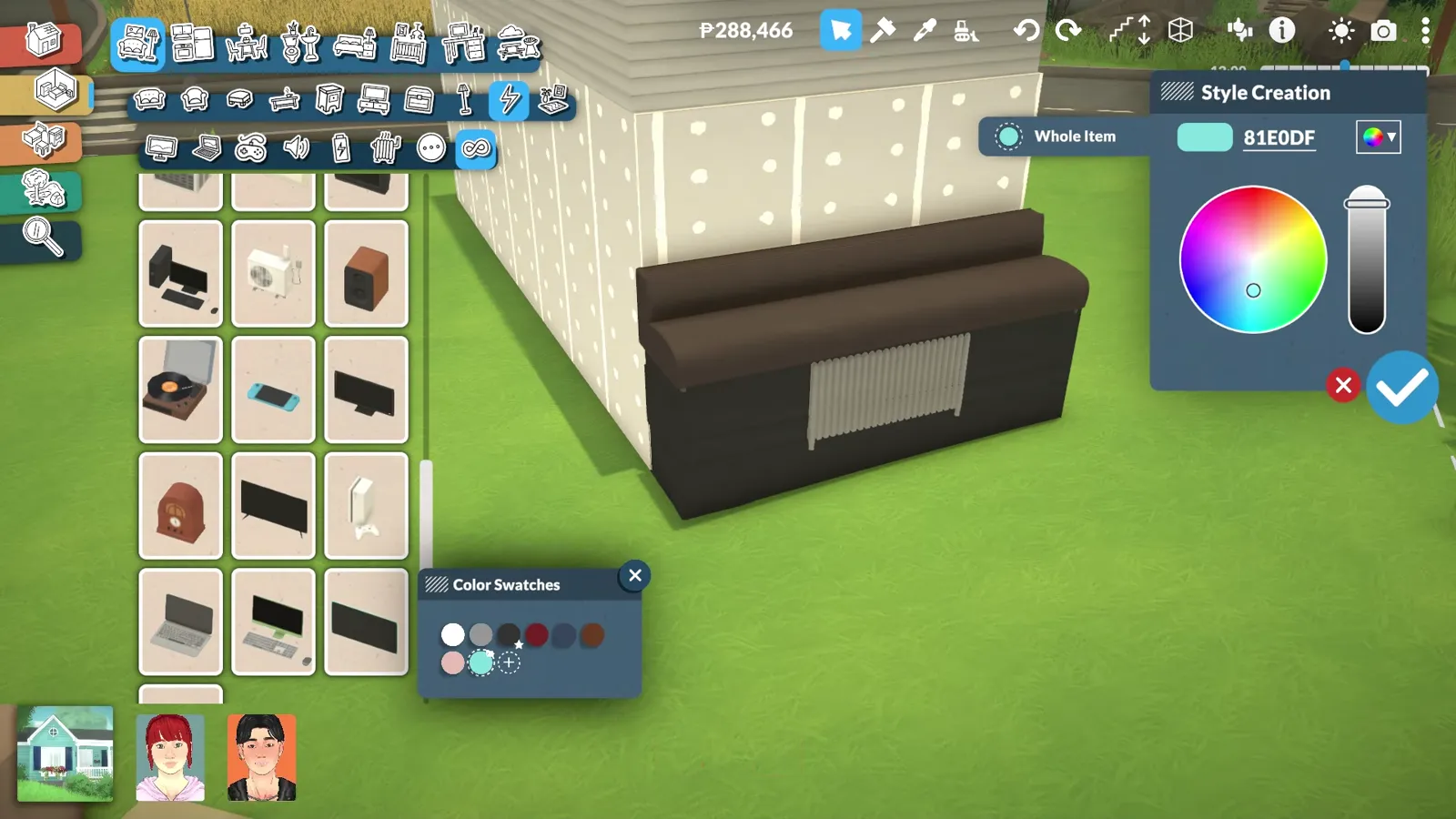
Style Creation paints the cab before the van has a face.Watch at 1:40 - 3
Fake the front end with props
The face of the van is pure improvisation. A ribbed vent panel stands in for the grille, two small wall lamps flank it as headlights, and a wide pane of glass above reads as the windscreen. Nothing here is a vehicle part — the lamp catalogue supplies the headlights — but from a few steps back the illusion holds completely.
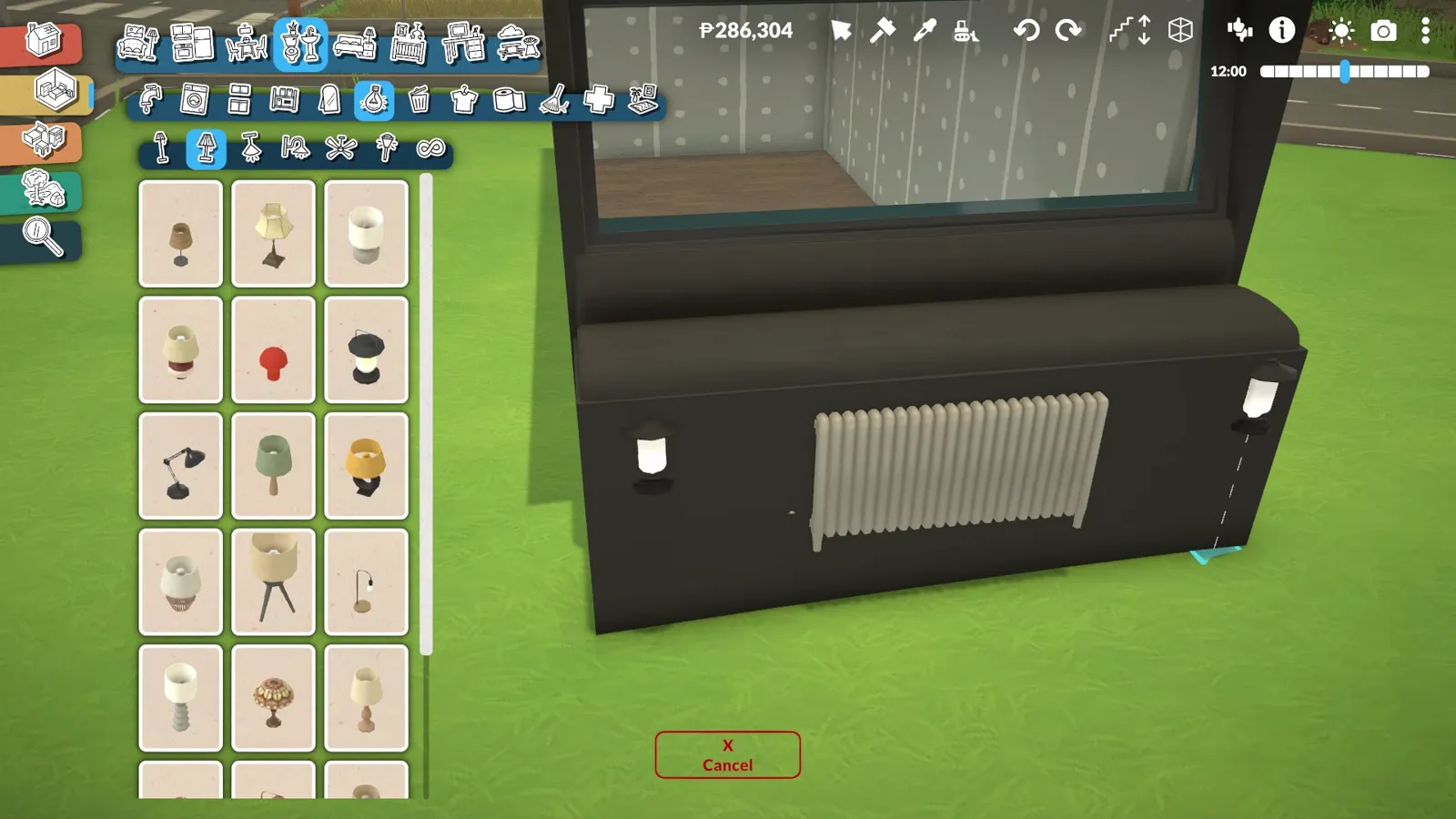
Lamps for headlights, a vent for the grille — the front end is pure props.Watch at 2:00 - 4
Lay down the two-tone paint
With the shape settled, the Color Swatches popup takes over: the lower wall band takes a rust-orange coat first, against the pale upper body and the dark cab. By the time the windows arrive, the band has settled into a slate teal at the front and a warm wood tone at the rear — the two-tone that defines the finished van.
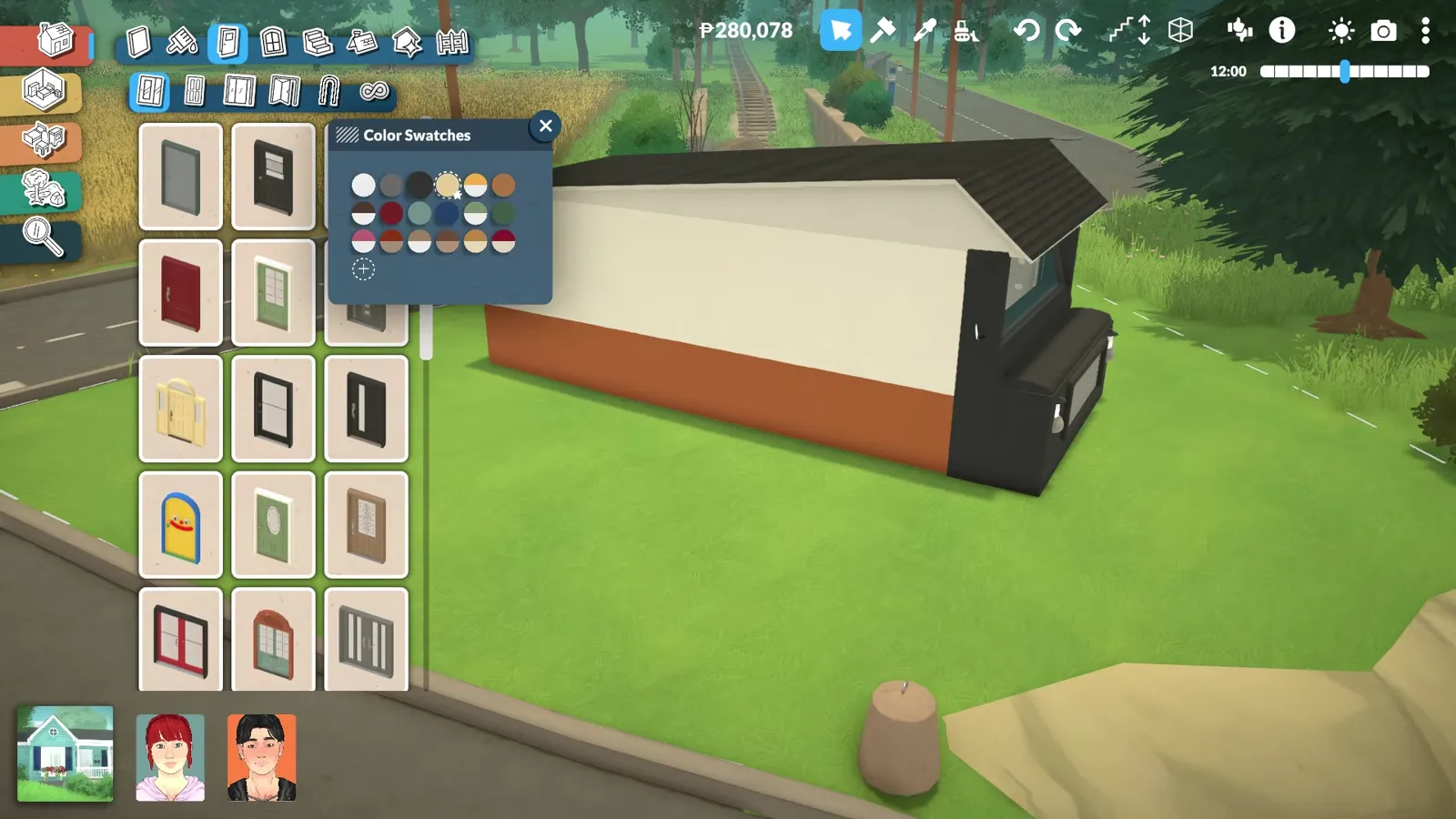
Two-tone paint goes on band by band — rust first, slate and wood to follow.Watch at 3:20
Curb appeal
Windows, window boxes and climbing roses
The street side gets its character in layers: a run of windows along the lower band, a planted planter box under the sills, roses and ivy softening the corners. A ring of white picket fence and a stepping-stone path then turn the grass into a front garden.
- 5
Glaze the side with a window run
A glass-panelled door and a run of framed windows slot into the lower band, nudged into place with the blue move arrows. The frame also shows the Switch Side shortcut in the right-click menu — windows flip facing without being replaced. Big panes matter in a van: they are the only connection between the interior and the campsite around it.
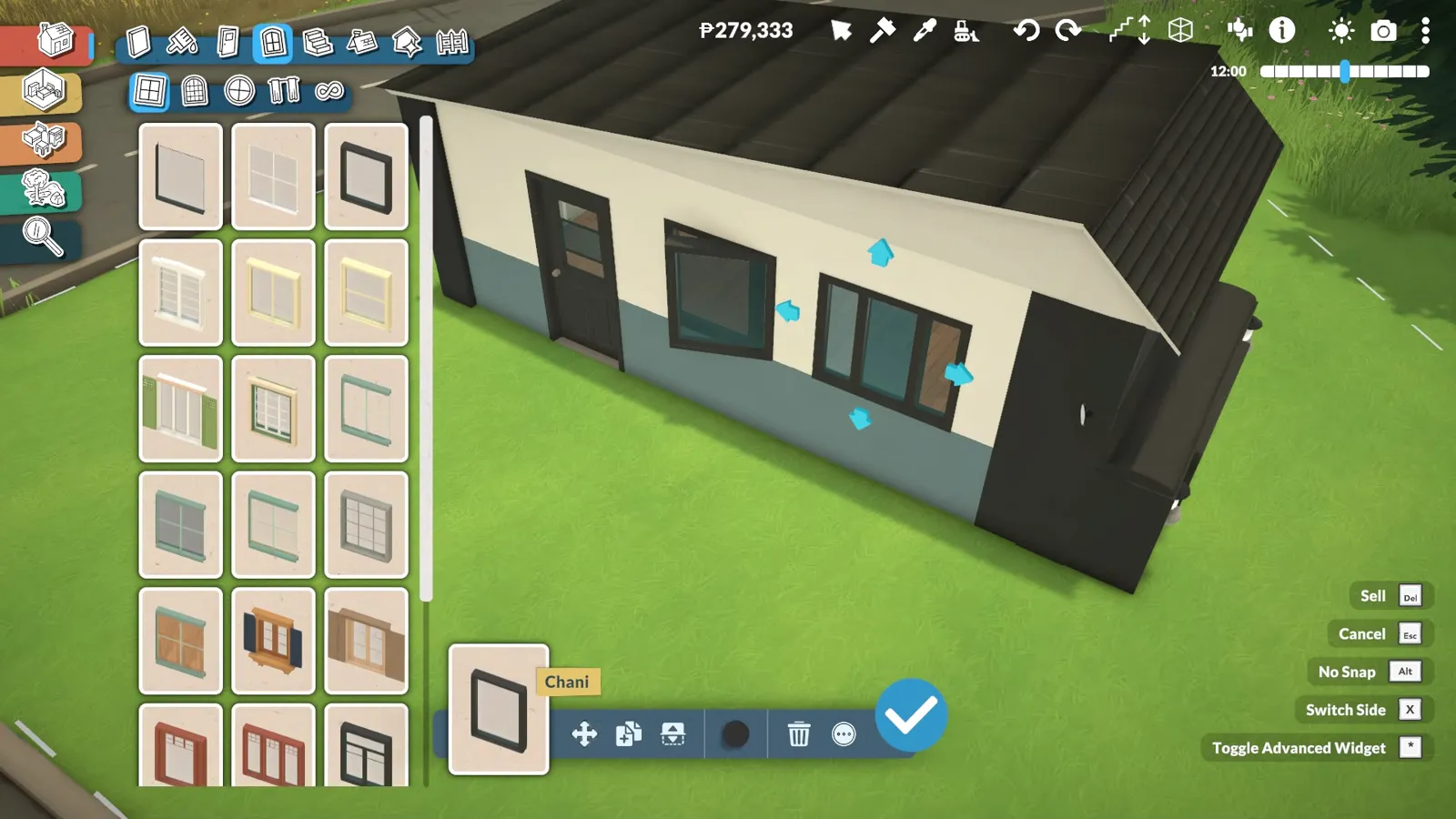
Windows slide into the band — Switch Side flips them without a rebuild.Watch at 4:20 - 6
Plant a window box under the sills
A long wooden planter runs along the base of the windows, and it is planted the slow way: bloom by bloom from the plant catalogue — daisies, tulips, sunflowers. Placing individual flowers instead of one pre-made arrangement is what gives the box its overgrown, lived-in look.
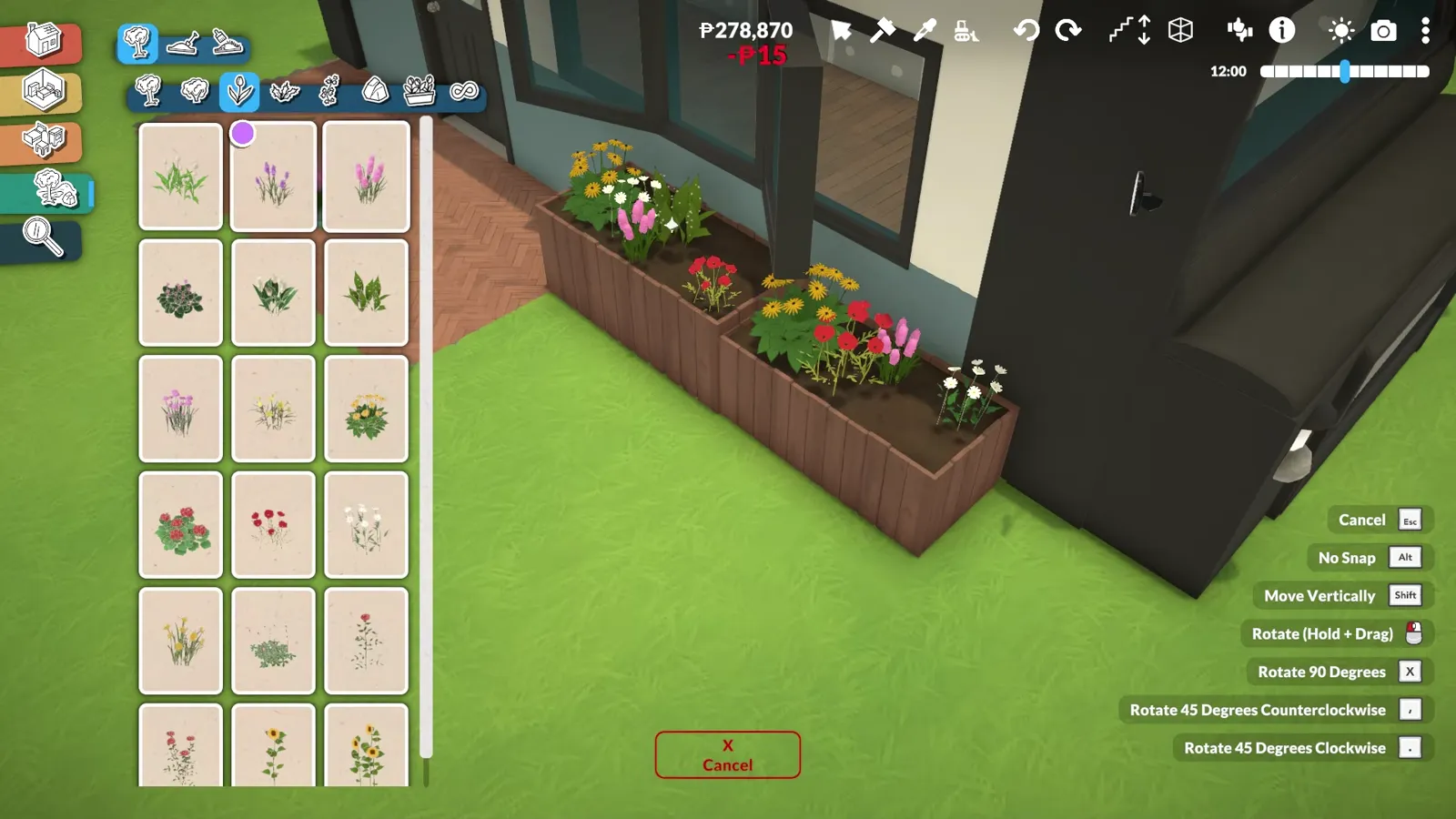
A window-box garden, planted bloom by bloom.Watch at 5:00 - 7
Soften the corners with climbing vines
Rose vines climb the front corner of the body while ivy works up the cab pillar, placed piece by piece from the shrub catalogue. On a build this boxy the vines do the weathering a real van earns on the road — they are the difference between a sculpture and a home on wheels.
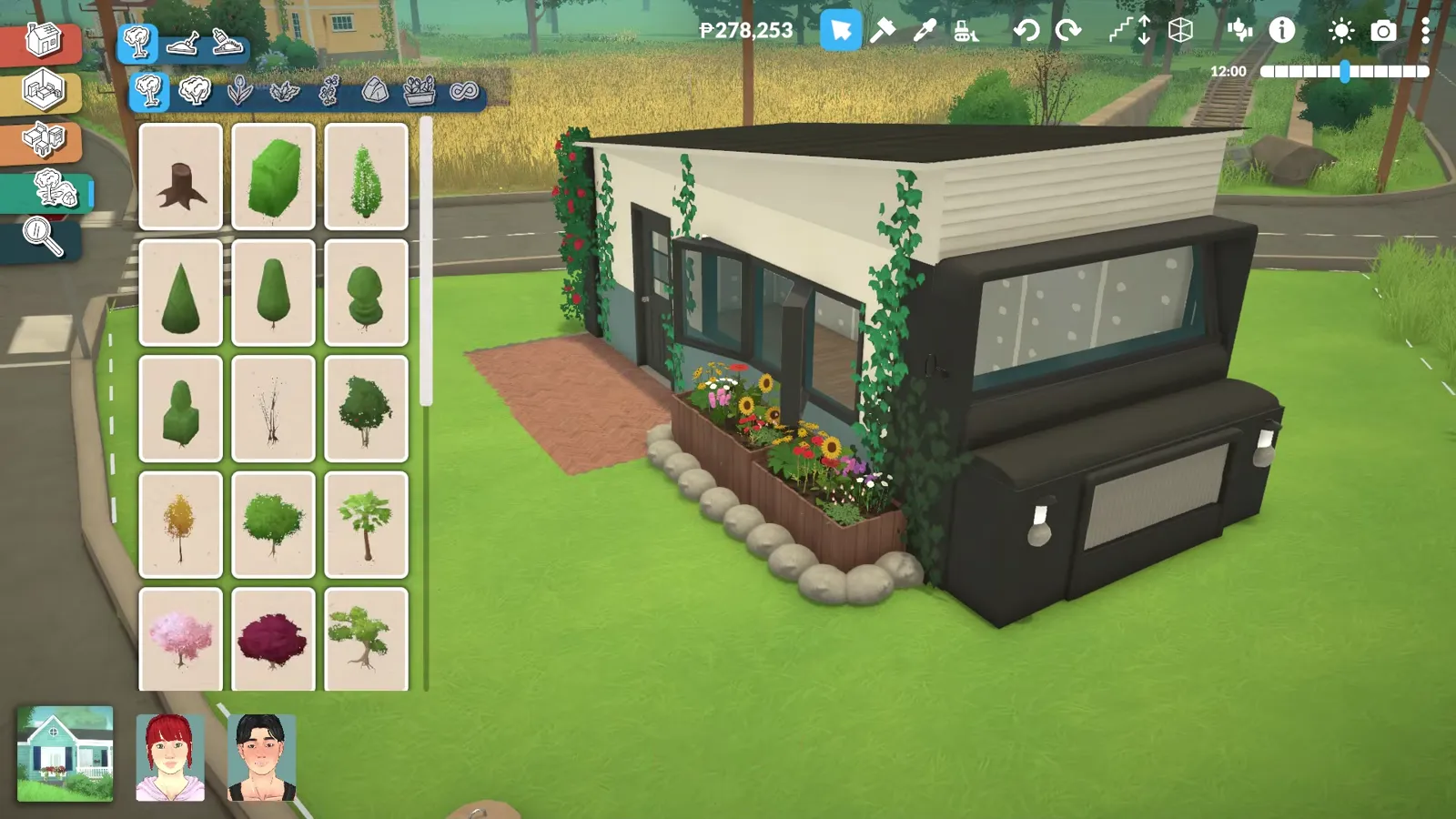
Vines do the weathering this van will never earn on a road.Watch at 5:30 - 8
Ring the yard with fence and stepping stones
Seen from above, the yard takes shape: a white picket fence rings the plot, stepping stones curve from the road to the van door, and the rock catalogue is still open — pale stones edge the planter box. A stop sign and a street lamp anchor the corner, so the van reads as parked on a real street, not floating in a lawn.
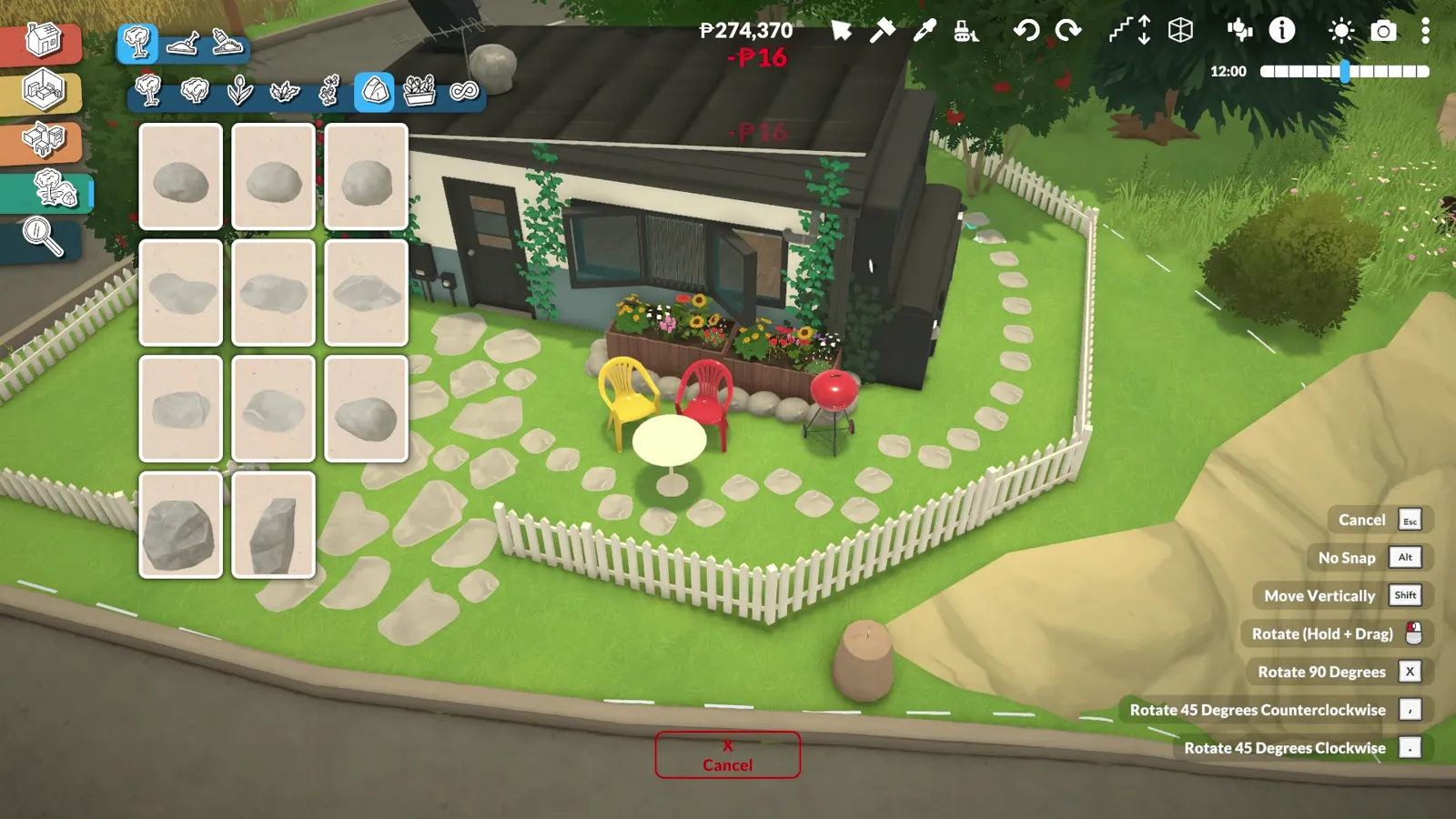
Fence ring first, then the path — the yard gets its shape from above.Watch at 6:40
The campsite pitch
Awning out, parasols up, table set
This is the closest Paralives gets to camping today: the garden becomes a campsite pitch, with a striped awning over the window band, bunting on the roofline, parasols, loungers, a kettle grill and a red picnic table on the stone circle. A dedicated campsite-lot guide is still waiting for qualifying source footage — the yard below is the staging that stands in for it.
- 9
Stretch the striped awning and hang the bunting
The street side gets its summer outfit: a red-and-white striped awning projects over the window band, and multicolour bunting strings along the roofline from the decor catalogue. It is the single biggest mood shift in the build — before the awning the van is a sculpture, after it, the van is on holiday.
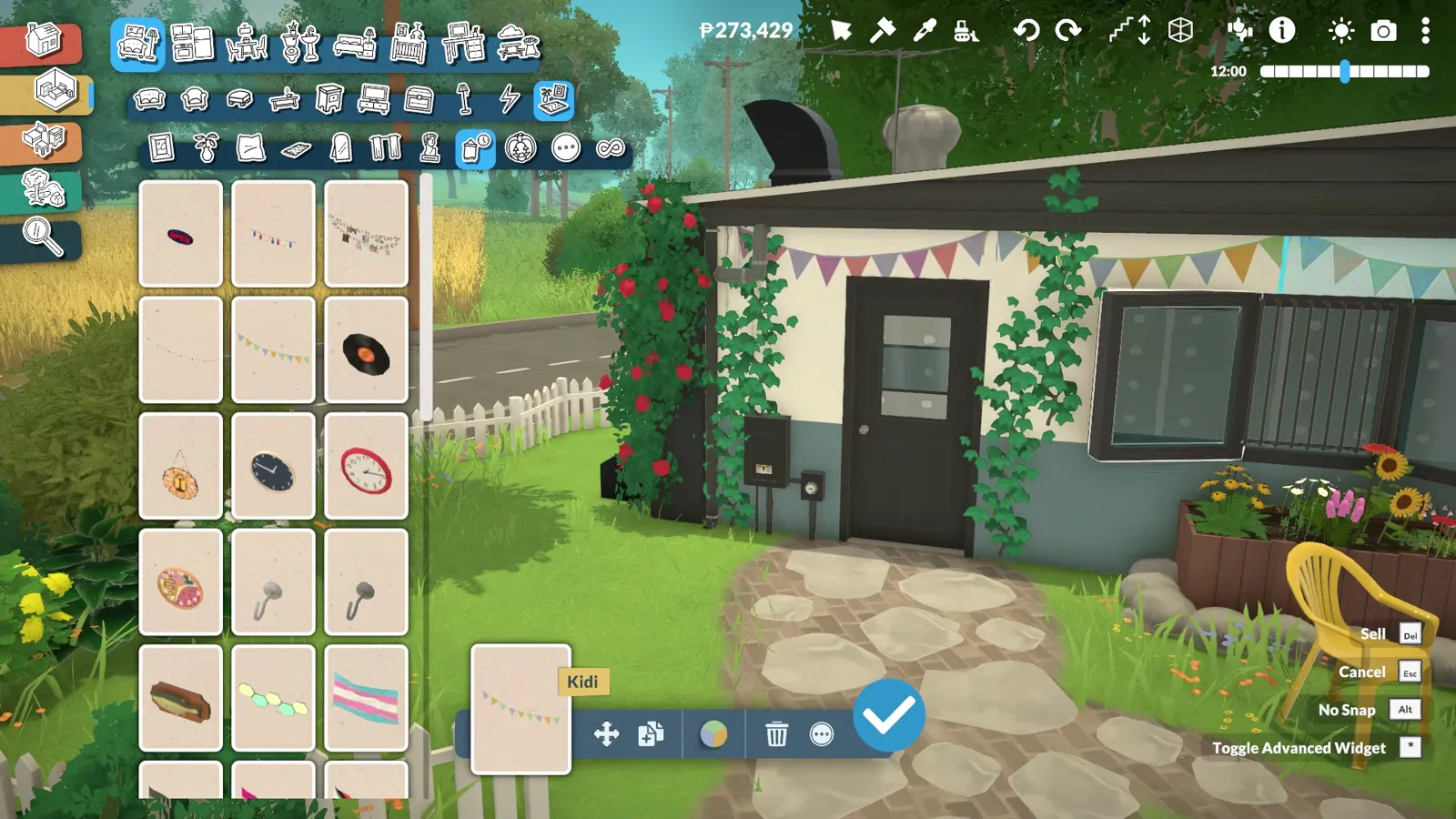
Awning out, bunting up — the van starts waving back.Watch at 7:50 - 10
Furnish the patio: chairs, grill, parasol
The stone circle becomes a sitting room: yellow and red plastic chairs around a white bistro table, a red kettle grill on the path, and a blue-and-white parasol opening over it all. Every piece is ordinary garden furniture — camping, in Paralives today, is a matter of props.
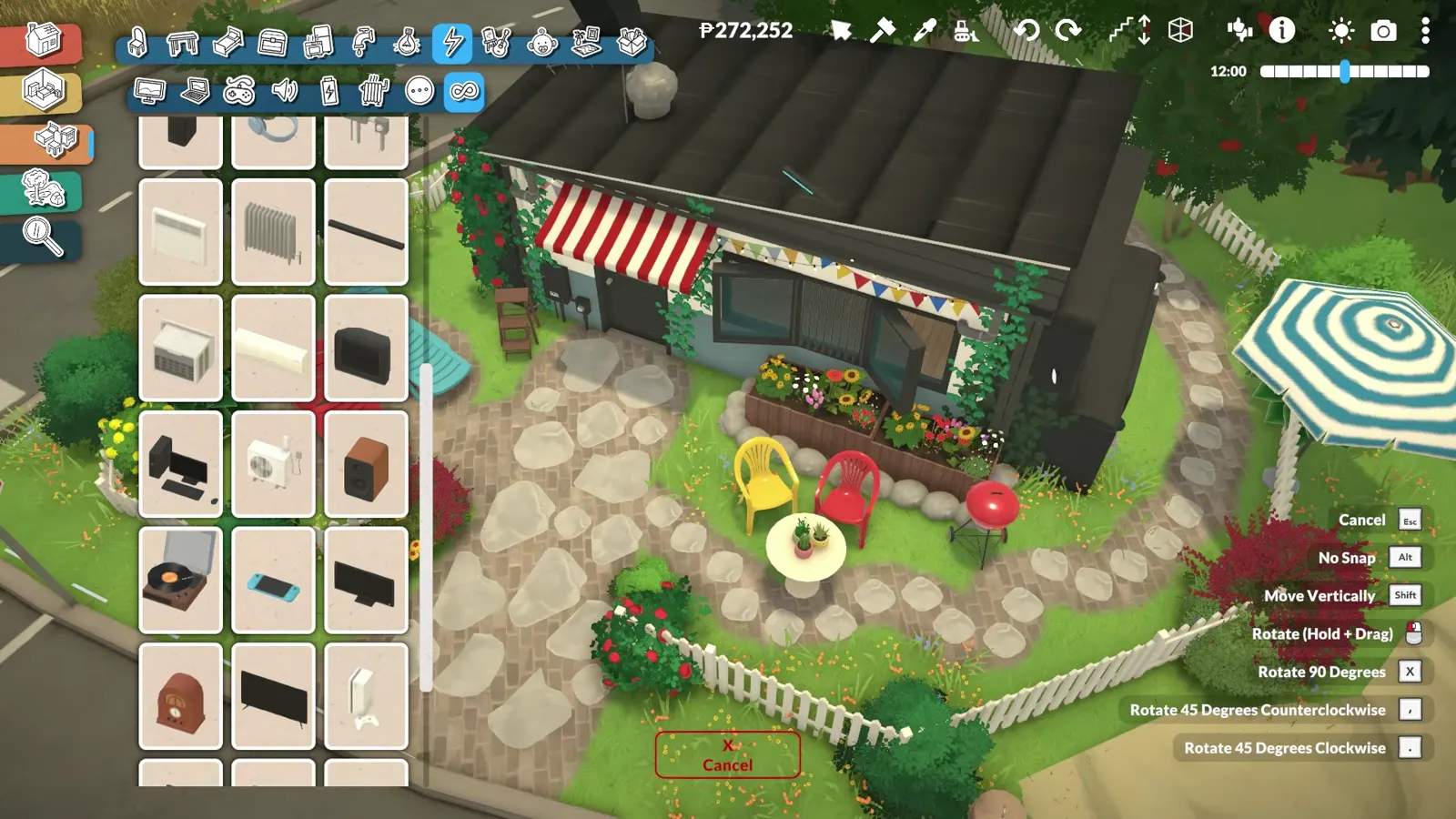
Chairs, grill, parasol — the campsite pitch assembles itself.Watch at 8:20 - 11
Set the red picnic table
The anchor of the campsite pitch lands on the stone circle: a red picnic table with attached benches, wooden crates stacked beside it. The clutter catalogue around this step runs from pumpkins to a black cat figurine — small props are what turn a lawn into a campsite worth staying at.
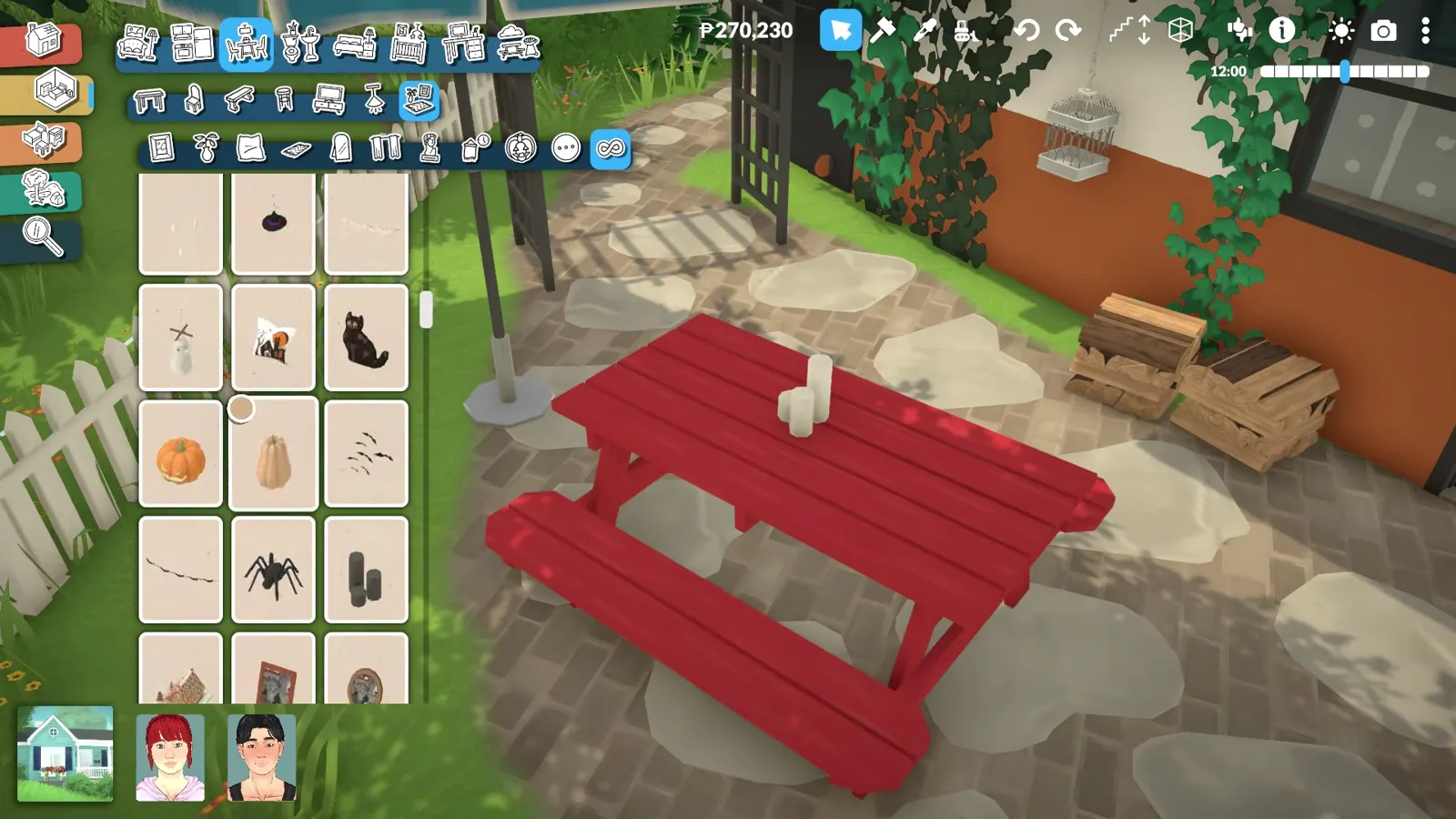
The red picnic table is where the yard eats.Watch at 9:50
Inside, and the reveal
Bathroom, bed, lounge, kitchen — then the roof comes off
Inside, the van is zoned like a tiny apartment: a white-tiled bathroom behind a partition, a bed with a clothes-rack wardrobe, a lounge around a kidney-shaped coffee table, and a sage-green kitchen to finish. For the finale the camera pulls straight up — one roofless frame shows every room at once.
- 12
Fit the bathroom behind the partition
Inside, a partition wall carves the smallest room out of the rear of the van, and white tiling finishes it: a pedestal sink, a mirror, a toilet, a chrome shower head, a towel rail with red and teal towels, even a toilet-paper holder. It is the most convincing proof that the van is meant for living — as pure staging, at least.
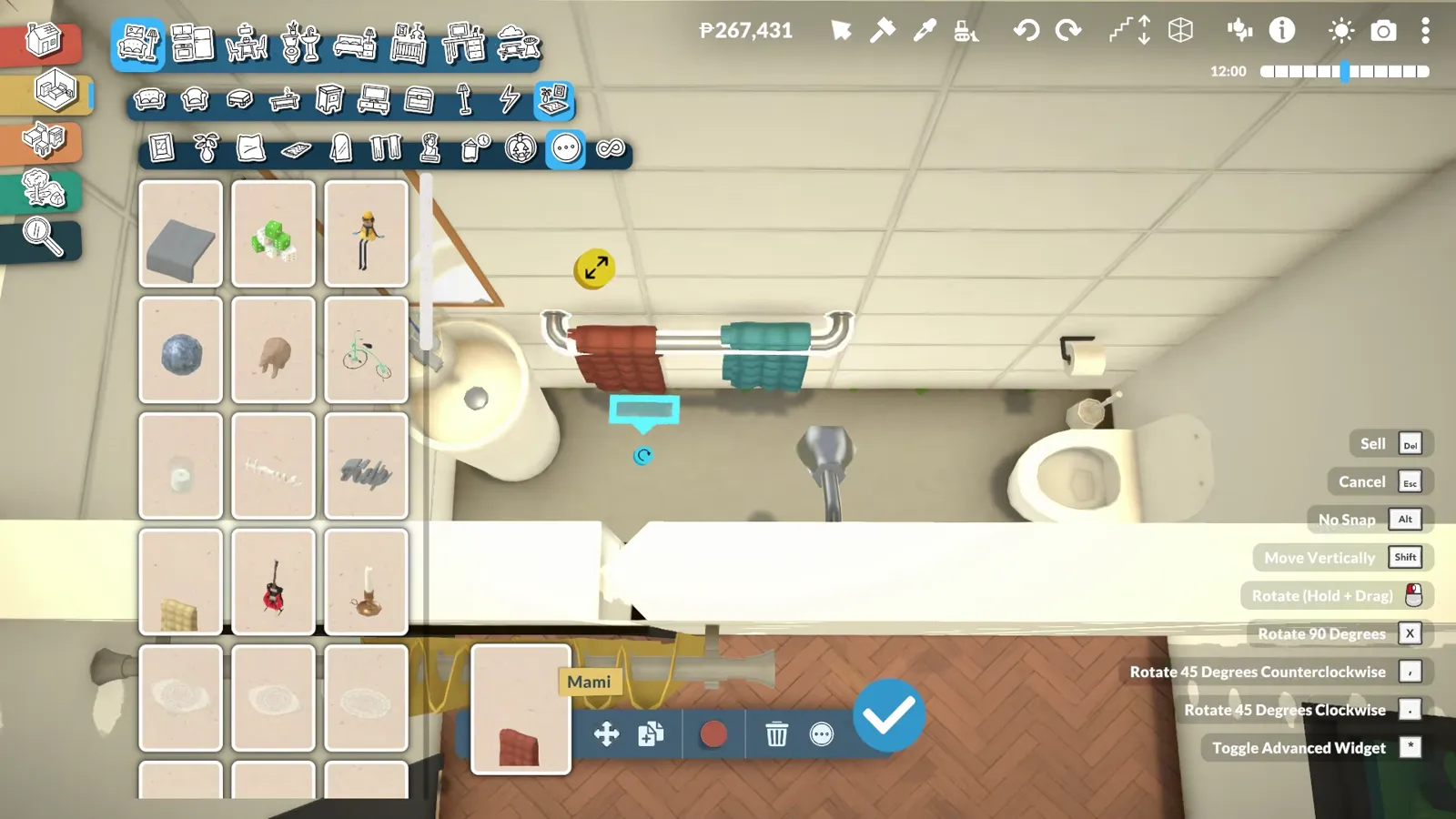
Towels, shower head, toilet paper — everything a van bathroom needs, added.Watch at 11:30 - 13
Make up the bed and hang a wardrobe rail
The sleeping end gets a bed dressed in a yellow-and-orange striped duvet, with a clothes-rack wardrobe standing in for a closet — hung garments and all, straight from the wardrobe catalogue. In a van this size, open rails beat wardrobes with doors: the nook stays walkable.
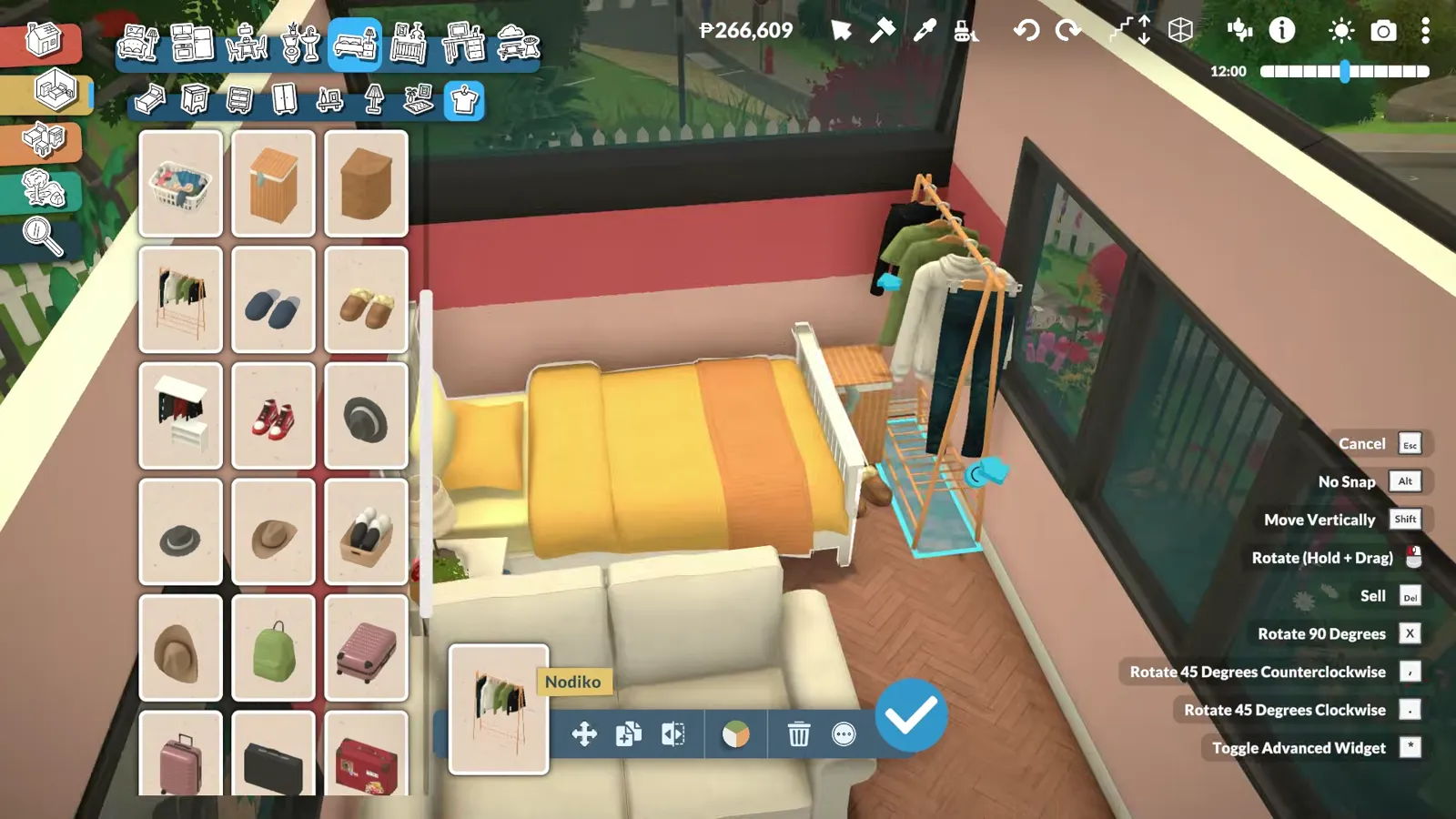
The wardrobe is a rail, the bed is a statement: yellow stripes.Watch at 12:20 - 14
Centre the lounge on a kidney coffee table
The middle zone becomes the lounge: a white sofa faces a green kidney-shaped coffee table on a round woven rug, vinyl records hang by the bed end, and a checkerboard floor patch — dropped tile by tile from the flooring catalogue — marks the entry. Pink walls warm the whole interior against the dark window band.
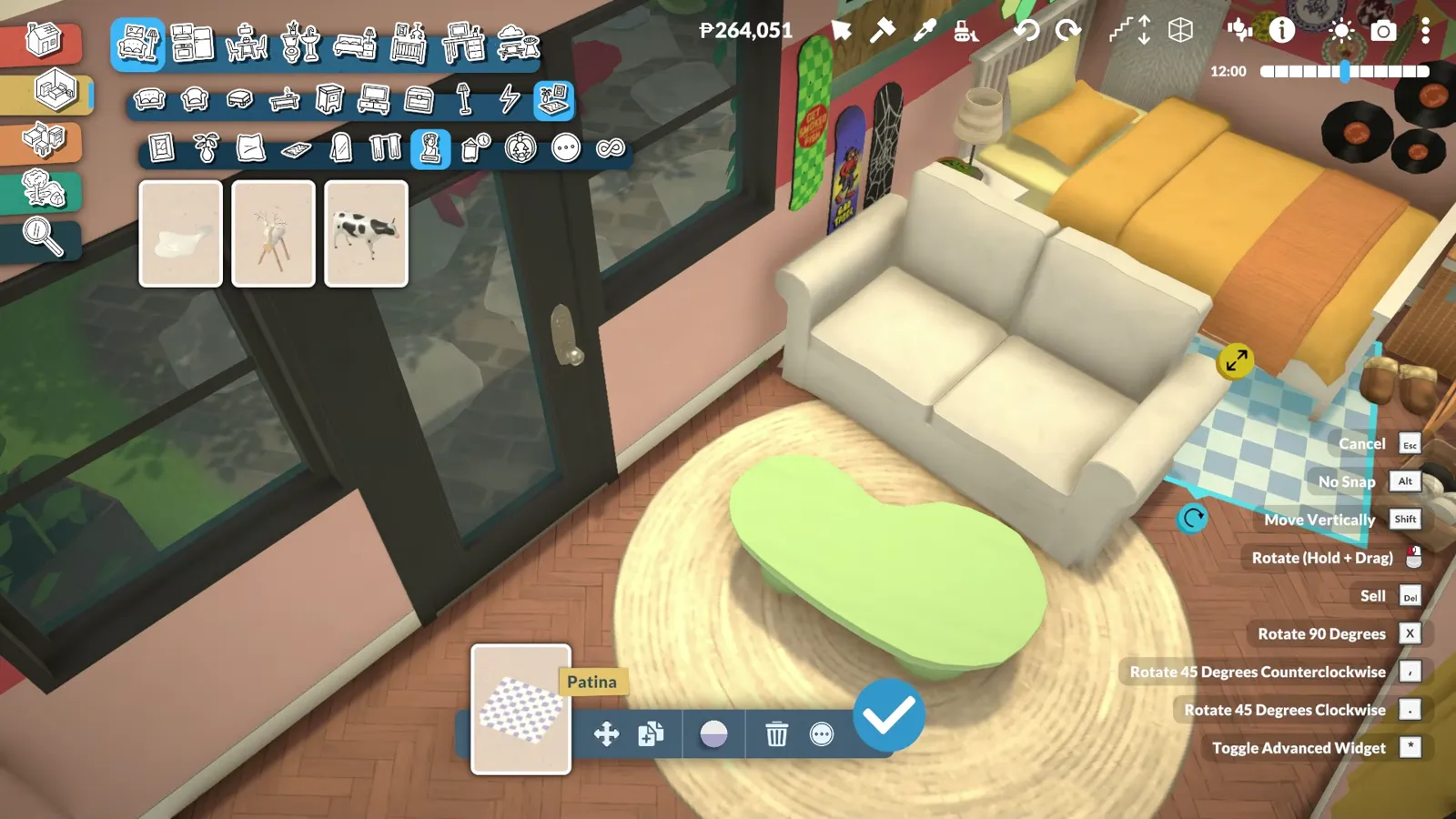
Checker tiles by the door, records on the wall — the lounge moves in.Watch at 13:00 - 15
Land the sage-green kitchen
The kitchen goes in last and loudest: a sage-green counter run curves around a white basin sink under a rattan pendant lamp, with a stove and hood on the back wall and yellow curtains dressing the window. The L of cabinets closes the floor plan — bathroom, bed, lounge, kitchen — and the van is ready to be lived in, in the only way Paralives currently allows: pretend.
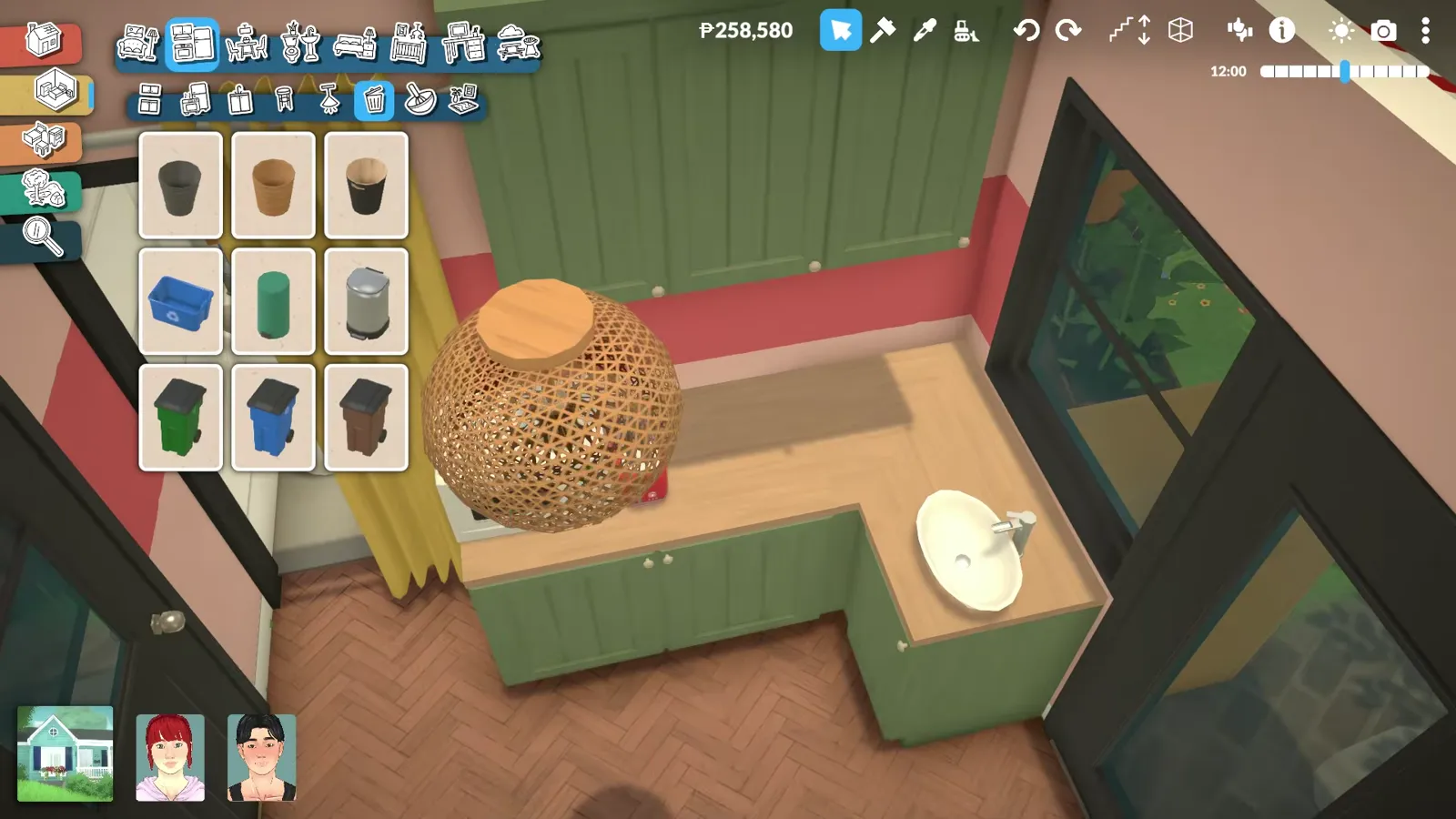
Sage green, butcher block, one rattan lamp — the kitchen lands last but loud.Watch at 14:00 - 16
Pull the roof for the top-down reveal
The finale lifts the camera straight overhead: one roofless frame shows kitchen, lounge, bedroom and the yard's stone loop in a single view — the whole 'van life' layout at a glance. Parked at the edge of the lot sits what looks like a tiny red car, built from the same parts and every bit as stationary as the van. That is the whole story of this build in one frame.
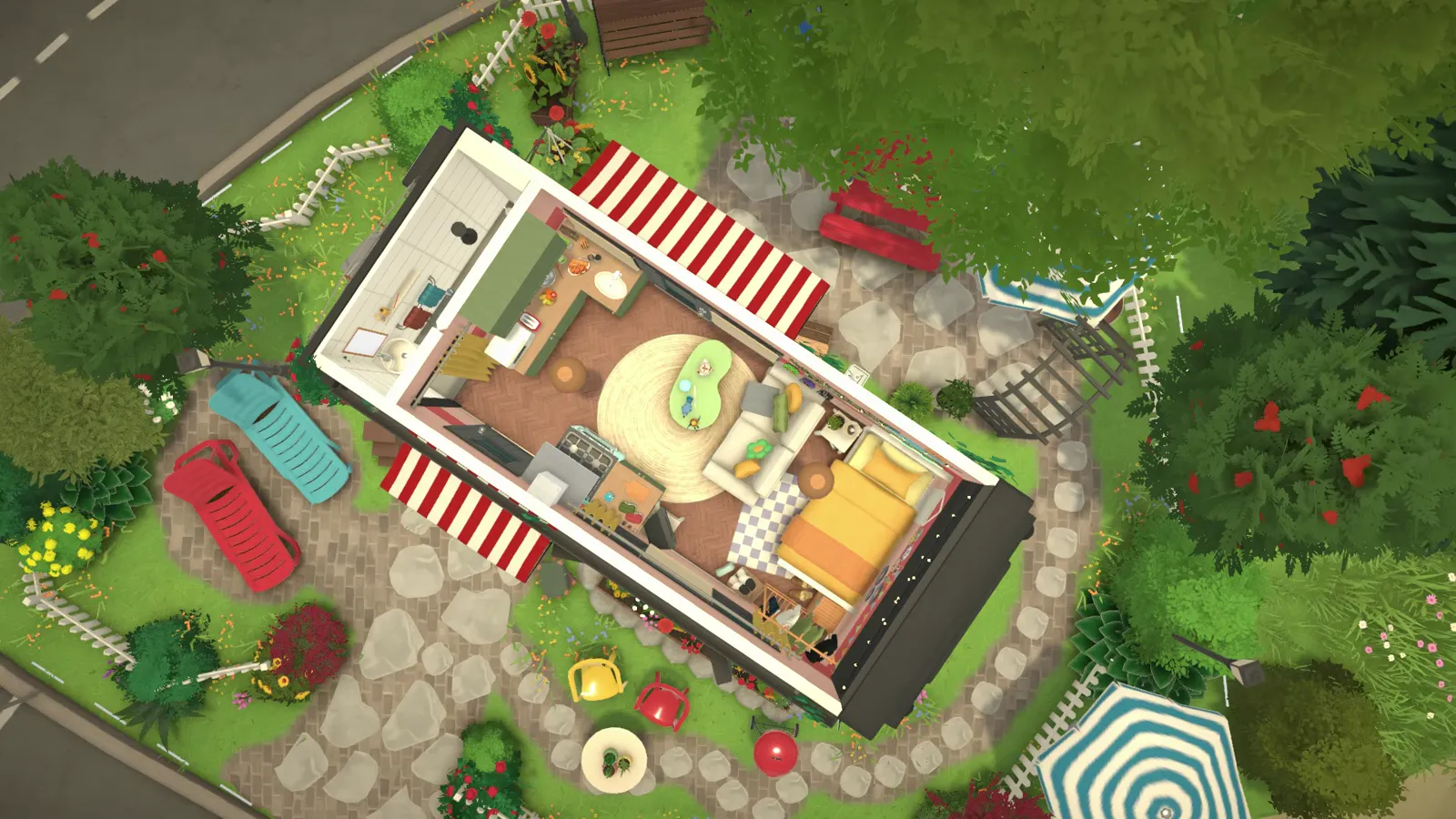
Roof off for the finale: every room visible at once, nothing going anywhere.Watch at 14:47
A camper van is a sculpture, not a vehicle
As of 0.1.8b Paralives has no drivable vehicles — no cars, no towing, no ignition sounds, nothing. The van above is built from the same wall, shape and furniture parts as any house, and it will never leave the lot it is placed on. The 'road trip' is entirely the campsite yard's invention: parasols, loungers and a picnic table stage the holiday that the game cannot yet run. If you want the indoor version of the same idea — a real, fixed residence — the mobile home guide is the counterpart build.
The build is also a small tour of the toolset. The right-click menu carries Rotate 90 Degrees, 45-degree nudges, No Snap, Move Vertically and Sell; Style Creation mixes custom colours and scopes them to the Whole Item; the Advanced Widget toggle changes how pieces are handled. And Paralives polices its own edges — the Early Access warning about uneven grids and small blocks shows up on screen in the very first step. One more honesty note: this source video has no narration at all, only music, so unlike most guides on this site every fact here was verified frame by frame rather than quoted from a commentary.
On the camping question: the yard here is the closest thing to a campsite Paralives currently offers — a staged pitch with a picnic table, parasols, loungers and a kettle grill. There is no campsite lot type, no booking, no outdoor-stay system. A dedicated campsite-lot guide will follow once a qualifying source video — clean footage, no facecam, no burned-in captions — shows up; until then, this page carries the camping keyword honestly. For other shapes of living, see the houseboat and tiny house builds.
Camper van build FAQ
- Can you build a camper van in Paralives?
- Yes — as a static build. This guide walks through a complete one from a sims4ideas speed build: a rounded shell for the body, a dark cab block, prop headlights and grille, a two-tone paint job, a campsite yard and a full interior with bathroom, bedroom, lounge and kitchen. Nothing about it is an official vehicle object; it is all ordinary building parts.
- Can you drive the camper van in Paralives?
- No. As of 0.1.8b Paralives has no drivable vehicles at all — nothing you place can pull away, tow or steer. The van is a sculpture made of walls, shape pieces and furniture, and it stays exactly where you park it. Any 'road trip' is imagined staging around it, which is why this guide spends as much time on the campsite yard as on the van itself.
- Is there a trailer or caravan in Paralives?
- Not as a vehicle — there is no caravan or trailer object to hitch up. The same furniture-built trick used for this van is how the site's trailer builds work, including the bakery trailer. If what you actually want is a small movable-feeling home on a permanent lot, the mobile home guide covers the fixed-residence take.
- Can you live in a camper van in Paralives?
- Not in a mechanical sense. Early Access has no residence or living system that lets a Para adopt a van — or any build — as a home, so 'van life' here is set dressing: the bed is made, the kettle is out, and nothing in the game tracks anyone living there. Treat the interior as staging for the story you want to tell, exactly like the campsite yard around it.
- Is there camping in Paralives?
- There is no camping system — no campsite lots, bookings or outdoor stays. What exists is everything the yard in this build uses: garden furniture, parasols, grills and picnic tables you can arrange into a convincing pitch beside your build. A dedicated campsite-lot guide is planned once a qualifying source video appears; until then this page is the honest stand-in for the camping keyword.
Keep building
Mobile home guide
The fixed-residence counterpart: a real home on a real lot for when the van should stop pretending it drives.
Houseboat guide
A home that floats — the water-borne cousin of the van life fantasy, moored and magnificent.
Tiny house guide
Small-space zoning done properly: every square tile earning its keep in a compact footprint.
Create a World guide
Custom lots and towns — the tool that decides where a parked van looks at home.
Decorating guide
Clutter, rugs, posters and plants — the small props that turn the van's staging into a story.