

Step by step
How to Feed a Toddler in Paralives
- 1
Pick up the toddler
Select a teen, young adult, adult or elder Para — babies and toddlers can't feed themselves, so you always feed through an older household member. Click the toddler and choose Pick Up so the older Para is carrying them.
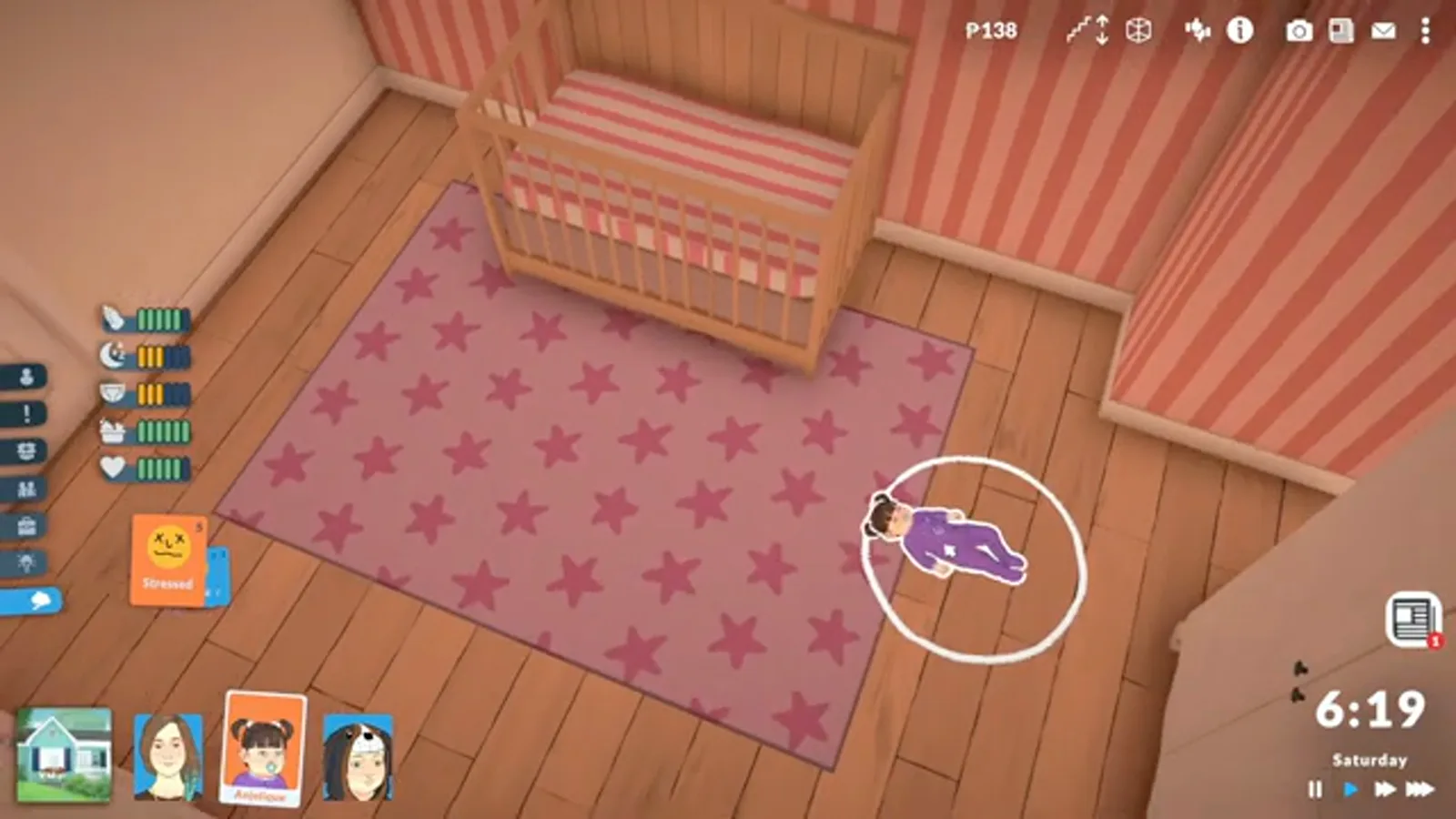
Click the baby or toddler to pick them up — feeding always goes through an older household member. - 2
Use the high chair if you have one
While carrying the toddler, click the high chair and choose Place in High Chair. Once they're seated, click the high chair again (or the toddler) and the Feed Toddler option appears, with food pulled from your fridge automatically.
- 3
No high chair? Feed by hand
A high chair is not required. With the toddler picked up, click the fridge or a counter and choose Feed — the carrying Para prepares a small meal and feeds the toddler directly. This is the fix for the very common 'I can't find the feed option' problem: it lives on the food source, not on the toddler.
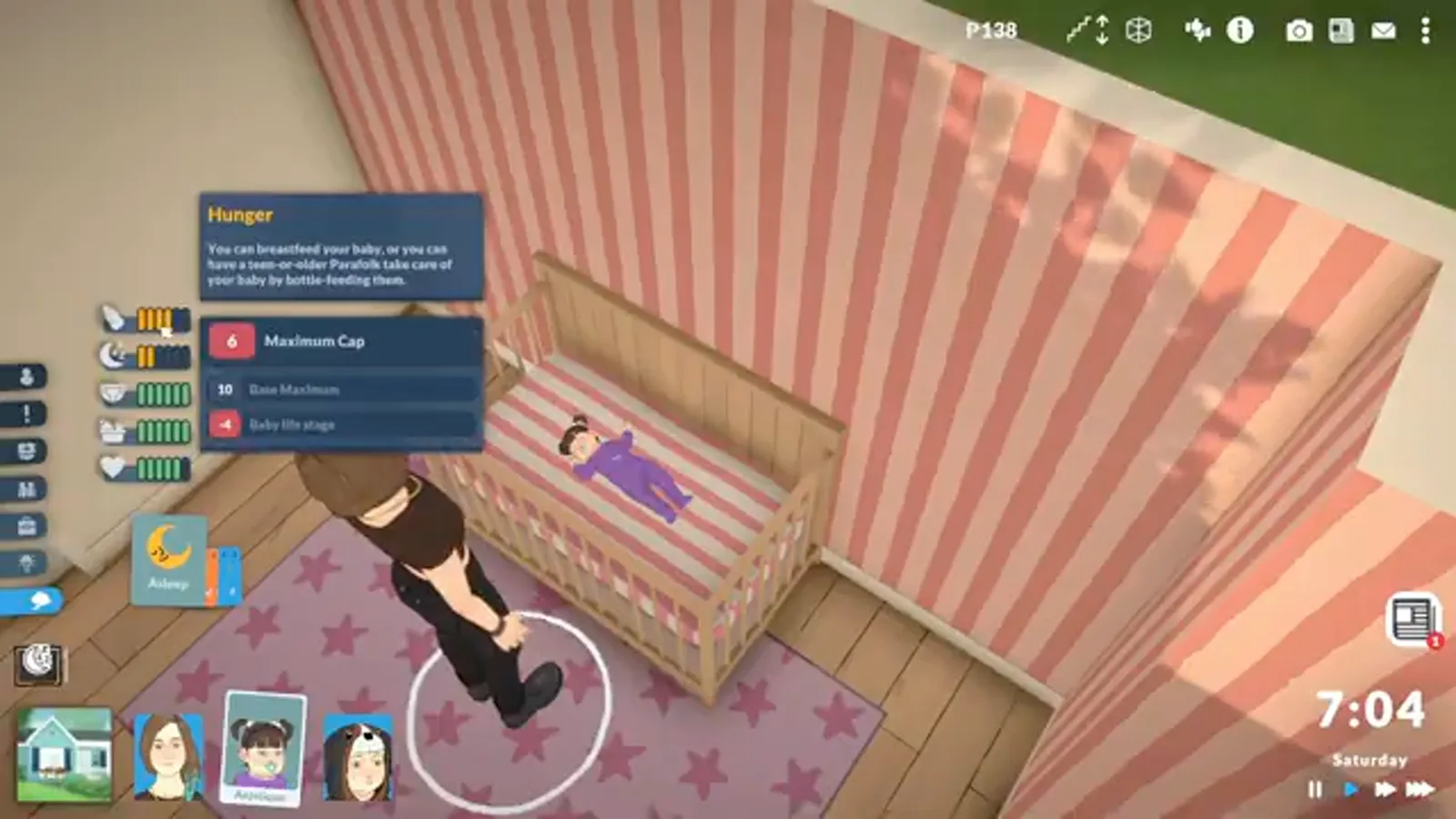
The in-game Hunger tooltip: breastfeeding, or bottle-feeding by a teen-or-older Parafolk. - 4
Watch the hunger need, not the clock
The Feed option greys out when the toddler isn't actually hungry. Open the toddler's needs panel and look at the hunger bar — if it's full, wait. If it's low and feeding still won't fire, the carrying Para may have a critical need of their own (energy or bladder) that's blocking the queued action.
- 5
Clean up and reset the cycle
After eating, toddlers get messy and need a wash — pick them up and use the sink or bathtub. Then it's the standard loop: feed, clean, play to build skills, and put them down for a nap before energy bottoms out and the crying starts.
What do toddlers actually eat?
Toddlers don't graze: they can't pick food up off counters or out of your inventory, even if a slice of pizza is sitting right next to them. Meals are served through the feeding interaction — once the toddler is seated in a high chair (or held, for hand-feeding), the game produces a proper plate such as steak and chips. One warning from live play: hungry toddlers throw tantrums, and a mid-tantrum toddler may refuse the plate entirely. Calm them down or wait out the fit, then offer the food again.
- Placed or inventory food is off limits — toddlers only eat through a feeding interaction.
- The high chair serves full meals; tantrums can pause or block eating until the toddler settles.
- After the meal comes the wash — messy toddlers need a bath before the cycle resets.
Toddler hygiene
Toddler hygiene: baths, diapers and the angry threshold
Toddlers can't wash themselves in Paralives — hygiene is the one need you have to schedule around feeding. Here's how the bar actually works, what a full diaper does to it, and the point where a filthy toddler turns angry.
The hygiene bar is shorter than an adult's
A toddler's hygiene bar is 8 cartridges long, against 10 for adults — babies sit at just 6. Shorter bars leave less slack between 'a bit grubby' and a full mood crash, so glance at the shower-head icon every time you pick them up.
They can't wash themselves — it takes a teen or older
Pick the toddler up with a teen-or-older Para, click a bathtub and choose the wash interaction for a full bath; the sink covers a quicker wash. There's no 'wash self' option at this age — the bar only moves when a caregiver acts.
A full diaper drains hygiene alarmingly fast
Sitting in a full diaper, toddler hygiene falls from 0.22 per hour to 4 — more than eighteen times faster. Change them at the changing table (or queue the potty once toilet training is going) and the bar stabilises again.
At 3, the anger kicks in
When hygiene hits 3, toddlers start gaining a +5 Angry emotion — babies get +5 Stressed at the same point instead. That's why a toddler crying 'for no reason' often just needs a bath: clear the filth before you retry feeding or play.
Where these numbers come from
Bar lengths and mood thresholds match the in-game need descriptions; the per-hour decay rates are the community wiki's measured values, not an official table — treat the exact decimals as unverified, and the direction (diapers drain far faster) as certain. Compare hygiene across every life stage · how moods like Angry work
The rest of baby & toddler care
Feeding is the headline, but a healthy little Para needs the whole loop covered. Here's the rest of the care system at a glance.
Feeding a baby (newborn stage)
Newborns are fed in arms, not in a high chair. Select an adult, click the baby and choose Feed — the Para cradles and feeds them. Babies sleep most of the day, so you'll mostly be answering hunger and the occasional fussiness.
Diapers & hygiene
When the hygiene need drops you'll see it on the baby or toddler's panel. Pick them up and use the changing table for a diaper, or the sink/bath for toddlers. Letting hygiene bottom out tanks their mood and makes every other interaction harder.
Sleep & naps
Toddlers crash hard. Place them in a crib or toddler bed before energy hits zero — an overtired toddler will refuse food and cry. A bed in the nursery near the high chair keeps the feed-clean-sleep loop short.
Do you actually need a high chair?
No. A high chair makes feeding tidier and a touch faster, but you can raise a toddler with just a fridge by feeding in-arms. Buy one when budget allows; it isn't a blocker for the toddler stage.
Toddler skills
Toddlers build early skills through play — talking, walking and potty-style milestones develop as you interact with them and let them use age-appropriate objects. Topping up needs first means they have the mood to keep playing and levelling those skills.
Growing into childhood & school
Once a toddler ages up to a child, the care loop eases and school takes over the day — including homework. From there your young Para starts the long climb through skills and, eventually, careers.
Toddler skills
Toddler skills, ranked — Language and Potty
Babies and toddlers don't share the adult skill list. They have exactly two lifestage skills in the current EA build, both leveled through daily care rather than solo practice.
Language
Baby + ToddlerHow little Paras learn to talk. It has no broader Knowledge domain, and progress carries over the Baby → Toddler age-up.
How to train: Play Together Cards in a group with the little Para — talk, babble-response and reading cards tick the bar fastest. Needs must stay green or cards cancel mid-stack.
Potty
Toddler onlyToilet training. A leveled Potty skill cuts diaper accidents and frees adults from a recurring care chore.
How to train: Place a potty chair and queue the 'use potty' interaction after meals. Praise interactions from a supervising adult speed it up.
Which toddler skill is the most useful?
Language, clearly. Potty saves you cleanup time, but Language compounds — an early talker enters the Child stage with faster social gains and fewer failed school interactions. Read the full Language skill guide →
Mistakes that leave a toddler crying
Most 'my toddler won't stop crying' reports trace back to one of these.
Looking for the feed option on the toddler
The Feed action lives on the high chair or the food source after you pick the toddler up — not in the toddler's own pie menu. Pick up first, then click the chair or fridge.
Trying to feed a toddler who isn't hungry
If the option is greyed out, check the hunger bar. A full toddler can't be fed; wait until the need actually drops.
Ignoring the caregiver's own needs
If the adult carrying the toddler is exhausted or needs the bathroom, the queued feed can stall. Meet the caregiver's critical need, then re-queue.
Letting sleep collapse
An overtired toddler refuses food and play. Keep a crib close and nap them before energy bottoms out, or you'll fight the mood for in-game hours.
Babies & toddlers FAQ
The toddler-care questions players ask most in Early Access.
- How do I feed a toddler in Paralives without a high chair?
- Pick the toddler up with a teen-or-older Para, then click the fridge or a counter and choose Feed. The carrying Para feeds them by hand — no high chair needed. The high chair is a convenience, not a requirement.
- Why is the feed toddler option greyed out?
- Usually the toddler isn't hungry yet — check the hunger bar in their needs panel. If hunger is low and it still won't fire, the Para carrying them likely has a critical need (energy or bladder) blocking the action.
- How do I clean a toddler?
- Pick the toddler up and use the sink to wash hands/face, or the bathtub for a full wash. For babies and diaper changes, use the changing table. Hygiene shows on their needs panel when it's time.
- How do toddler skills work?
- Toddlers level early skills through play and interaction rather than a formal skill menu. Keep their needs topped up so they stay in a good enough mood to keep playing, and let them use age-appropriate objects.
- Can I choose the baby's gender, and can I have twins?
- Babies arrive with a randomly assigned gender in Early Access; there's no in-menu gender pick at birth, though you can adjust appearance later in the character editor. Multiples like twins can occur, and cheats can be used to influence family outcomes. Still waiting on the pregnancy? Open the Try for Baby fix checklist →
- What about homework once my child starts school?
- Homework starts at the child life stage, not for toddlers. Once your toddler ages up, school assigns homework that your young Para completes at home to keep their grades up. Toddlers themselves don't get homework.
- What food can toddlers eat in Paralives?
- Toddlers eat meals served through the feeding interaction — cooked dishes like steak and chips appear on the high chair tray. They cannot grab food from counters, plates or inventory, so you always feed them through an older Para.
- Why does my toddler refuse to eat?
- Usually a tantrum. Hungry toddlers in Paralives throw fits, and mid-tantrum they can refuse the plate you just served. Let the tantrum pass or soothe the toddler, then offer the meal again — the hunger need will still be there.
- Why is my toddler always angry?
- Filth is the usual suspect. At hygiene 3, a toddler carries a +5 Angry mood, and a full diaper drains hygiene more than eighteen times faster than normal. Change the diaper or run a bath first; if hygiene looks fine, check hunger and sleep — the other classic tantrum causes.
- Can toddlers die from low hygiene in Paralives?
- No. Babies and toddlers can't die from needs in Early Access — not even starvation or exhaustion kills them, and hygiene isn't lethal at any life stage. The worst a bottomed-out hygiene bar does is wreck their mood and make every interaction harder.
- How do you feed a toddler in Paralives?
- Pick the toddler up with a teen or older Para, then click the high chair, choose Place in High Chair and pick Feed on the chair — or skip the high chair entirely: click the fridge or a counter and choose Feed to hand-feed while holding them. The option only greys out when the toddler isn't hungry or the Para carrying them has a more urgent need of their own.
Keep building the family
Where to go before and after the toddler stage.
Relationships, Try for Baby, pregnancy and birth — the full path to a newborn.
When your child grows up, this is the full 12-skill ladder to level.
Every job domain, best jobs and promotion paths for your grown Paras.
Achievement-safe console codes to speed up needs, aging and family goals.
Six ordered checks for a missing or failing Try for Baby, what patch 0.1.7 changed, and save-safe workarounds.